



Peace lily
Spathiphyllum spp. · Araceae · Flowering houseplant
Also called Spathiphyllum, White sails
It droops clearly when thirsty and recovers soon after watering, but try to water just before it reaches that point. More light means more flowers; despite the name, it is not a true lily.
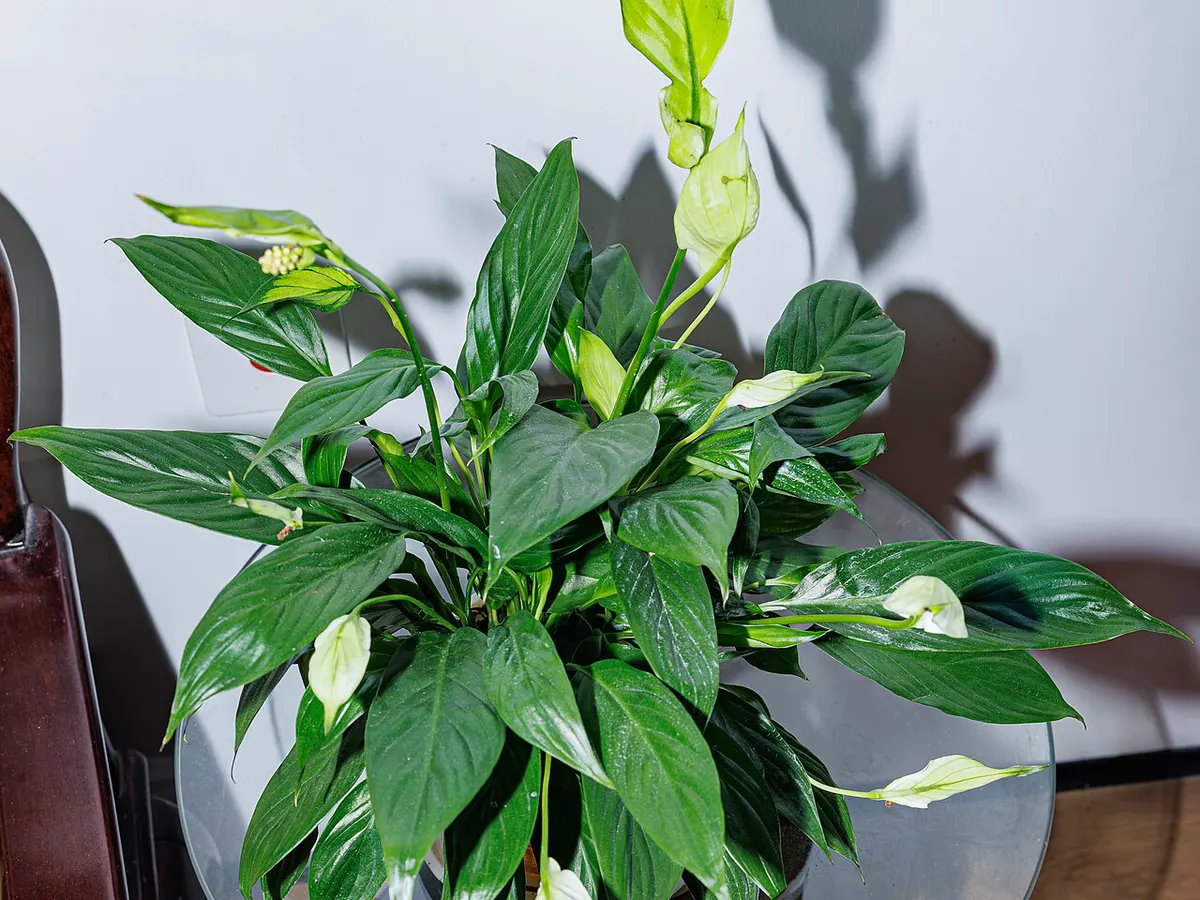
Photo: Dinkun Chen, CC BY-SA 4.0, via Wikimedia Commons
- Light
- Medium, a few steps from a window · copes with less
- Water
- Water when the top 2–3 cm of soil are dry.
- Humidity
- Average
- Temperature
- 16–30 °C
- Care level
- Easy-going, a good first plant
- Pets
- Not safe for cats and dogs
How often to water Peace lily
About every 6 days in summer and every 9 days in winter. Water when the top 2–3 cm of soil are dry.
Roughly how often, in a medium pot (12–20 cm) in the light it likes. Smaller pots, brighter spots and warm balconies need water sooner; big pots and dim corners later.
- Spring every 7 days
- Summer every 6 days
- Autumn every 8 days
- Winter every 9 days
Worked out by LeafMinder’s schedule. In the app it then adapts to your home, from your “still damp” and “bone dry” answers.
Feeding and repotting
Feed about every 30 days from March to September, with a houseplant fertiliser at half strength. Not in the colder months. Check whether it needs a bigger pot every 24 months or so, ideally in spring.
Thirsty, or too wet?
- When it would like water
- The whole plant droops, leaves hanging limp, and the top few centimetres of soil are dry. It usually stands back up within hours of watering, though it's kinder to water just before it reaches that point.
- When it has had too much
- Lower leaves turn yellow, tips go brown and the soil stays soggy. Let the top 2–3 cm dry before watering again, never leave the pot standing in water, and check the roots if it droops while the soil is wet.
Soil and pot
Use a peat-free multipurpose compost mixed with perlite, about three parts compost to one part perlite, in a pot with drainage holes. It does well when a little snug, so repot only when roots fill the pot, grow through the holes or circle the surface, about every two years in spring. Choose a pot just a few centimetres wider, since a much bigger pot keeps the soil wet for too long.
Common problems
- Whole plant suddenly droops
- The soil has dried out; peace lilies show thirst quickly. Try first: Water thoroughly and let the extra drain away. It should perk up within hours.
- Brown leaf tips or edges
- Dry air, soil drying out too far between waterings, or salts building up from too much fertiliser. Try first: Water more evenly, keep it away from radiators, feed at a weak dilution and now and then flush the pot with plenty of water. Trim the brown tips with clean scissors.
- Yellow leaves
- Often overwatering or soggy soil. The occasional old leaf turning yellow is normal. Try first: Let the top 2–3 cm dry before watering, empty the saucer and remove yellow leaves at the base.
- No flowers
- Too little light, or a plant that is still young. Try first: Move it to bright, indirect light, out of direct sun, and feed it about once a month from spring to early autumn.
- Cottony spots, fine webbing or tiny flies
- Mealybugs, spider mites or fungus gnats, which breed in damp compost. Try first: Wipe the leaves with a damp cloth and check the undersides weekly. For fungus gnats, let the top of the soil dry out between waterings.
Not sure what you’re seeing? A photo health check suggests possible causes. How health checks work
Propagation
Divide a large, crowded plant in spring. Ease it out of the pot, separate the root ball into clumps that each have roots and several leaves, and pot each one in fresh, free-draining compost. Water well and keep them in indirect light while they settle. Wear gloves, as the sap can irritate skin.
Varieties and relatives
- 'Sensation': The largest common type, with big, ribbed leaves on a plant that can grow over 1.5 m tall.
- 'Domino': Dark green leaves streaked and speckled with cream. Brighter indirect light keeps the pattern clear.
- 'Little Angel': A compact dwarf, about 30–40 cm tall, that flowers freely.
- 'Mauna Loa': A larger, long-grown type with long leaves and big white flowers.
Questions people ask
How often should I water a peace lily?
In a medium pot indoors, about once a week in spring and summer (every 6–7 days) and about every 8–9 days in autumn and winter. Check that the top 2–3 cm of soil are dry first.
Is a peace lily toxic to cats and dogs?
Yes. It contains insoluble calcium oxalate crystals, which irritate the mouth and can cause drooling, vomiting and difficulty swallowing. It isn't a true lily, so it doesn't carry the kidney risk true lilies pose to cats, but keep it out of reach and call your vet if a pet chews it.
Why does my peace lily droop?
Most often it's thirsty, and it recovers within hours of watering. If it droops while the soil is still wet, the roots may be sitting in too much water: let it dry out and check the drainage.
Why won't my peace lily flower?
Too little light is the most common reason; it lives happily in shade but rarely flowers there. Plants under a year old often don't flower yet either. Give it bright, indirect light and feed it about once a month from March to September.
From the journal
Sources and licences
This care guide was written with AI and checked against the sources below.
General guidance. Every home is different, so the soil is always the best guide. About this advice
From LeafMinder’s plant care guides: leafminder.eu/plants/peace-lily