



Gardenia
Gardenia jasminoides · Rubiaceae · Flowering houseplant
Also called Cape jasmine
It wants steady warmth, bright light, humid air and soft, lime-free water when the surface feels dry. Buds drop after temperature swings, draughts or dry soil.
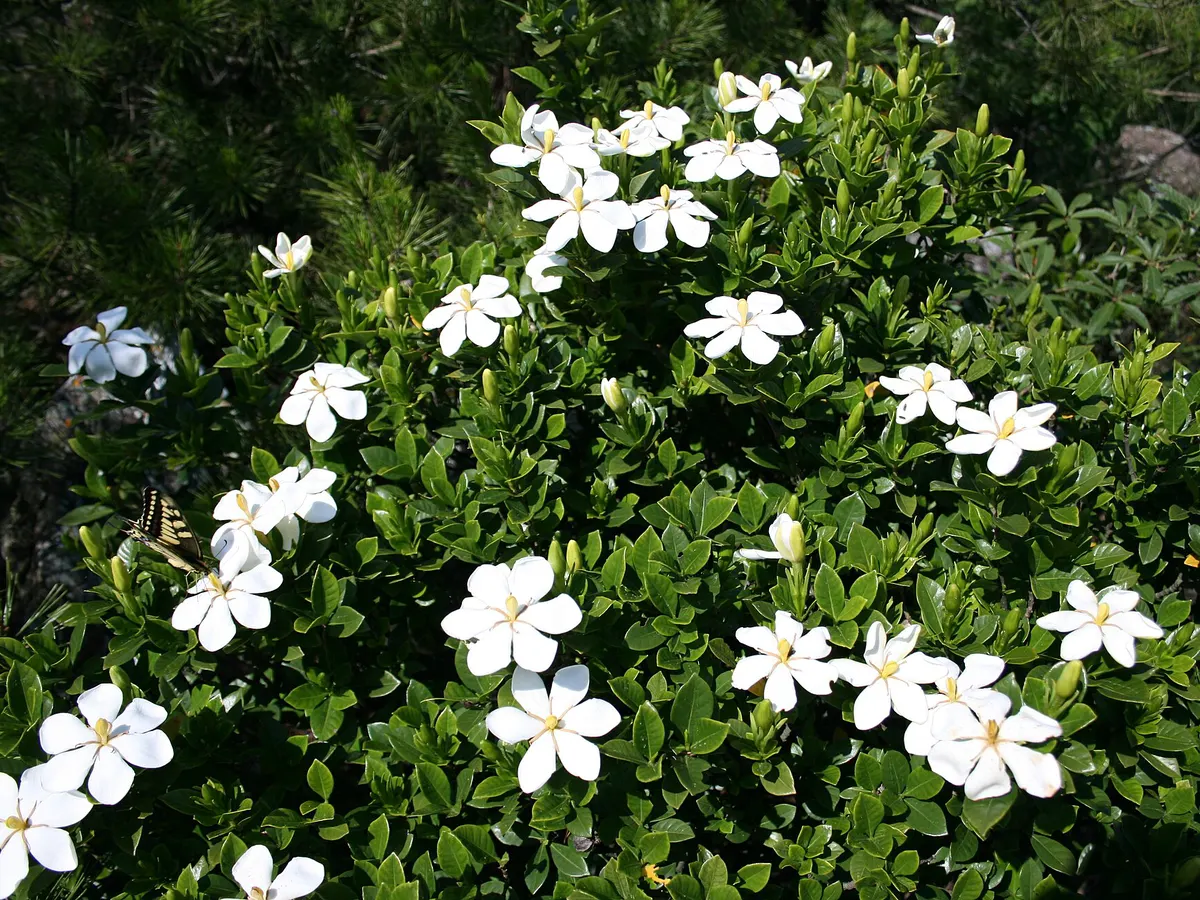
Photo: Alpsdake, CC BY-SA 3.0, via Wikimedia Commons
- Light
- Bright, indirect
- Water
- Water when the top 2–3 cm of soil are dry.
- Humidity
- Likes humid air
- Temperature
- 16–27 °C
- Care level
- Particular about its conditions
- Pets
- Not safe for cats and dogs
How often to water Gardenia
About every 4 days in summer and every 5 days in winter. Water when the top 2–3 cm of soil are dry.
Roughly how often, in a medium pot (12–20 cm) in the light it likes. Smaller pots, brighter spots and warm balconies need water sooner; big pots and dim corners later.
- Spring every 4 days
- Summer every 4 days
- Autumn every 5 days
- Winter every 5 days
Worked out by LeafMinder’s schedule. In the app it then adapts to your home, from your “still damp” and “bone dry” answers.
Feeding and repotting
Feed about every 21 days from March to September, with a houseplant fertiliser at half strength. Not in the colder months. Check whether it needs a bigger pot every 24 months or so, ideally in spring.
Thirsty, or too wet?
- When it would like water
- The leaves lose their gloss and hang a little, and the top few centimetres of mix feel dry. Left longer, the buds are often the first thing it lets go of, so water before it gets to that point.
- When it has had too much
- Older leaves turn yellow and fall, and the plant can wilt even though the mix is wet, a sign the roots are struggling. Let the top 2–3 cm dry before watering again, empty the saucer and check the pot drains freely.
Soil and pot
Gardenias need an acidic, lime-free mix: an ericaceous compost for acid-loving plants, with some bark or perlite for drainage. Use a pot with drainage holes, only a little larger than the last one. Repot in spring every two years or so, or when roots circle the bottom, poke out of the holes, or water runs straight through. In between, you can replace the top few centimetres with fresh ericaceous mix.
Common problems
- Flower buds falling off before they open
- Temperature swings, cold draughts, a move to a new spot, dry air, or soil that dried out or stayed soggy. Try first: Find it one bright spot it can stay in, away from radiators and draughty doors. Water evenly and raise the humidity with a tray of damp gravel under the pot.
- New leaves yellow with green veins
- The plant can't take up iron because the mix has become too alkaline, often from hard tap water. Try first: Water with rainwater or other soft water at room temperature, feed with a fertiliser for acid-loving plants, and use a chelated iron product if it carries on.
- Older leaves yellowing and dropping
- Usually too much water or a pot that drains poorly, which leads to root rot. A few old leaves turning yellow in spring is normal. Try first: Let the top of the mix dry between waterings and look at the roots. Trim any soft, dark ones and repot into fresh ericaceous mix if many are affected.
- Healthy leaves but no flowers
- Nights that stay too warm, about 18 °C or more, too little light, or very dry air. Try first: Give it bright light without hot midday sun and a slightly cooler spot at night, around 15–18 °C, while buds form. Raise the humidity.
- Fine webbing, sticky leaves or a black film
- Spider mites, whitefly, mealybugs, scale or aphids. The sticky honeydew from sap-feeding pests grows a black sooty mould. Try first: Check the undersides of the leaves often. Rinse or wipe pests off, keep the plant apart from others, and treat repeat outbreaks with an insecticidal soap labelled safe for gardenias.
Not sure what you’re seeing? A photo health check suggests possible causes. How health checks work
Propagation
Take 10 cm cuttings from soft new shoots in late winter or spring, or from semi-ripe shoots in summer. Strip the lower leaves and set them in a damp mix of ericaceous compost and perlite, covered to keep the air humid, somewhere warm and bright out of direct sun. Rooting takes several weeks. Young plants often flower more freely than old ones, so many growers root a few cuttings every year or two.
Varieties and relatives
- Gardenia jasminoides 'Radicans': A low, spreading dwarf form with small leaves and small flowers, easy to keep compact in a pot.
- Gardenia jasminoides 'Veitchii': A compact form that flowers over a long season, long grown as a pot plant under glass.
- Gardenia jasminoides 'Kleim's Hardy': Single, six-petalled flowers and better tolerance of cold, so it is more often grown outdoors in mild climates.
- Coffee plant (Coffea arabica): A cousin in the same family, with glossy leaves and the same taste for warmth, bright light and humid air, but less fussy about bud drop.
Questions people ask
How often should I water a gardenia?
About every 4 days in spring and summer and every 5 days in autumn and winter, in a medium pot indoors. Check that the top few centimetres feel dry first, and use soft, lime-free water at room temperature.
Is a gardenia toxic to cats and dogs?
Yes. The ASPCA lists gardenia as toxic to cats and dogs; eating it usually causes mild vomiting or diarrhoea, sometimes hives. Keep it out of reach, and call your vet if a pet chews it.
Why are my gardenia buds falling off?
Buds drop when conditions change: a move, a draught, a swing in temperature, dry air, or soil that dried out. Keep it in one bright spot at a steady temperature and water evenly while the buds form.
Why are my gardenia's leaves turning yellow?
If new leaves are yellow with green veins, the mix is likely too alkaline and the plant can't take up iron; switch to rainwater and a feed for acid-loving plants. If older leaves yellow while the mix stays wet, water less and check the roots.
Sources and licences
This care guide was written with AI and checked against the sources below.
- Care checked against: Royal Horticultural Society, Clemson Cooperative Extension, Home & Garden Information Center, Clemson Cooperative Extension, Home & Garden Information Center, NC State Extension Gardener Plant Toolbox, ASPCA Animal Poison Control.
- GBIF Backbone Taxonomy: other botanical names. Record. CC BY 4.0. GBIF Secretariat (2023). GBIF Backbone Taxonomy. Checklist dataset https://doi.org/10.15468/39omei accessed via GBIF.org on 2026-11-15.
Material from these sources keeps its own licence; LeafMinder’s copyright doesn’t extend to it, and the sources don’t endorse LeafMinder.
General guidance. Every home is different, so the soil is always the best guide. About this advice
From LeafMinder’s plant care guides: leafminder.eu/plants/gardenia