



African violet
Streptocarpus ionanthus · Gesneriaceae · Flowering houseplant
Also called Saintpaulia, Usambara violet
Water with room-temperature water from below or at the soil, keeping drops off the hairy leaves, which spot. Water when the surface feels dry.
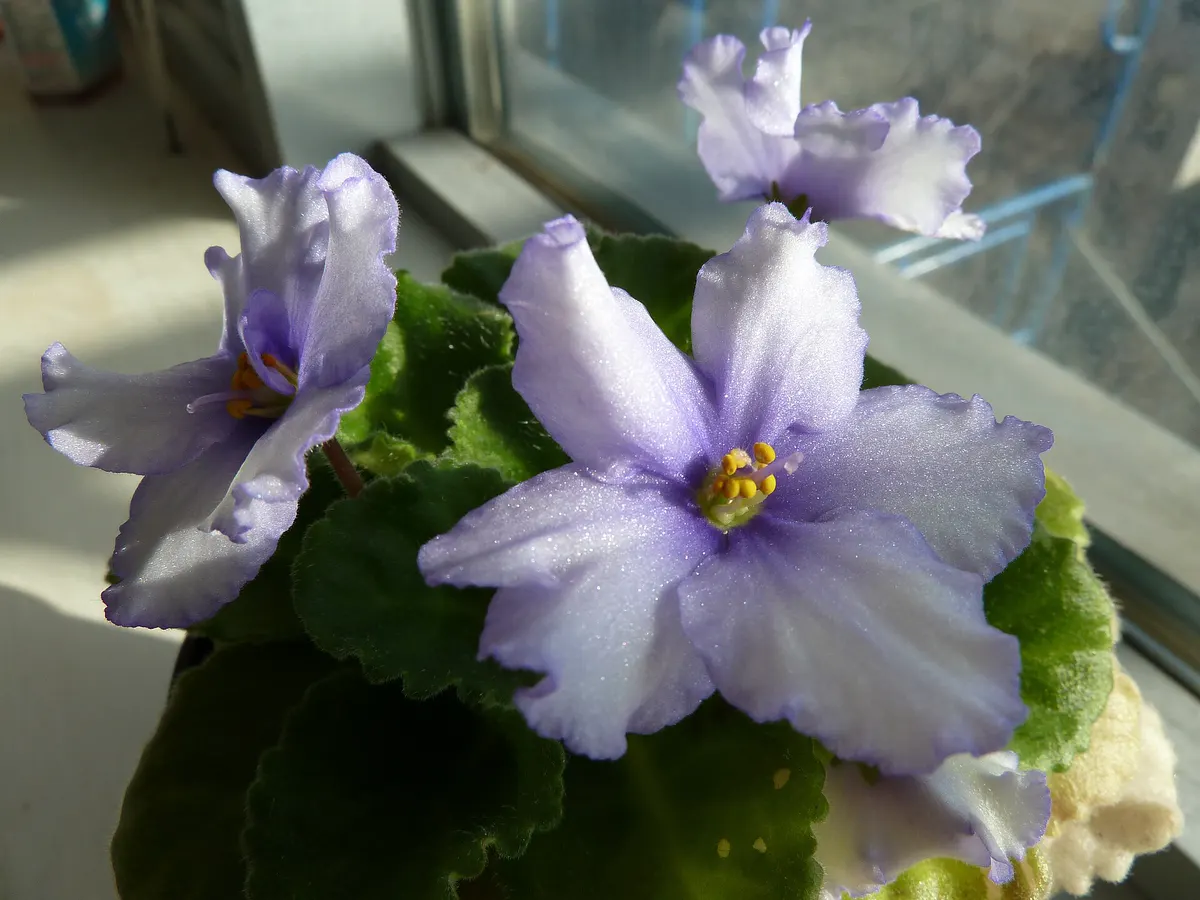
Photo: Clyde Charles Brown, CC BY-SA 4.0, via Wikimedia Commons
- Light
- Bright, indirect
- Water
- Water when the top 2–3 cm of soil are dry.
- Humidity
- Average
- Temperature
- 16–27 °C
- Care level
- Needs a little attention
- Pets
- Not known to be toxic to cats and dogs
How often to water African violet
About every 5 days in summer and every 7 days in winter. Water when the top 2–3 cm of soil are dry.
Roughly how often, in a medium pot (12–20 cm) in the light it likes. Smaller pots, brighter spots and warm balconies need water sooner; big pots and dim corners later.
- Spring every 5 days
- Summer every 5 days
- Autumn every 6 days
- Winter every 7 days
Worked out by LeafMinder’s schedule. In the app it then adapts to your home, from your “still damp” and “bone dry” answers.
Feeding and repotting
Feed about every 21 days from March to September, with a houseplant fertiliser at half strength. Not in the colder months. Check whether it needs a bigger pot every 12 months or so, ideally in spring.
Thirsty, or too wet?
- When it would like water
- The surface of the soil feels dry to the touch and the pot is lighter. Water before the leaves turn soft and limp, as dry spells hold back the flowers.
- When it has had too much
- The leaves go limp even though the soil is wet, and the centre may darken and turn mushy. Let the surface dry before watering again, never leave it standing in water, and keep water off the crown.
Soil and pot
Use a light, airy, quick-draining mix, such as one sold for African violets or an all-purpose mix lightened with perlite. The roots are shallow, so a small, shallow pot with a drainage hole, roughly a third as wide as the leaf spread, suits it best. Repot about once a year, or sooner if roots fill the pot or a bare neck appears below the lowest leaves.
Common problems
- Pale rings or spots on the leaves
- Cold water touching the leaves, which damages the leaf surface. Try first: Use room-temperature water and pour it onto the soil or into the saucer, not over the leaves. The marks stay, but new leaves come in clean.
- Mushy centre and collapsing leaves
- Crown rot, from soil kept too wet or water left sitting in the centre of the plant. Try first: Once the centre has rotted it rarely recovers, so root a firm, healthy leaf to start again. From then on let the surface dry between waterings and keep water off the crown.
- Healthy leaves but no flowers
- Too little light, a room that is too cool, or too much or too little fertiliser. Thin, dark leaves on long stalks point to low light. Try first: Move it to a bright window out of hot afternoon sun, or give it 12–16 hours a day under a grow light, and feed lightly every three weeks from spring to early autumn.
- Tight, twisted, stunted leaves in the centre
- Cyclamen mites, which are too small to see and feed on the newest growth. Try first: Move it away from other violets straight away. These mites are very hard to clear, so the kindest choice for your other plants is usually to discard it.
- White cottony tufts in the leaf joints
- Mealybugs, which spread easily from one violet to the next. Try first: Dab them off with a cotton swab dipped in alcohol, check the soil surface too, and keep the plant apart until no new ones appear.
Not sure what you’re seeing? A photo health check suggests possible causes. How health checks work
Propagation
African violets grow well from a single leaf, ideally in spring or summer. Take a firm, healthy leaf from the middle row, trim its stalk to 2–4 cm and push it into moist perlite, a vermiculite and sand mix or ordinary violet mix, then cover it loosely to keep the air humid. Roots form in three to four weeks and small plantlets follow a few weeks later; expect flowers after six to nine months. Leaves of striped-flowered pinwheel types usually don't come true.
Varieties and relatives
- Miniature African violets: Stay under about 15 cm across and live in smaller pots, which dry out faster, so check them more often.
- Trailing African violets: Make several crowns on spreading stems, so they fill a shallow pot or spill over its edge instead of forming one rosette.
- Cape primrose: A close relative in the same genus, with long, strap-shaped leaves and trumpet flowers held on tall stalks above them.
- Flame violet: A cousin in the same family, grown as much for its patterned, quilted leaves as for its small red or orange flowers; it likes warmth and humid air.
Questions people ask
How often should I water an African violet?
About every 5 days in spring and summer and every 6–7 days in autumn and winter, in a medium pot indoors. Water when the surface feels dry, using room-temperature water.
Is African violet toxic to cats and dogs?
No. The ASPCA lists African violets as non-toxic to cats and dogs. A pet that eats a lot of any plant can still have a mildly upset stomach.
Why is my African violet not flowering?
Most often it needs more light; thin, dark leaves on long stalks are the clue. A bright window without hot afternoon sun, a warm room and light, regular feeding from spring to early autumn usually bring the flowers back.
Should I water an African violet from below?
You can. Stand the pot in about 2–3 cm of room-temperature water until the surface is moist, then let it drain and empty the saucer. Water from the top now and then as well, to rinse out fertiliser salts.
Sources and licences
This care guide was written with AI and checked against the sources below.
General guidance. Every home is different, so the soil is always the best guide. About this advice
From LeafMinder’s plant care guides: leafminder.eu/plants/african-violet