



Majesty palm
Ravenea rivularis · Arecaceae · Palm
Also called Ravenea, Majestic palm
It comes from riverbanks and likes evenly moist soil and lots of light, which makes it harder to keep indoors than it looks. Yellowing fronds usually mean too little light or dry soil.
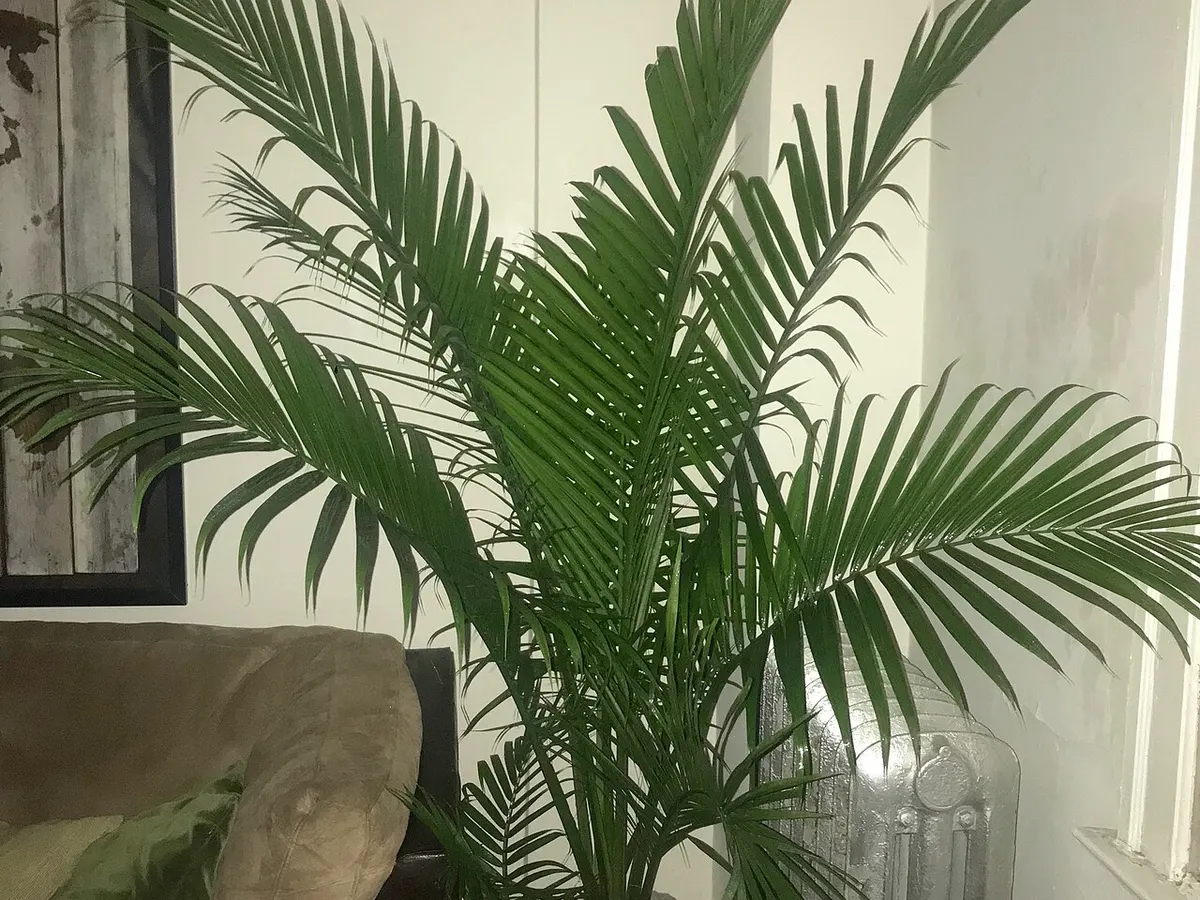
Photo: Glpinagelpinagel, CC BY-SA 4.0, via Wikimedia Commons
- Light
- Bright, indirect
- Water
- Keep the soil lightly moist, never soggy.
- Humidity
- Likes humid air
- Temperature
- 15–30 °C
- Care level
- Particular about its conditions
- Pets
- Not known to be toxic to cats and dogs
How often to water Majesty palm
About every 4 days in summer and every 5 days in winter. Keep the soil lightly moist, never soggy.
Roughly how often, in a medium pot (12–20 cm) in the light it likes. Smaller pots, brighter spots and warm balconies need water sooner; big pots and dim corners later.
- Spring every 4 days
- Summer every 4 days
- Autumn every 5 days
- Winter every 5 days
Worked out by LeafMinder’s schedule. In the app it then adapts to your home, from your “still damp” and “bone dry” answers.
Feeding and repotting
Feed about every 30 days from March to September, with a houseplant fertiliser at half strength. Not in the colder months. Check whether it needs a bigger pot every 24 months or so, ideally in spring.
Thirsty, or too wet?
- When it would like water
- The top of the soil feels dry and the pot is lighter than usual. If it stays dry for long, the frond tips turn brown and crisp and the older fronds start to yellow.
- When it has had too much
- Fronds yellow from the base up, the soil smells sour and the stems may darken where they meet the soil. Let the top centimetre or two dry, empty the saucer and make sure the pot drains freely.
Soil and pot
Give it a rich houseplant mix that holds moisture but still drains, with some bark or perlite mixed in. Always use a pot with drainage holes, as it likes moist soil but not standing water. Repot in spring, about every 2 years, when roots fill the pot or grow out of the bottom, going up only one size. Keep the root ball whole, as palms dislike having their roots disturbed.
Common problems
- Yellowing fronds
- Usually too little light, soil that dried out, or hungry roots. Wet, airless soil can do it too. Try first: Move it closer to a bright window, out of hot direct sun, keep the soil evenly moist and feed it monthly from spring to early autumn.
- Dull, speckled fronds with fine webbing
- Spider mites, which thrive in warm, dry indoor air. Try first: Rinse the fronds in the shower, top and underside, and raise the humidity. Repeat weekly and use insecticidal soap if they keep coming back.
- Brown, crispy frond tips
- Dry air or soil that was allowed to dry out. Try first: Water before the soil dries, run a humidifier nearby in winter and keep it away from radiators. Trim only the brown tip, leaving a thin brown edge.
- White fluffy spots or brown bumps
- Mealybugs or scale insects hiding along the stems and frond bases. Try first: Wipe them off with a damp cloth and check again every week. Treat with insecticidal soap if there are many.
- Pale, scorched patches on fronds
- Strong direct sun through glass. Try first: Move it back from the window or filter the light with a sheer curtain.
Not sure what you’re seeing? A photo health check suggests possible causes. How health checks work
Propagation
A majesty palm can't be grown from cuttings, as each stem has a single growing point. Many nursery pots hold several plants, though, and in spring you can gently tease the root ball apart and pot each part on its own, keeping them warm and moist while they settle. Growers raise new plants from seed, which is slow.
Varieties and relatives
- Kentia palm: Copes much better with lower light and drier air indoors, and grows more slowly.
- Parlour palm: A small palm that stays compact and manages in less light.
- Areca palm: Also from Madagascar, with clustered, feathery stems. It wants similar bright light but less constant moisture.
Questions people ask
How often should I water a majesty palm?
About every 4 days in spring and summer and every 5 days in autumn and winter, in a medium pot indoors. Water when the surface just starts to dry, so the soil stays lightly moist but never soggy.
Is a majesty palm toxic to cats and dogs?
It is listed as non-toxic to cats and dogs. Chewing any plant can still upset a pet's stomach, so it is kindest to keep the fronds out of reach.
Why are my majesty palm's fronds turning yellow?
Most often it is too little light or soil that has dried out between waterings. Move it to a brighter spot, keep the soil evenly moist and feed it monthly in the growing season; cut off fronds only once they are fully yellow or brown.
Why is a majesty palm hard to keep indoors?
It grows along rivers in Madagascar, so it wants lots of light, constant moisture and humid air, which most rooms lack. Give it the brightest spot you have, a humidifier in winter and nights above 15 °C; in summer it can spend time outside in bright shade.
Sources and licences
This care guide was written with AI and checked against the sources below.
- Care checked against: NC State Extension Gardener Plant Toolbox, ASPCA Animal Poison Control.
General guidance. Every home is different, so the soil is always the best guide. About this advice
From LeafMinder’s plant care guides: leafminder.eu/plants/majesty-palm