



Kentia palm
Howea forsteriana · Arecaceae · Palm
Also called Thatch palm, Paradise palm, Howea
It grows slowly and copes well with lower light. Let the top few centimetres dry between waterings and repot only when it is really needed.
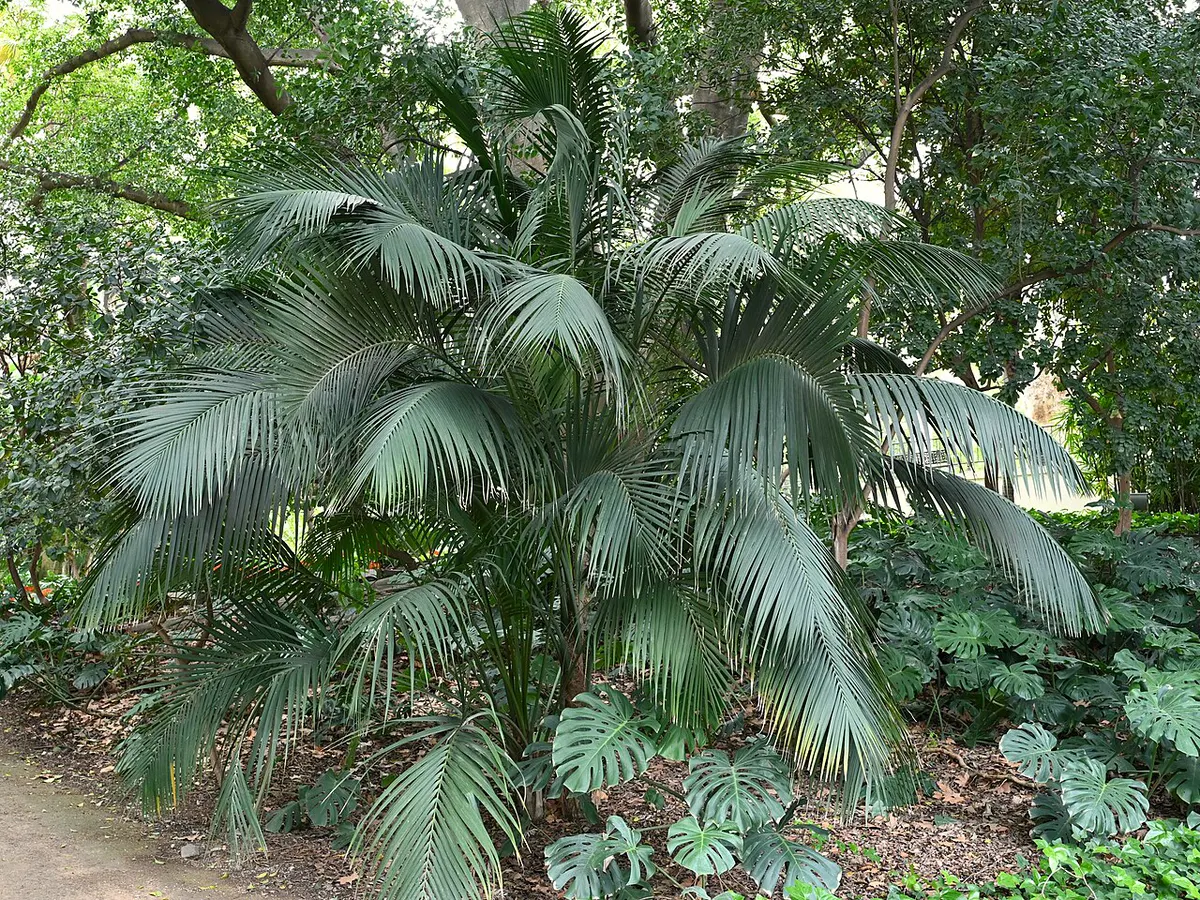
Photo: Krzysztof Ziarnek, Kenraiz, CC BY-SA 4.0, via Wikimedia Commons
- Light
- Medium, a few steps from a window · copes with less
- Water
- Water when the top 2–3 cm of soil are dry.
- Humidity
- Average
- Temperature
- 12–30 °C
- Care level
- Easy-going, a good first plant
- Pets
- Not known to be toxic to cats and dogs
How often to water Kentia palm
About every 10 days in summer and every 17 days in winter. Water when the top 2–3 cm of soil are dry.
Roughly how often, in a medium pot (12–20 cm) in the light it likes. Smaller pots, brighter spots and warm balconies need water sooner; big pots and dim corners later.
- Spring every 11 days
- Summer every 10 days
- Autumn every 14 days
- Winter every 17 days
Worked out by LeafMinder’s schedule. In the app it then adapts to your home, from your “still damp” and “bone dry” answers.
Feeding and repotting
Feed about every 30 days from March to September, with a houseplant fertiliser at half strength. Not in the colder months. Check whether it needs a bigger pot every 36 months or so, ideally in spring.
Thirsty, or too wet?
- When it would like water
- The fronds look dull, the newest leaflets may fold or droop, and the top few centimetres of mix feel dry. Water thoroughly until it runs from the drainage hole, then empty the saucer.
- When it has had too much
- Lower fronds turn yellow, brown spots appear, and the mix stays wet and may smell sour. Let the top few centimetres dry before watering again, and never leave the pot standing in water.
Soil and pot
Use a free-draining, humus-rich potting mix, such as houseplant compost with added bark and perlite or grit. The pot needs a drainage hole. Kentia dislikes having its roots disturbed, so repot only about every three years, in spring, when thick roots push up at the surface or out of the base; in the years between, replace the top few centimetres of mix instead.
Common problems
- Brown leaf tips
- Dry air from heating, salts from fertiliser or hard water, or tips knocked as people brush past. Try first: Trim the brown tips with clean scissors, leaving a thin brown edge, and use rain or filtered water if yours is hard. It's cosmetic and doesn't harm the palm.
- Yellowish, speckled leaves with fine webbing
- Spider mites, which thrive in warm, dry rooms. Try first: Rinse the fronds in the shower or wipe both sides with a damp cloth, and raise the humidity a little. Repeat weekly until they're gone.
- Small brown bumps or white fluff on the stems
- Scale insects or mealybugs. Try first: Remove them with a cotton bud dipped in rubbing alcohol and wipe the leaves. Check under the leaflets and where the fronds meet the stem.
- Lower fronds turn yellow and die back
- Normal ageing if it's one at a time. Several at once point to overwatering or a lack of nutrients, especially potassium. Try first: Cut off fully dead fronds near the base. Check your watering, and feed monthly from March to September with a palm or balanced fertiliser.
- Brown or black spots on the leaves
- Overwatering or a sudden cold draught, sometimes a fungal leaf spot. Try first: Let the top of the mix dry between waterings, keep it away from cold doors and windows in winter, and cut off badly marked leaves.
Not sure what you’re seeing? A photo health check suggests possible causes. How health checks work
Propagation
Kentia can't be grown from cuttings and doesn't make offsets. Growers raise it from seed, which needs steady warmth and can take months to germinate, and it then takes years to form a sizeable palm. Plants sold as a clump are several seedlings in one pot; you can separate them in spring to give each more room, but the roots resent disturbance, so do it gently and only with a large, healthy clump.
Varieties and relatives
- Howea belmoreana: The only other Howea. Its fronds arch more strongly and curve downwards, and it grows more slowly.
- Parlour palm (Chamaedorea elegans): A much smaller palm for tables and shelves that also copes with lower light.
- Areca palm (Dypsis lutescens): A feathery, clump-forming palm that wants more light than kentia.
- Lady palm (Rhapis excelsa): A fan palm with clusters of bamboo-like stems, also tolerant of shade.
Questions people ask
How often should I water a kentia palm?
About every 10–11 days in spring and summer, about every two weeks in autumn and about every 17 days in winter, in a medium pot indoors. Check that the top few centimetres of mix are dry first.
Is kentia palm toxic to cats and dogs?
No. The ASPCA lists Howea forsteriana as non-toxic to cats and dogs, which makes it one of the safer large palms for a home with pets. Chewed fronds can still cause a mild upset stomach.
Can a kentia palm grow in low light?
Yes, it copes with lower light better than most palms, though it grows more slowly there. Keep it out of strong direct sun, which can scorch the fronds, and turn it now and then for even growth.
Should I cut off brown fronds on my kentia palm?
Cut a frond off once it is completely brown, close to the stem. Leave partly green fronds in place, as the palm still draws energy from them, and never cut the new spear in the centre.
Sources and licences
This care guide was written with AI and checked against the sources below.
- Care checked against: NC State Extension, Gardener Plant Toolbox, New York Botanical Garden, Mertz Library plant guide, Royal Horticultural Society, ASPCA Animal Poison Control.
- GBIF Backbone Taxonomy: other botanical names. Record. CC BY 4.0. GBIF Secretariat (2023). GBIF Backbone Taxonomy. Checklist dataset https://doi.org/10.15468/39omei accessed via GBIF.org on 2026-11-15.
Material from these sources keeps its own licence; LeafMinder’s copyright doesn’t extend to it, and the sources don’t endorse LeafMinder.
General guidance. Every home is different, so the soil is always the best guide. About this advice
From LeafMinder’s plant care guides: leafminder.eu/plants/kentia-palm