



Areca palm
Chrysalidocarpus lutescens · Arecaceae · Palm
Also called Butterfly palm, Golden cane palm, Dypsis
Water when the top few centimetres are dry, preferably with rainwater or filtered water. Brown tips are common in dry rooms; trim them with clean scissors.
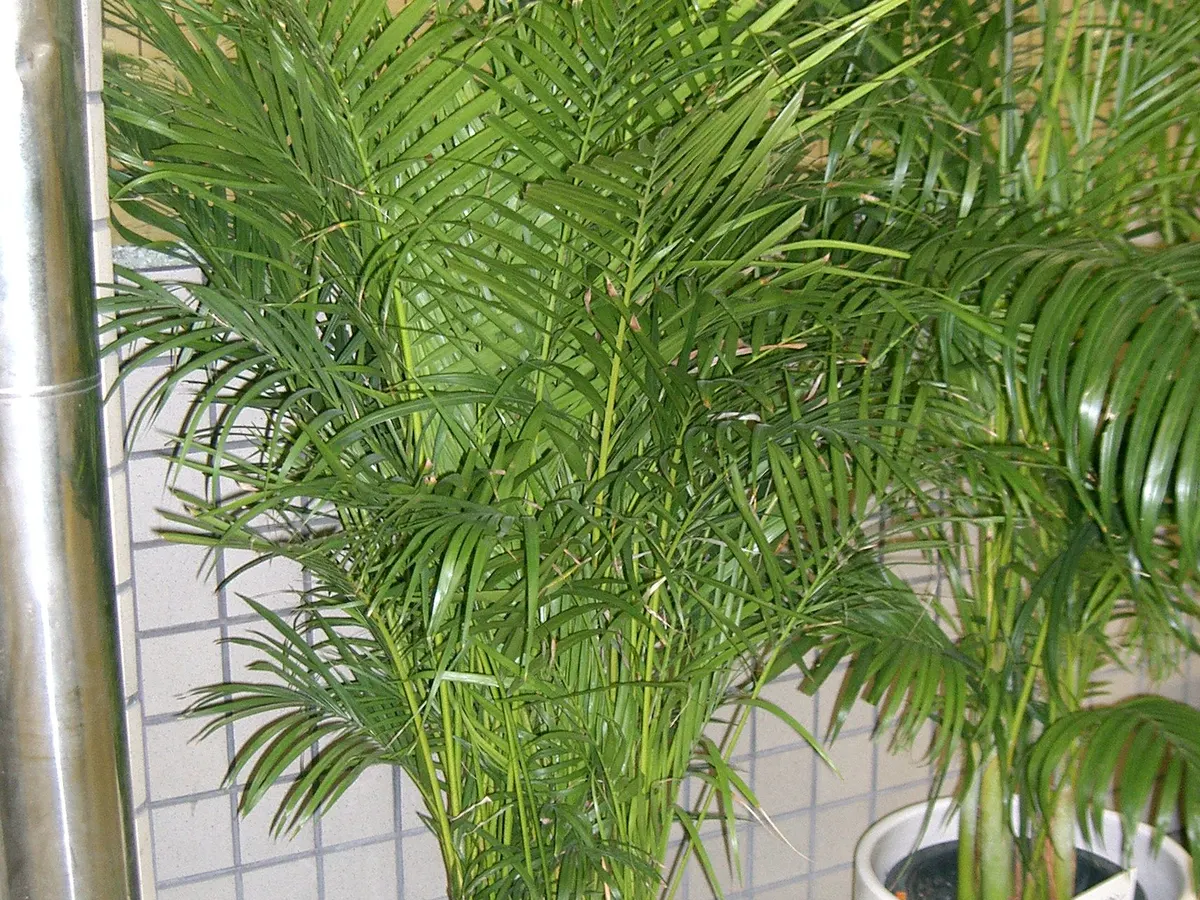
Photo: KENPEI, CC BY-SA 3.0, via Wikimedia Commons
- Light
- Bright, indirect
- Water
- Water when the top 2–3 cm of soil are dry.
- Humidity
- Average
- Temperature
- 16–30 °C
- Care level
- Needs a little attention
- Pets
- Not known to be toxic to cats and dogs
How often to water Areca palm
About every 5 days in summer and every 9 days in winter. Water when the top 2–3 cm of soil are dry.
Roughly how often, in a medium pot (12–20 cm) in the light it likes. Smaller pots, brighter spots and warm balconies need water sooner; big pots and dim corners later.
- Spring every 6 days
- Summer every 5 days
- Autumn every 8 days
- Winter every 9 days
Worked out by LeafMinder’s schedule. In the app it then adapts to your home, from your “still damp” and “bone dry” answers.
Feeding and repotting
Feed about every 30 days from March to September, with a houseplant fertiliser at half strength. Not in the colder months. Check whether it needs a bigger pot every 36 months or so, ideally in spring.
Thirsty, or too wet?
- When it would like water
- The top few centimetres of soil are dry, the pot feels light and the fronds droop or fold slightly. If it dries out often, the leaf tips brown faster.
- When it has had too much
- Lower fronds yellow, stems may darken at the base and the soil smells stale. Let the top of the soil dry, empty the saucer, and make sure the drainage holes aren't blocked.
Soil and pot
Use a well-draining houseplant mix, ideally with some bark or coarse sand mixed in. Plant it in a pot with drainage holes, only slightly wider than the roots. It grows slowly in a pot and likes to be snug, so repot in spring every three years or so, when roots fill the pot or push the plant upwards. In the years between, replace the top few centimetres of soil with fresh mix.
Common problems
- Brown leaf tips
- Dry indoor air, soil drying out completely, or salts and minerals in tap water. Try first: Water with rainwater or filtered water, keep it away from heaters, and flush the pot through with plenty of water now and then. Trim the brown ends with clean scissors, leaving a thin brown edge.
- Yellowing fronds
- Old lower fronds yellow naturally. Yellowing across the plant can mean it's short of feed, sitting in hot direct sun, or its roots are wet. Try first: Feed monthly from spring to early autumn, give it bright light without hot midday sun, and check the soil isn't staying soggy.
- Dull, speckled leaflets with fine webbing
- Spider mites, which arecas are prone to in warm, dry rooms. Try first: Rinse the fronds in the shower, wipe the undersides, and repeat weekly for a few weeks. Keep it away from radiators and other plants until it's clear.
- Sticky fronds, brown bumps or white fluff
- Scale insects or mealybugs, the most common pests on this palm. Try first: Wipe them off with a cloth or cotton bud dipped in soapy water or rubbing alcohol, checking where leaflets meet the stem, and look again weekly.
- Thin, pale new fronds and a sparse look
- Too little light. It needs a bright spot to stay full. Try first: Move it close to a bright window, out of strong midday sun, and turn the pot now and then so it grows evenly.
Not sure what you’re seeing? A photo health check suggests possible causes. How health checks work
Propagation
Nurseries grow arecas from seed, and most pots hold several seedlings together. At home, division is the practical way: in spring, take the plant out of its pot, gently split the root ball into clumps that each have several stems and plenty of roots, and pot them up. Divisions often sulk for a few weeks, so keep them warm, in bright indirect light, and water carefully while they settle.
Varieties and relatives
- Triangle palm (Chrysalidocarpus decaryi): A close relative whose leaves grow in three neat rows, giving the crown a triangular look. Grows larger.
- Kentia palm (Howea forsteriana): Not a relative, but a common alternative: darker green, slower growing and much happier in lower light.
- Bamboo palm (Chamaedorea seifrizii): Shares the name bamboo palm with the areca but is a different plant: smaller, with thin canes, and it copes with less light.
Questions people ask
How often should I water an areca palm?
About every 5–6 days in spring and summer and every 8–9 days in autumn and winter, in a medium pot indoors. Check that the top few centimetres have dried first.
Is an areca palm toxic to cats and dogs?
No, it is listed as non-toxic to cats and dogs. It's still best to stop pets chewing the fronds, which can upset a stomach.
Why does my areca palm have brown tips?
It's very common indoors. Dry air, soil that dries right out, and minerals in tap water all play a part. Rainwater or filtered water, steady watering and a spot away from heaters help new fronds stay greener.
Can an areca palm live in low light?
Not for long. It needs bright, indirect light close to a window; in a dim spot it thins out and yellows. For a darker room, a kentia or parlour palm is a better choice.
Sources and licences
This care guide was written with AI and checked against the sources below.
- Care checked against: NC State Extension Gardener Plant Toolbox, RHS, UF/IFAS Extension Charlotte County, ASPCA Animal Poison Control.
- GBIF Backbone Taxonomy: other botanical names. Record. CC BY 4.0. GBIF Secretariat (2023). GBIF Backbone Taxonomy. Checklist dataset https://doi.org/10.15468/39omei accessed via GBIF.org on 2026-11-15.
Material from these sources keeps its own licence; LeafMinder’s copyright doesn’t extend to it, and the sources don’t endorse LeafMinder.
General guidance. Every home is different, so the soil is always the best guide. About this advice
From LeafMinder’s plant care guides: leafminder.eu/plants/areca-palm