



Parlour palm
Chamaedorea elegans · Arecaceae · Palm
Also called Parlor palm, Neanthe bella palm, Chamaedorea
Water when the top few centimetres are dry and keep it out of direct sun. It is a good palm for a north-facing room.
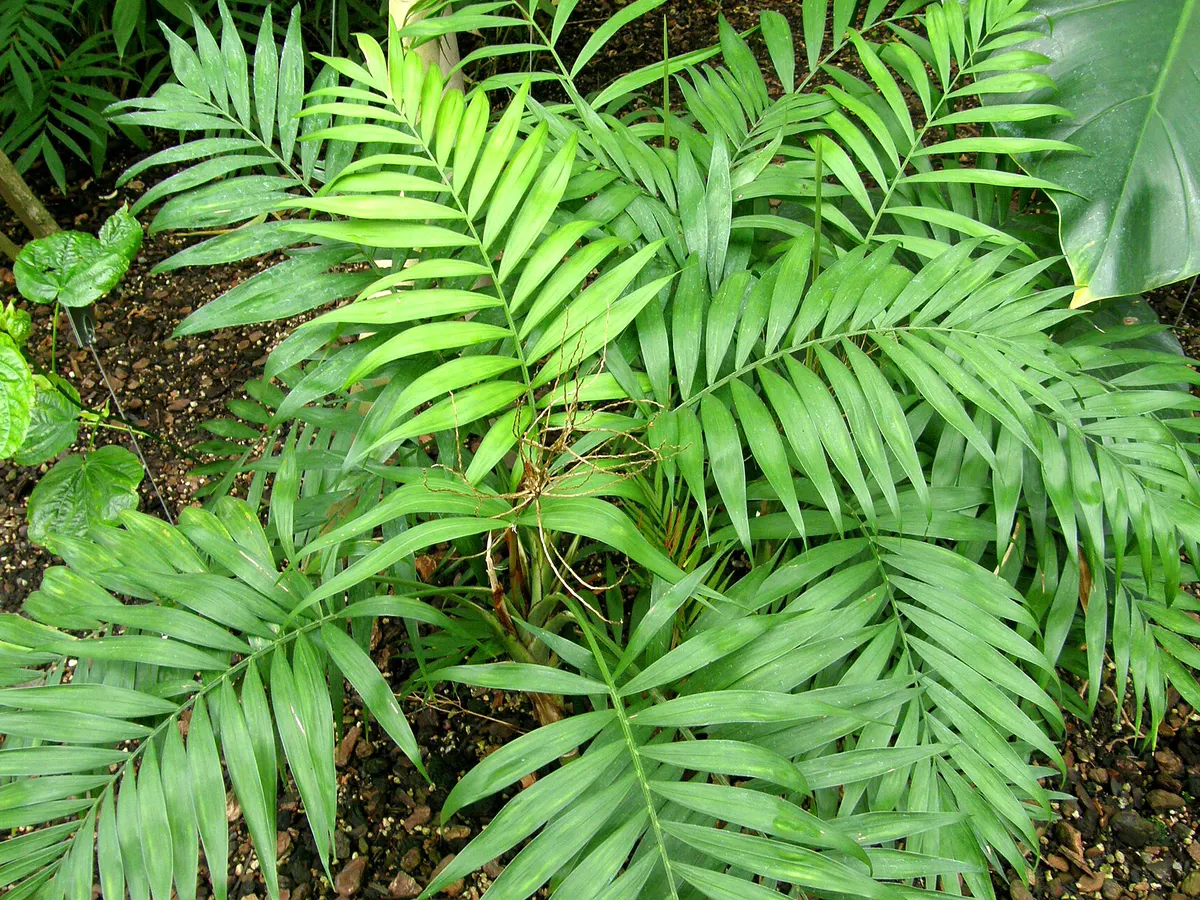
Photo: Bachelot Pierre J-P, CC BY-SA 3.0, via Wikimedia Commons
- Light
- Medium, a few steps from a window · copes with less
- Water
- Water when the top 2–3 cm of soil are dry.
- Humidity
- Average
- Temperature
- 12–29 °C
- Care level
- Easy-going, a good first plant
- Pets
- Not known to be toxic to cats and dogs
How often to water Parlour palm
About every 7 days in summer and every 12 days in winter. Water when the top 2–3 cm of soil are dry.
Roughly how often, in a medium pot (12–20 cm) in the light it likes. Smaller pots, brighter spots and warm balconies need water sooner; big pots and dim corners later.
- Spring every 8 days
- Summer every 7 days
- Autumn every 10 days
- Winter every 12 days
Worked out by LeafMinder’s schedule. In the app it then adapts to your home, from your “still damp” and “bone dry” answers.
Feeding and repotting
Feed about every 30 days from March to September, with a houseplant fertiliser at half strength. Not in the colder months. Check whether it needs a bigger pot every 24 months or so, ideally in spring.
Thirsty, or too wet?
- When it would like water
- The top few centimetres of soil are dry and the pot feels light. The fronds lose their sheen, droop slightly and may start to brown at the tips.
- When it has had too much
- Fronds yellow and then brown, starting low in the clump, and the soil stays dark and damp for days. Let it dry out, tip the water out of the saucer, and water less often from now on.
Soil and pot
A light, well-draining houseplant mix with some bark or grit added suits it, and it prefers slightly acidic conditions. A pot with drainage holes is essential. It grows slowly and likes to be a little snug, since a pot that's too big stays wet for too long. Repot in spring, about every two years, when roots crowd the pot or push out of the bottom, going up only 2–3 cm in width.
Common problems
- Brown leaf tips
- Dry air near heaters, soil that dries out completely, or hard tap water. Try first: Water as soon as the top few centimetres are dry, use rainwater or filtered water when you can, and keep it away from radiators. Trim the tips, leaving a thin brown edge.
- Yellowing fronds
- The odd old lower frond yellowing is normal. Several at once usually means wet roots or strong direct sun. Try first: Check that the pot drains, let the top of the soil dry before watering, and move it out of direct sun.
- Pale speckled fronds with fine webbing
- Spider mites, most common in winter when heating dries the air. Try first: Rinse the fronds in the shower, wipe the undersides, and repeat weekly for a few weeks. Keep it away from radiators.
- Sticky fronds, small bumps or white fluff
- Scale insects or mealybugs feeding on the sap. Try first: Wipe them off with a cloth or cotton bud dipped in soapy water or rubbing alcohol, and check again every week.
- Some stems in the pot dying off
- Shop plants are usually several seedlings grown together, and the weaker stems get crowded out over time. Try first: Cut dead stems off at the base. The rest of the plant carries on as normal.
Not sure what you’re seeing? A photo health check suggests possible causes. How health checks work
Propagation
Each stem grows from a single tip and can't be rooted as a cutting, so growers raise parlour palms from seed. At home, the practical way is to divide a crowded pot in spring: ease the root ball apart into clumps that each have several stems and their own roots, pot them up, and keep them warm and out of direct sun while they settle. Seed needs both a male and a female plant and steady warmth, so it rarely works indoors.
Varieties and relatives
- Bamboo palm (Chamaedorea seifrizii): Clumps of taller, cane-like stems. Grows bigger and handles a little more light.
- Cat palm (Chamaedorea cataractarum): Forms a low, wide clump with no visible trunk and likes its soil kept more evenly moist.
- Metallic palm (Chamaedorea metallica): Broad, fishtail-shaped leaves with a blue-green metallic sheen, on a compact plant.
Questions people ask
How often should I water a parlour palm?
About once a week in summer, every 8 days in spring, every 10 days in autumn and about every 12 days in winter, in a medium pot indoors. Check that the top few centimetres are dry first.
Is a parlour palm toxic to cats and dogs?
No, it is listed as non-toxic to cats and dogs. Chewing any plant can still upset a stomach, so it's best not to let pets graze on it.
Can a parlour palm grow in a dark room?
It copes with low light better than most palms and does well near a north-facing window. In a dim corner it grows slowly and needs less water, but it won't thrive in a room with no daylight at all.
Can I cut the top off a parlour palm?
No. Each stem grows from a single tip, and once that is cut the stem stops growing and won't branch. Remove only whole fronds that have browned, cutting them close to the stem.
Sources and licences
This care guide was written with AI and checked against the sources below.
- Care checked against: RHS, RHS, NC State Extension Gardener Plant Toolbox, ASPCA Animal Poison Control.
- GBIF Backbone Taxonomy: other botanical names. Record. CC BY 4.0. GBIF Secretariat (2023). GBIF Backbone Taxonomy. Checklist dataset https://doi.org/10.15468/39omei accessed via GBIF.org on 2026-11-15.
Material from these sources keeps its own licence; LeafMinder’s copyright doesn’t extend to it, and the sources don’t endorse LeafMinder.
General guidance. Every home is different, so the soil is always the best guide. About this advice
From LeafMinder’s plant care guides: leafminder.eu/plants/parlour-palm