



ZZ plant
Zamioculcas zamiifolia · Araceae · Leafy green plant
Also called Zanzibar gem, ZZ, Zamioculcas
Its rhizomes store water, so let the soil dry right through before watering. Yellowing stems usually mean it has had too much water, not too little.
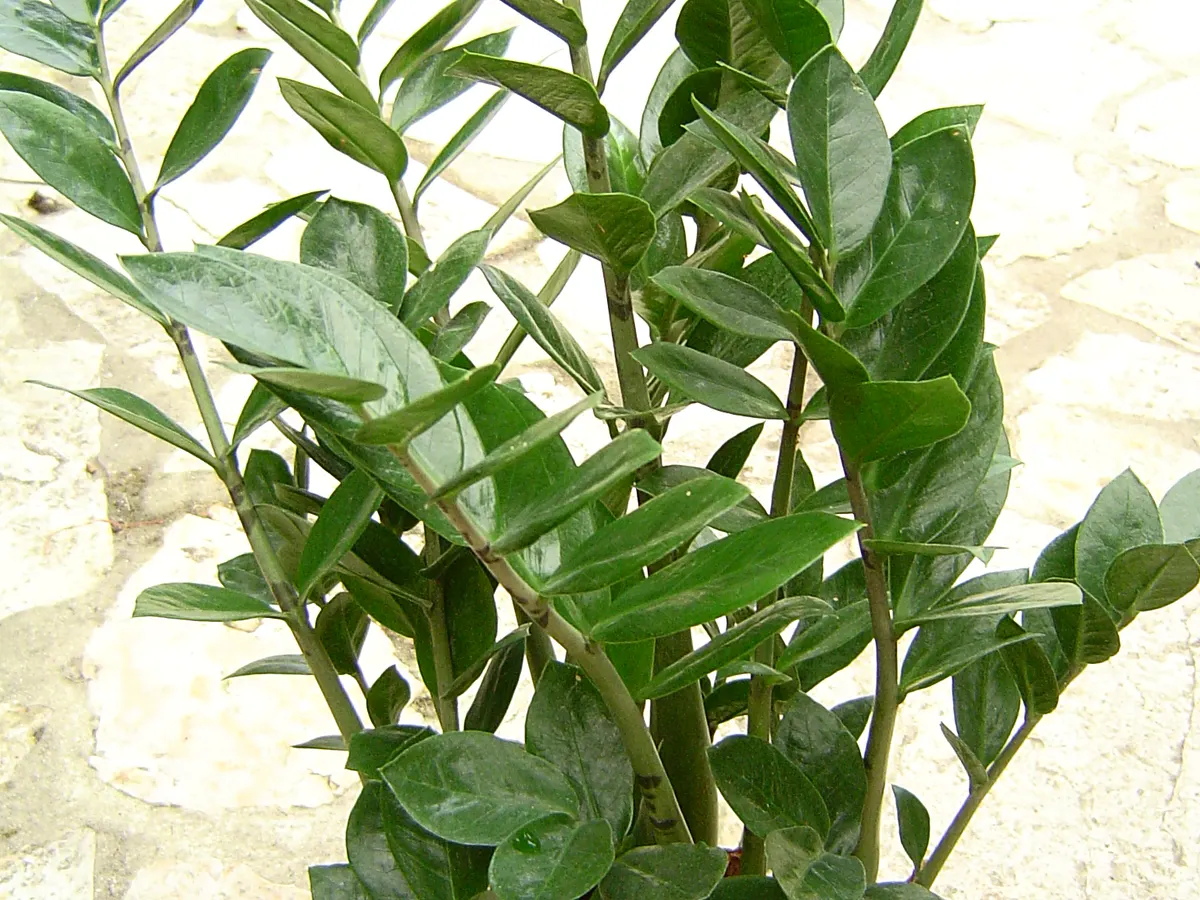
Photo: WeFt, CC BY-SA 3.0, via Wikimedia Commons
- Light
- Medium, a few steps from a window · copes with less
- Water
- Water only when the soil is dry right through.
- Humidity
- Normal room air is fine
- Temperature
- 15–30 °C
- Care level
- Easy-going, a good first plant
- Pets
- Not safe for cats and dogs
How often to water ZZ plant
About every 18 days in summer and every 40 days in winter. Water only when the soil is dry right through.
Roughly how often, in a medium pot (12–20 cm) in the light it likes. Smaller pots, brighter spots and warm balconies need water sooner; big pots and dim corners later.
- Spring every 20 days
- Summer every 18 days
- Autumn every 30 days
- Winter every 40 days
Worked out by LeafMinder’s schedule. In the app it then adapts to your home, from your “still damp” and “bone dry” answers.
Feeding and repotting
Feed about every 60 days from March to September, with a houseplant fertiliser at half strength. Not in the colder months. Check whether it needs a bigger pot every 36 months or so, ideally in spring.
Thirsty, or too wet?
- When it would like water
- The soil is dry right through and the pot feels light. It rarely shows thirst, because its thick stems and rhizomes store water; only after a very long dry spell do the stems start to wrinkle slightly.
- When it has had too much
- Stems and leaflets turn yellow and the base feels soft, while the soil stays damp. Stop watering, let it dry out completely and check the rhizomes for soft, dark rot.
Soil and pot
Give it a free-draining mix: potting compost with plenty of perlite or grit, or a cactus mix. Always use a pot with drainage holes, and don't leave water in the saucer. It grows slowly and likes to be snug, so repot about every three years in spring, when the thick rhizomes press against the sides, bend the pot or rise above the soil.
Common problems
- Yellowing stems and leaves
- Too much water, often in a pot that drains slowly. Try first: Let the soil dry right through before watering again and empty the saucer. Cut fully yellow stems off at the base.
- Soft, dark stems at the soil line
- Rot in the rhizomes and roots from soil that stays wet. Try first: Unpot it, cut away soft, dark parts back to firm tissue, let the cuts dry for a day and repot in fresh, gritty mix. Wait about a week before watering.
- Long, leaning stems
- Not enough light, so it stretches towards the window. Try first: Move it to brighter, indirect light and turn the pot now and then so it grows evenly.
- Brown, scorched patches on the leaves
- Strong direct sun, often through a window. Try first: Move it out of direct sun, a little back from the glass. Marked leaves won't recover, but new growth will be fine.
- Small brown bumps on the stems
- Scale insects, which feed on sap and can leave sticky spots. Try first: Wipe or gently scrape them off with a damp cloth, keep the plant apart from others and check weekly for a month.
Not sure what you’re seeing? A photo health check suggests possible causes. How health checks work
Propagation
Division is quickest: in spring, separate the rhizomes so each piece has its own stems and roots, and pot them up in dry, gritty mix. You can also root single leaflets or pieces of stem, pressed lightly into barely moist mix somewhere warm. They make roots and a small tuber first, and the first new shoot can take several months, so patience helps.
Varieties and relatives
- 'Dowon' (black ZZ): New shoots come up lime green and darken to a deep purple-black with age. The same easy, dry-loving care.
- 'Chameleon': Leaves open golden yellow and turn dark green as they mature.
- 'Lucky': Wider leaflets with rounded tips, on otherwise the same tough plant.
Questions people ask
How often should I water a ZZ plant?
In a medium pot indoors, about every 18–20 days in spring and summer, about once a month in autumn and roughly every 40 days in winter. Wait until the soil has dried right through; if in doubt, wait a few more days.
Is a ZZ plant toxic to cats and dogs?
Yes. It contains calcium oxalate crystals, which can irritate the mouth and cause drooling, vomiting or diarrhoea if a pet chews it. Keep it out of reach, and call your vet if your pet has eaten some.
Why is my ZZ plant turning yellow?
Yellowing stems usually mean too much water, not too little. Let the soil dry completely, check the rhizomes for soft spots and water less often. An old stem yellowing on its own now and then is normal.
Can a ZZ plant grow in low light?
Yes, it copes with very low light, even in rooms lit mostly by lamps, but it grows slowly there and leans towards the light. Bright, indirect light suits it best; keep it out of strong direct sun, which can scorch the leaves.
From the journal
Sources and licences
This care guide was written with AI and checked against the sources below.
- Care checked against: NC State Extension Gardener Plant Toolbox, Iowa State University Extension and Outreach, Iowa State University Extension and Outreach.
- GBIF Backbone Taxonomy: other botanical names. Record. CC BY 4.0. GBIF Secretariat (2023). GBIF Backbone Taxonomy. Checklist dataset https://doi.org/10.15468/39omei accessed via GBIF.org on 2026-11-15.
Material from these sources keeps its own licence; LeafMinder’s copyright doesn’t extend to it, and the sources don’t endorse LeafMinder.
General guidance. Every home is different, so the soil is always the best guide. About this advice
From LeafMinder’s plant care guides: leafminder.eu/plants/zz-plant