



Calathea orbifolia
Goeppertia orbifolia · Marantaceae · Leafy green plant
Also called Orbifolia, Round-leaf calathea
It wants humid air, steady warmth and soft water when the surface feels dry. Crispy edges point to dry air or hard water rather than a need for more water.
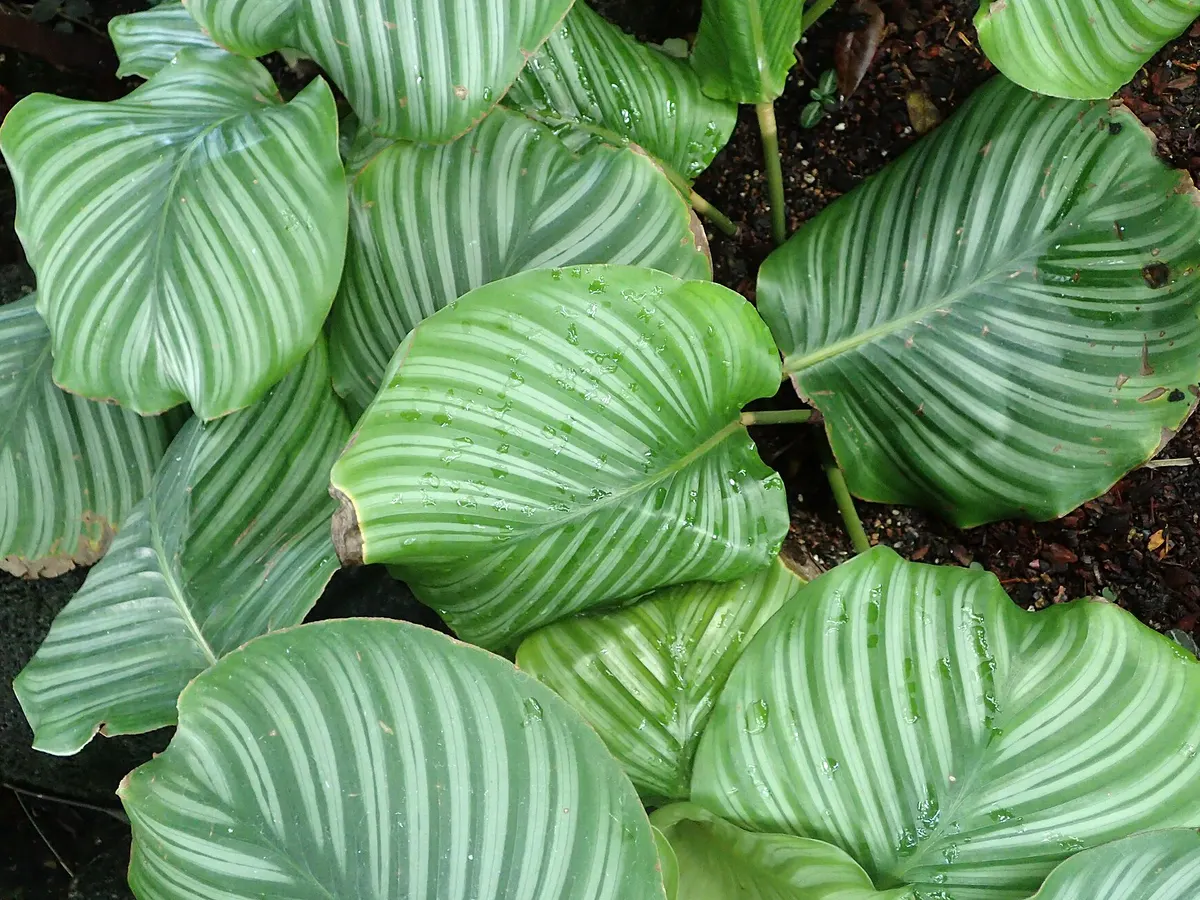
Photo: Krzysztof Ziarnek, Kenraiz, CC BY-SA 4.0, via Wikimedia Commons
- Light
- Medium, a few steps from a window · copes with less
- Water
- Water when the top 2–3 cm of soil are dry.
- Humidity
- Likes humid air
- Temperature
- 18–27 °C
- Care level
- Particular about its conditions
- Pets
- Not known to be toxic to cats and dogs
How often to water Calathea orbifolia
About every 5 days in summer and every 7 days in winter. Water when the top 2–3 cm of soil are dry.
Roughly how often, in a medium pot (12–20 cm) in the light it likes. Smaller pots, brighter spots and warm balconies need water sooner; big pots and dim corners later.
- Spring every 6 days
- Summer every 5 days
- Autumn every 6 days
- Winter every 7 days
Worked out by LeafMinder’s schedule. In the app it then adapts to your home, from your “still damp” and “bone dry” answers.
Feeding and repotting
Feed about every 30 days from March to September, with a houseplant fertiliser at half strength. Not in the colder months. Check whether it needs a bigger pot every 24 months or so, ideally in spring.
Thirsty, or too wet?
- When it would like water
- The big round leaves curl inwards along their edges and lose their firmness, and the surface of the soil feels dry. Water before the pot dries much further, as it does not like drying out.
- When it has had too much
- Leaves yellow and droop even though the soil is damp, and stems may go soft at the base. Let the surface dry before the next watering, empty the saucer and water a little less in winter.
Soil and pot
It wants a mix that holds moisture but still drains: a peat-free houseplant compost with a little grit or perlite added works well. Use a pot with drainage holes and keep it out of standing water. Repot in spring, about every two years, once the clump fills the pot and roots appear at the drainage holes. Go up only one or two sizes, as a big pot of wet compost invites rot.
Common problems
- Brown, crispy leaf edges
- Dry air, often near a radiator, or hard or chlorinated tap water building up in the soil. Try first: Raise the humidity with a humidifier or a tray of wet pebbles, and water with rainwater, filtered water or tap water left to stand for a day. Trim the brown edges if you like.
- Leaves curling inwards
- The soil has dried out too far, the air is too dry, or the plant is getting too much sun. Try first: Water when the surface feels dry, raise the humidity and move it out of direct sun.
- Yellow leaves with soggy soil
- Too much water, especially in winter when it grows slowly. Roots sitting wet start to rot. Try first: Let the surface dry before watering and empty the saucer. If the roots are brown and mushy, trim them and repot into fresh mix.
- Faded leaves or pale, scorched patches
- Direct sun, which bleaches the silver stripes and burns the leaves. Try first: Give it bright, indirect light, such as a north or east window, or a spot a little back from a sunnier one.
- Dull, speckled leaves with fine webbing underneath
- Spider mites, which spread quickly in warm, dry rooms. Mealybugs and fungus gnats also turn up. Try first: Wipe both sides of the leaves with a damp cloth, rinse the plant in the shower and keep the air humid. Use insecticidal soap if they keep returning.
Not sure what you’re seeing? A photo health check suggests possible causes. How health checks work
Propagation
It is grown from division rather than cuttings, since single leaves or stems will not root. In spring, when you repot, gently split the clump into sections that each have roots and several leaves. Pot them up in moist mix and keep them warm, above about 18 °C, and humid, for example under a clear plastic bag, until new leaves appear. Expect the divisions to sulk for a few weeks.
Varieties and relatives
- Calathea ornata: Narrow, dark green leaves with fine pink pinstripes. Care is much the same.
- Peacock plant (Goeppertia makoyana): Thinner leaves with a feather-like pattern and purple undersides. Just as keen on humid air.
- Calathea zebrina: Long, soft, velvety leaves with dark zebra stripes. Grows into a large, full clump.
- Prayer plant (Maranta leuconeura): A smaller, spreading relative that folds its leaves up at night. Similar care.
Questions people ask
How often should I water a calathea orbifolia?
About every 5–6 days in spring and summer, every 6 days or so in autumn and about once a week in winter, in a medium pot indoors. Water when the surface of the soil feels dry, using soft water if you can.
Is calathea orbifolia toxic to cats and dogs?
No, it is considered non-toxic to cats and dogs. A pet that chews a lot of any plant can still get a mild upset stomach, so it is worth discouraging nibbling.
Should I mist a calathea orbifolia?
Misting only raises the humidity for a short while, and leaves that stay wet in a cool or dim room can develop leaf spots. A humidifier, a tray of wet pebbles or grouping it with other plants keeps the air moist more steadily.
Why are my calathea orbifolia's leaves curling?
Curling usually means the plant is short of water or the air is too dry, and sometimes that it is getting too much sun. Check the soil, raise the humidity and move it out of direct light. The leaves should flatten again within a few days.
Sources and licences
This care guide was written with AI and checked against the sources below.
- Care checked against: NC State Extension Gardener Plant Toolbox, Royal Horticultural Society, Ultimate Houseplants (cross-check only).
- GBIF Backbone Taxonomy: other botanical names. Record. CC BY 4.0. GBIF Secretariat (2023). GBIF Backbone Taxonomy. Checklist dataset https://doi.org/10.15468/39omei accessed via GBIF.org on 2026-11-15.
Material from these sources keeps its own licence; LeafMinder’s copyright doesn’t extend to it, and the sources don’t endorse LeafMinder.
General guidance. Every home is different, so the soil is always the best guide. About this advice
From LeafMinder’s plant care guides: leafminder.eu/plants/calathea-orbifolia