



Ti plant
Cordyline fruticosa · Asparagaceae · Leafy green plant
Also called Cordyline, Good luck plant, Hawaiian ti, Cordyline terminalis
Bright light keeps the red and pink colours vivid. Water when the top few centimetres are dry, ideally with rainwater, as it is sensitive to fluoride.
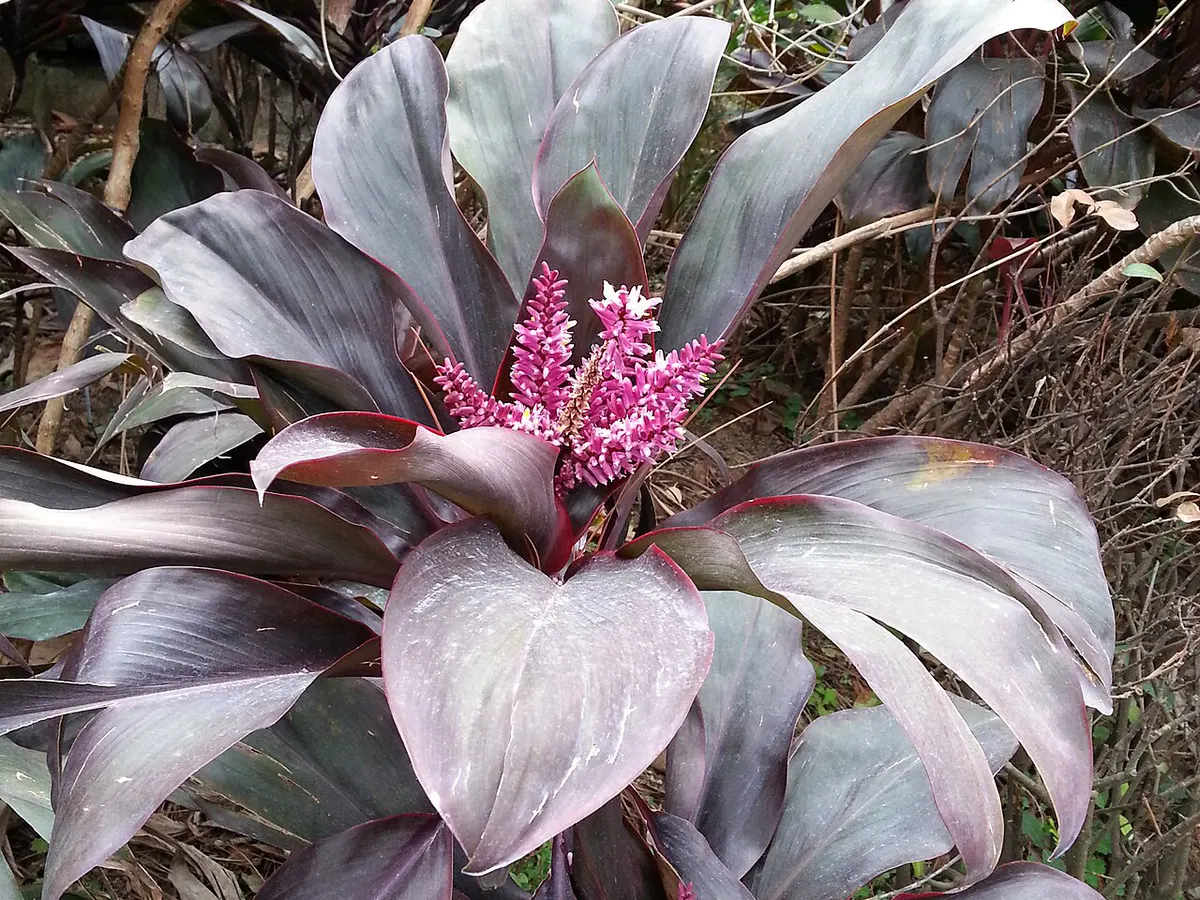
Photo: Pc1878, CC BY-SA 3.0, via Wikimedia Commons
- Light
- Bright, indirect
- Water
- Water when the top 2–3 cm of soil are dry.
- Humidity
- Likes humid air
- Temperature
- 15–30 °C
- Care level
- Needs a little attention
- Pets
- Not safe for cats and dogs
How often to water Ti plant
About every 5 days in summer and every 9 days in winter. Water when the top 2–3 cm of soil are dry.
Roughly how often, in a medium pot (12–20 cm) in the light it likes. Smaller pots, brighter spots and warm balconies need water sooner; big pots and dim corners later.
- Spring every 6 days
- Summer every 5 days
- Autumn every 8 days
- Winter every 9 days
Worked out by LeafMinder’s schedule. In the app it then adapts to your home, from your “still damp” and “bone dry” answers.
Feeding and repotting
Feed about every 30 days from March to September, with a houseplant fertiliser at half strength. Not in the colder months. Check whether it needs a bigger pot every 24 months or so, ideally in spring.
Thirsty, or too wet?
- When it would like water
- The leaves lose their gloss and start to droop, and the top few centimetres of soil feel dry. Left dry too often, the leaf tips turn brown.
- When it has had too much
- Lower leaves yellow and fall, the soil stays damp and the base of the stem may soften. Let the top few centimetres dry before the next watering and check that water drains out of the pot.
Soil and pot
A loose, slightly acidic houseplant mix with some bark for drainage suits it. Use a pot with drainage holes and empty the saucer after watering. It wants a bigger pot about every 2 years, in spring, when roots circle the bottom or water runs straight through the pot.
Common problems
- Brown leaf tips and edges
- Fluoride in tap water, salts building up from fertiliser, or dry air. Try first: Water with rainwater or filtered water, run plenty of water through the pot now and then to flush out salts, and raise the humidity. Trim the brown tips with clean scissors.
- Red and pink colours fading to green
- Too little light. The colours need bright light to stay vivid. Try first: Move it to a bright spot near a window, out of harsh midday sun, and feed monthly in the growing season.
- Many lower leaves yellowing and dropping
- Wet soil, cold draughts or a sudden drop in temperature. A single old leaf now and then is normal. Try first: Check the soil and let it dry more, and keep the plant above 15 °C, away from draughty doors and cold glass.
- Speckled leaves with fine webbing
- Spider mites, which like warm, dry rooms. Try first: Rinse the leaves in the shower, especially the undersides, and raise the humidity. Use insecticidal soap if they return.
- White cottony spots in the leaf bases
- Mealybugs or scale insects. Try first: Dab them off with a cotton bud dipped in soapy water and check weekly, treating with insecticidal soap if needed.
Not sure what you’re seeing? A photo health check suggests possible causes. How health checks work
Propagation
It is easy to propagate in spring or summer. Cut the top off a leggy stem and root it in water or moist potting mix, and cut the bare cane below into pieces about 5–8 cm long. Lay those pieces on their side, half buried in moist mix, in a warm, bright spot, and new shoots grow from the buds along them. The old stump usually sprouts again too.
Varieties and relatives
- 'Kiwi': Smaller leaves striped green, yellow and cream with red edges.
- 'Black Magic': Deep purple-black leaves; holds its colour in slightly less light than the brighter cultivars.
- 'Baby Doll': A compact cultivar with small maroon leaves edged in pink. It is especially prone to fluoride tip burn.
- Cabbage tree: A related cordyline with narrow green leaves. It is much hardier, takes cool rooms and can live outdoors in mild areas.
Questions people ask
How often should I water a ti plant?
About every 5–6 days in spring and summer and every 8–9 days in autumn and winter, in a medium pot indoors. Check that the top few centimetres of soil are dry first, and use rainwater or filtered water if you can.
Is a ti plant toxic to cats and dogs?
Yes. It contains saponins, which can cause vomiting, drooling, low appetite and, in cats, dilated pupils. Keep it out of reach and call your vet if a pet chews it.
Why are my ti plant's leaf tips brown?
Usually fluoride in tap water, salt build-up from fertiliser or dry air. Switch to rainwater or filtered water, flush the pot well every few months and raise the humidity; new leaves should come through clean.
Why is my ti plant losing its red colour?
It needs bright light to keep its red and pink tones. Move it closer to a window, out of strong midday sun, and the new leaves will colour up again.
Sources and licences
This care guide was written with AI and checked against the sources below.
- Care checked against: NC State Extension Gardener Plant Toolbox, UF/IFAS Extension Charlotte County, ASPCA Animal Poison Control.
- GBIF Backbone Taxonomy: other botanical names. Record. CC BY 4.0. GBIF Secretariat (2023). GBIF Backbone Taxonomy. Checklist dataset https://doi.org/10.15468/39omei accessed via GBIF.org on 2026-11-15.
Material from these sources keeps its own licence; LeafMinder’s copyright doesn’t extend to it, and the sources don’t endorse LeafMinder.
General guidance. Every home is different, so the soil is always the best guide. About this advice
From LeafMinder’s plant care guides: leafminder.eu/plants/ti-plant