



Umbrella tree
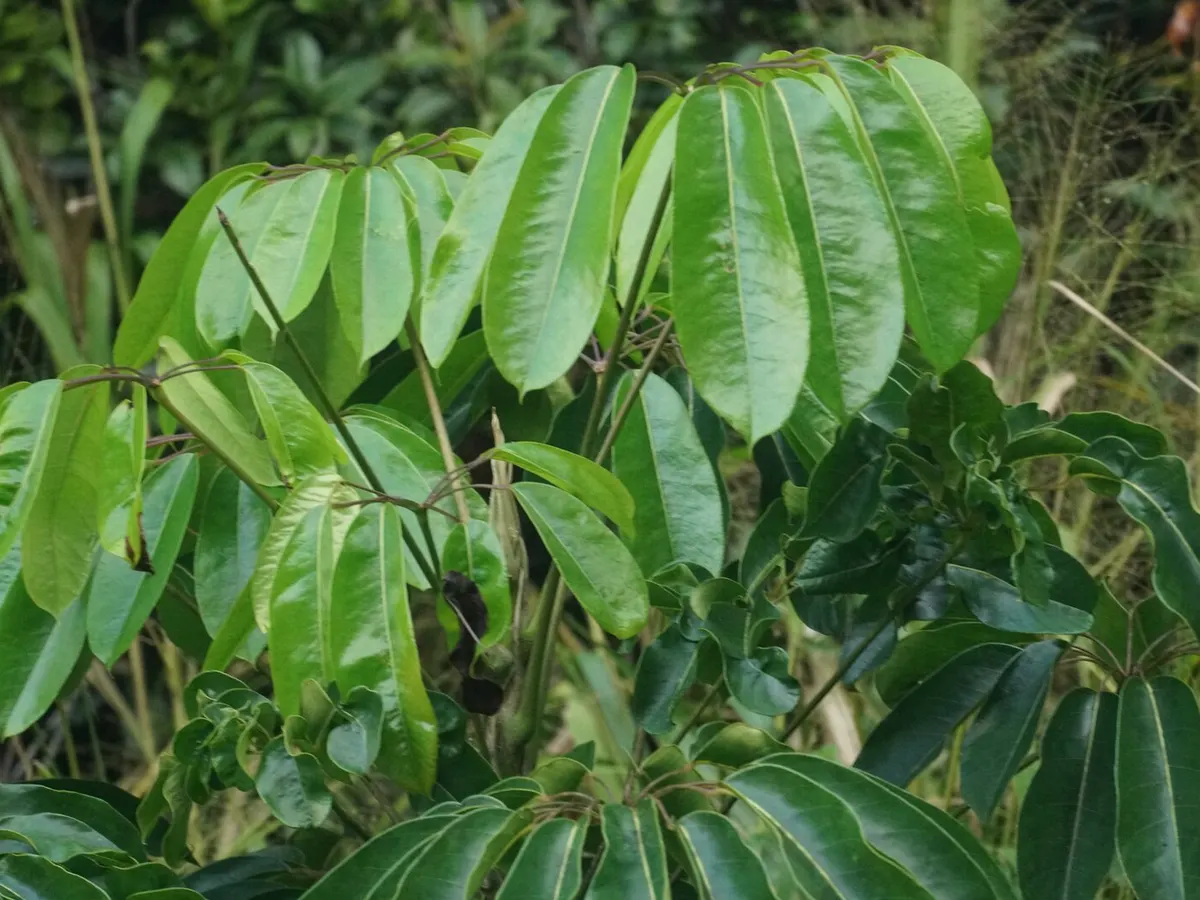
Heptapleurum actinophyllum · Araliaceae · Leafy green plant
Also called Queensland umbrella tree, Schefflera actinophylla, Octopus tree
Give it bright, indirect light and water when the top few centimetres are dry. It can grow tall quickly; cut back the top in spring to keep it bushy.
- Light
- Bright, indirect
- Water
- Water when the top 2–3 cm of soil are dry.
- Humidity
- Average
- Temperature
- 13–30 °C
- Care level
- Easy-going, a good first plant
- Pets
- Not safe for cats and dogs
How often to water Umbrella tree
About every 7 days in summer and every 12 days in winter. Water when the top 2–3 cm of soil are dry.
Roughly how often, in a medium pot (12–20 cm) in the light it likes. Smaller pots, brighter spots and warm balconies need water sooner; big pots and dim corners later.
- Spring every 8 days
- Summer every 7 days
- Autumn every 10 days
- Winter every 12 days
Worked out by LeafMinder’s schedule. In the app it then adapts to your home, from your “still damp” and “bone dry” answers.
Feeding and repotting
Feed about every 30 days from March to September, with a houseplant fertiliser at half strength. Not in the colder months. Check whether it needs a bigger pot every 24 months or so, ideally in spring.
Thirsty, or too wet?
- When it would like water
- Leaves droop slightly and lose their shine, and the top few centimetres of soil feel dry. Left dry for longer, it starts to drop whole leaves.
- When it has had too much
- Leaves yellow, then turn dark or black and fall, and the soil smells sour. Let the top layer dry before you water again, and make sure the pot drains freely.
Soil and pot
A standard houseplant compost with some perlite or bark mixed in for drainage works well. Use a pot with a drainage hole, and a heavy one for tall plants. About every two years, or when roots fill the pot and water runs straight through, move it into a pot one size larger in spring.
Common problems
- Leaves dropping suddenly
- A change it didn't like: a move, a cold draught, a spell of dry soil or soggy roots. It also sheds leaves in a dim spot. Try first: Give it a bright place away from radiators and cold doors, keep watering steady, and allow a few weeks for it to settle.
- Fine webbing and pale, speckled leaves
- Spider mites, which thrive in warm, dry rooms in winter. Try first: Rinse the leaves, tops and undersides, in the shower and wipe them regularly. Raising the humidity helps keep mites away.
- Sticky leaves and brown bumps on stems
- Scale insects or mealybugs, which leave a sticky residue behind. Try first: Scrape or wipe them off with a cloth dipped in soapy water, and keep checking the leaf joints for a few weeks.
- Tall, bare stems with leaves only at the top
- Too little light, or simply a young plant growing upward fast. Try first: Move it to brighter light and cut the tallest stems back in spring; new shoots form below the cut.
- Black spots on the leaves
- Bacterial leaf spot, which follows wet leaves and soil that stays wet. Try first: Remove spotted leaves, water the soil rather than the leaves, and let the top dry between waterings.
Not sure what you’re seeing? A photo health check suggests possible causes. How health checks work
Propagation
Take stem cuttings about 10–15 cm long in spring or summer, remove the lower leaves, and root them in a moist mix of compost and perlite, somewhere warm and loosely covered to hold humidity. Rooting is slow and doesn't always work. For a tall, bare stem, air layering is more reliable: wound the stem, wrap it in damp moss until roots form, then cut it off and pot it up.
Varieties and relatives
- 'Amate': A popular indoor selection with glossy leaves. It tends to resist spider mites and leaf spot better than the plain species.
- 'Variegata': Leaflets marked with yellow or cream. It needs bright light to keep its colour.
- Dwarf umbrella tree: A smaller relative with much smaller leaflets, often sold as Schefflera arboricola. It branches more and stays compact indoors.
Questions people ask
How often should I water an umbrella tree?
About once a week in summer, every 8 days or so in spring, and every 10–12 days in autumn and winter, in a medium pot indoors. Check that the top few centimetres are dry first.
Is the umbrella tree toxic to cats and dogs?
Yes. It contains calcium oxalate crystals, which irritate the mouth and can cause drooling, vomiting and trouble swallowing. Keep it out of reach, and call your vet if a pet chews it.
Why is my umbrella tree dropping leaves?
Usually it's reacting to a change: a move, a cold draught, or soil that went too dry or stayed too wet. Keep it in steady, bright light, water when the top few centimetres are dry, and new leaves should follow.
How do I keep an umbrella tree bushy?
Cut back the tallest stems in spring, just above a leaf, and the plant branches below the cut. Turning the pot every few weeks also keeps growth even.
Sources and licences
This care guide was written with AI and checked against the sources below.
- Care checked against: NC State Extension Gardener Plant Toolbox, Royal Horticultural Society, University of Illinois Extension, Clemson Cooperative Extension Home & Garden Information Center, ASPCA Animal Poison Control.
- GBIF Backbone Taxonomy: other botanical names. Record. CC BY 4.0. GBIF Secretariat (2023). GBIF Backbone Taxonomy. Checklist dataset https://doi.org/10.15468/39omei accessed via GBIF.org on 2026-11-15.
Material from these sources keeps its own licence; LeafMinder’s copyright doesn’t extend to it, and the sources don’t endorse LeafMinder.
General guidance. Every home is different, so the soil is always the best guide. About this advice
From LeafMinder’s plant care guides: leafminder.eu/plants/umbrella-tree