



Ponytail palm
Beaucarnea recurvata · Asparagaceae · Succulent
Also called Elephant's foot, Bottle palm, Nolina
The swollen base stores water, so let the soil dry right through before watering. It is not a true palm and is happiest in a small, heavy pot.
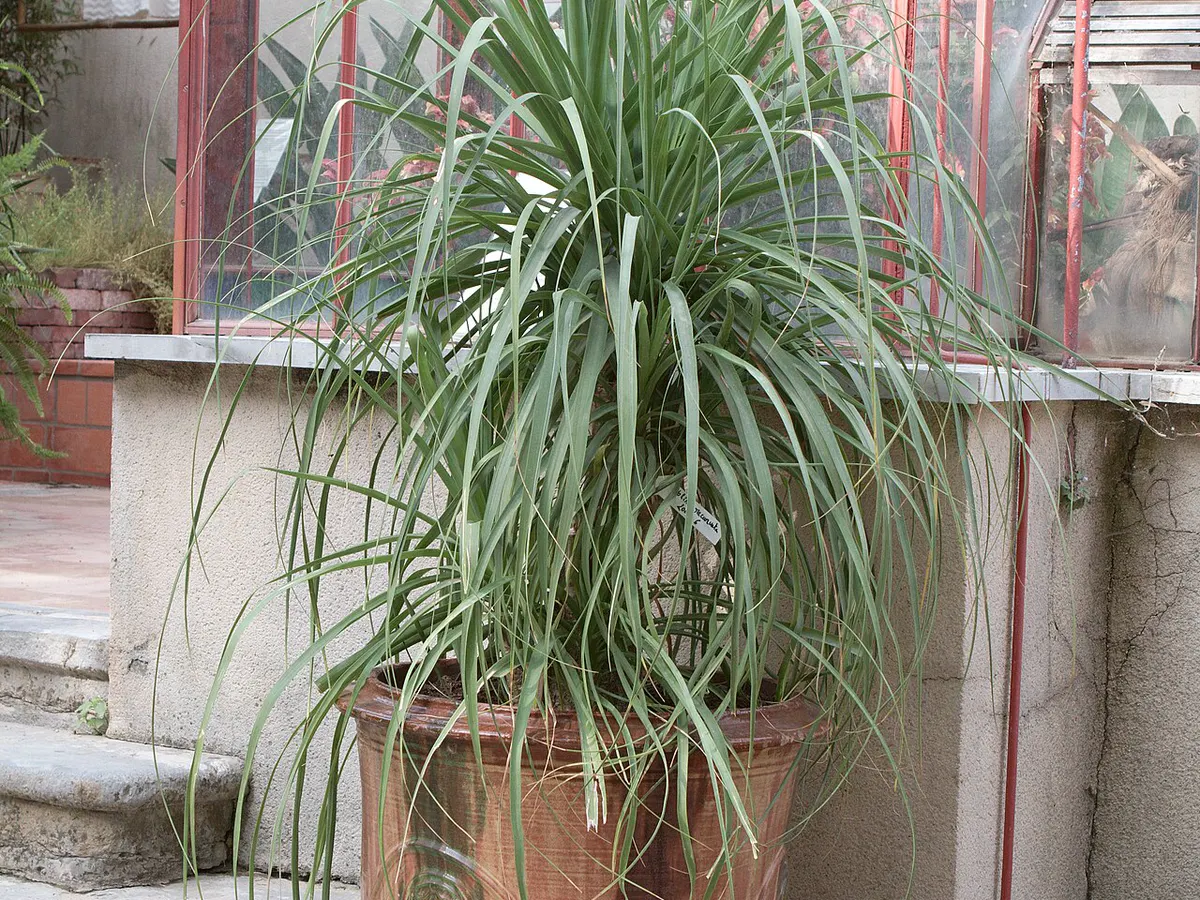
Photo: Georges Seguin ( Okki ), CC BY-SA 3.0, via Wikimedia Commons
- Light
- Direct sun
- Water
- Water only when the soil is dry right through.
- Humidity
- Normal room air is fine
- Temperature
- 10–32 °C
- Care level
- Easy-going, a good first plant
- Pets
- Not known to be toxic to cats and dogs
How often to water Ponytail palm
About every 14 days in summer and every 38 days in winter. Water only when the soil is dry right through.
Roughly how often, in a medium pot (12–20 cm) in the light it likes. Smaller pots, brighter spots and warm balconies need water sooner; big pots and dim corners later.
- Spring every 15 days
- Summer every 14 days
- Autumn every 27 days
- Winter every 38 days
Worked out by LeafMinder’s schedule. In the app it then adapts to your home, from your “still damp” and “bone dry” answers.
Feeding and repotting
Feed about every 30 days from April to September, with a houseplant fertiliser at half strength. Not in the colder months. Check whether it needs a bigger pot every 36 months or so, ideally in spring.
Thirsty, or too wet?
- When it would like water
- The leaves look dull, the tips may brown, and the swollen base feels softer and more wrinkled than usual. Once the mix is dry right through, water deeply and let it drain.
- When it has had too much
- Lower leaves turn yellow and the base or trunk feels soft and mushy rather than firm. Stop watering, let the mix dry out completely, and check the base and roots for rot.
Soil and pot
Use a gritty, fast-draining mix, such as cactus and succulent compost with extra grit or sand. Choose a fairly small, heavy pot with a drainage hole; terracotta dries faster and keeps a tall plant from tipping. It likes being snug, so repot only about every three years, in spring, when the swollen base nearly touches the rim, and keep the base at the same depth as before.
Common problems
- Brown, dry leaf tips
- Very common. Uneven watering, cold draughts, heat from a radiator, or salts from fertiliser and hard water. Try first: Trim the brown tips with clean scissors, following the leaf shape, and look at watering and position. Dry air is rarely the cause, so misting won't help.
- Soft, mushy base or trunk
- Rot from watering too often, a pot that doesn't drain, or soil piled up against the trunk. Try first: Stop watering and check how far the softness goes. A small patch can be cut back to firm tissue; then repot into dry, gritty mix with the base above the soil.
- Pale growth, plant leaning to one side
- Not enough light. It wants a sunny window. Try first: Move it to your brightest window and turn the pot a quarter turn every week or so. Introduce stronger sun gradually so the leaves don't scorch.
- Sticky leaves, fine webbing or small bumps
- Spider mites, mealybugs or scale insects feeding on the sap. Try first: Isolate the plant, wipe the leaves with a damp cloth and remove scale or mealybugs with a cotton bud dipped in rubbing alcohol. Repeat weekly until no new ones appear.
Not sure what you’re seeing? A photo health check suggests possible causes. How health checks work
Propagation
Ponytail palm is slow to propagate at home. Mature plants sometimes form small offsets around the base; in spring, once one is about 10–15 cm tall, cut it off cleanly, let the cut dry for a few days and pot it in gritty mix, watering very lightly until it roots. Growers mostly raise new plants from seed sown in warmth in spring, which is reliable but slow, and the seed is hard to find.
Varieties and relatives
- Beaucarnea stricta: A close relative with stiffer, straighter, bluish leaves that stand upright instead of falling like a fountain.
Questions people ask
How often should I water a ponytail palm?
About every two weeks in spring and summer, about every four weeks in autumn and about every five to six weeks in winter, in a medium pot indoors. Let the mix dry right through first; the swollen base stores water for dry spells.
Is ponytail palm toxic to cats and dogs?
No. The ASPCA lists Beaucarnea recurvata as non-toxic to cats and dogs. Chewing on its long leaves can still cause a mild upset stomach.
Is a ponytail palm a real palm?
No. Despite the name it belongs to the asparagus family, with agaves and dracaenas as relatives, and it comes from dry parts of eastern Mexico. That's why it wants sun, gritty soil and a dry winter rest rather than palm-style care.
Why are the tips of my ponytail palm's leaves brown?
Brown tips are common and rarely serious. Irregular watering, cold draughts, a nearby radiator and salt build-up from fertiliser or hard water are the usual causes. Trim the tips and adjust the conditions; new leaves will grow in green.
Sources and licences
This care guide was written with AI and checked against the sources below.
- Care checked against: NC State Extension, Gardener Plant Toolbox, New York Botanical Garden, Mertz Library plant guide, Royal Horticultural Society, ASPCA Animal Poison Control.
- GBIF Backbone Taxonomy: other botanical names. Record. CC BY 4.0. GBIF Secretariat (2023). GBIF Backbone Taxonomy. Checklist dataset https://doi.org/10.15468/39omei accessed via GBIF.org on 2026-11-15.
Material from these sources keeps its own licence; LeafMinder’s copyright doesn’t extend to it, and the sources don’t endorse LeafMinder.
General guidance. Every home is different, so the soil is always the best guide. About this advice
From LeafMinder’s plant care guides: leafminder.eu/plants/ponytail-palm