



Aloe vera
Aloe vera · Asphodelaceae · Succulent
Also called Aloe, Medicinal aloe, Barbados aloe
Water deeply, then wait until the soil is dry right through. Thin, curling leaves mean it is thirsty; soft, brown ones mean the roots stayed too wet.
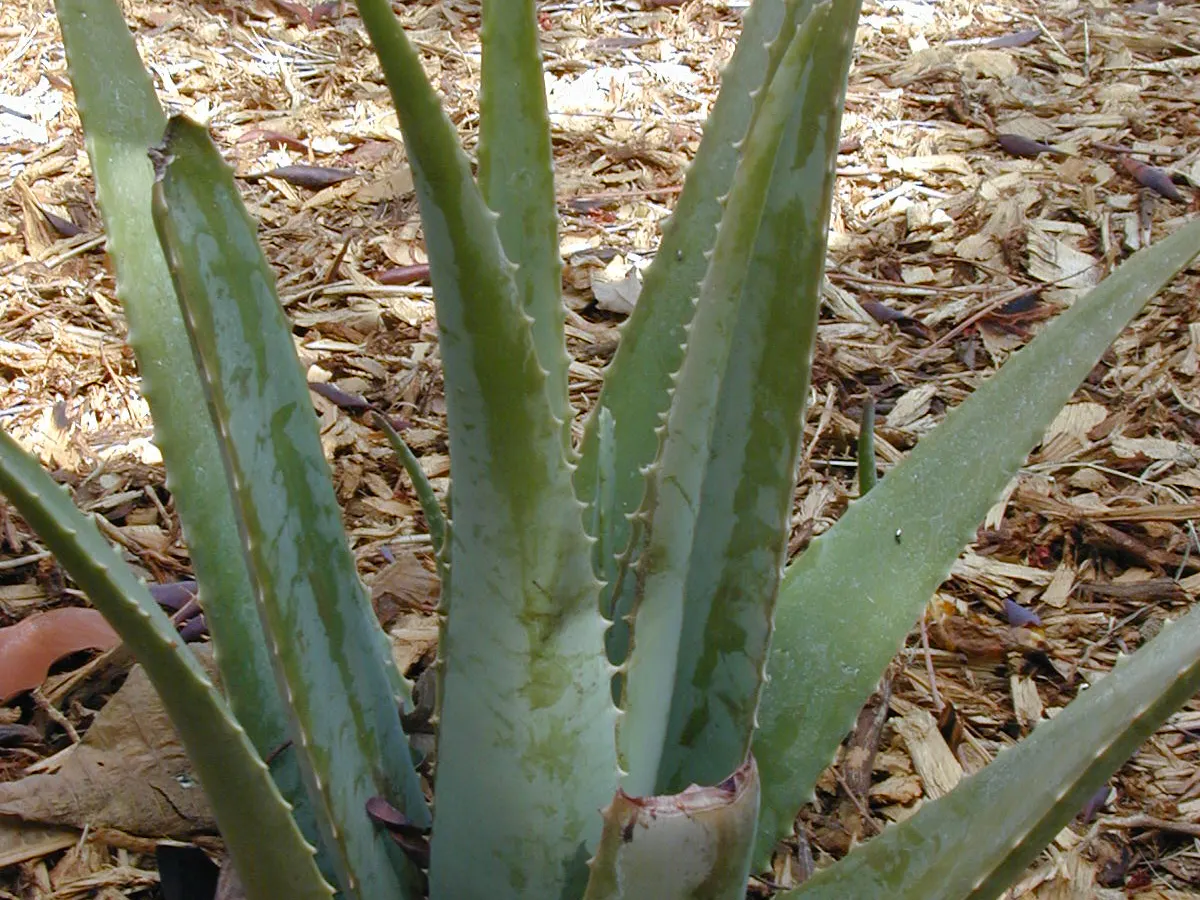
Photo: Forest & Kim Starr, CC BY 3.0, via Wikimedia Commons
- Light
- Direct sun
- Water
- Water only when the soil is dry right through.
- Humidity
- Normal room air is fine
- Temperature
- 10–32 °C
- Care level
- Easy-going, a good first plant
- Pets
- Not safe for cats and dogs
How often to water Aloe vera
About every 11 days in summer and every 30 days in winter. Water only when the soil is dry right through.
Roughly how often, in a medium pot (12–20 cm) in the light it likes. Smaller pots, brighter spots and warm balconies need water sooner; big pots and dim corners later.
- Spring every 12 days
- Summer every 11 days
- Autumn every 21 days
- Winter every 30 days
Worked out by LeafMinder’s schedule. In the app it then adapts to your home, from your “still damp” and “bone dry” answers.
Feeding and repotting
Feed about every 30 days from April to September, with a houseplant fertiliser at half strength. Not in the colder months. Check whether it needs a bigger pot every 24 months or so, ideally in spring.
Thirsty, or too wet?
- When it would like water
- The leaves look thinner and flatter, curl in at the edges and may wrinkle, and the soil is dry right through. Give it a deep drink and the leaves plump up again over a few days.
- When it has had too much
- Leaves turn soft, translucent or brown at the base, and the plant may wobble in its pot. Stop watering and let the soil dry right through; if the base is mushy, unpot it, cut away rotten roots and replant in dry, gritty mix.
Soil and pot
Use a cactus and succulent mix, or houseplant compost mixed with about the same amount of grit, sand or perlite. A pot with a large drainage hole is essential; terracotta helps the soil dry faster. Go up only one size, because too big a pot holds water and invites rot. Repot about every two years, or when pups crowd the pot or the plant gets top-heavy, with the leaves sitting just above the soil.
Common problems
- Soft, brown or mushy leaves at the base
- Root rot from watering too often, a pot without drainage or soil that holds water. Try first: Let the soil dry right through. If the base is soft, unpot it, cut away dark, mushy roots and replant in dry, gritty mix; wait about a week before watering.
- Thin, curling leaves
- It's thirsty, or the roots have stopped working after rot. Try first: If the soil is bone dry, water deeply. If it's damp and the leaves still curl, check the roots.
- Leaves flop over and spread flat
- Too little light: the leaves stretch and lose their strength. Try first: Move it to the sunniest window you have, and turn the pot now and then so it grows evenly.
- Leaves turning red-brown or orange
- Stress from sudden strong sun, for example after moving outside, or from cold. Try first: Move it into brighter light gradually over a week or two, and keep it above 10 °C. The colour fades once it settles.
- White fluffy spots between the leaves
- Mealybugs hiding at the leaf bases. Try first: Dab them off with a cotton bud dipped in rubbing alcohol and check again every few days until no more appear.
Not sure what you’re seeing? A photo health check suggests possible causes. How health checks work
Propagation
Aloe vera spreads by pups, small plants that grow from the base. In spring or summer, when a pup is a few centimetres tall and has its own roots, ease it away from the mother plant, let any cut dry for a day or two, and pot it in dry succulent mix. Wait about a week, then water lightly. Single leaves cut from the plant usually rot rather than root.
Varieties and relatives
- Lace aloe (Aristaloe aristata): A small, stemless rosette with white-speckled leaves and soft, bristly tips. Stays compact on a windowsill.
- Tiger tooth aloe (Aloe juvenna): Stacked, spiky rosettes with pale spots and soft white teeth. Forms clumps quickly.
- Coral aloe (Aloe striata): Broad, flat, blue-grey leaves with smooth pinkish edges and no teeth.
- Candelabra aloe (Aloe arborescens): Grows into a branching, shrubby plant with long, toothed leaves. Needs room as it ages.
Questions people ask
How often should I water an aloe vera?
In a medium pot indoors, about every 12 days in spring, every 11 days in summer, every three weeks in autumn and about once a month in winter. Only water when the soil is dry right through, then water thoroughly and let it drain.
Is aloe vera toxic to cats and dogs?
Yes. The ASPCA lists aloe as toxic to cats and dogs: chewing the leaves can cause vomiting, diarrhoea and lethargy. Keep it out of reach, and call your vet if a pet eats some.
Why is my aloe vera falling over?
Usually not enough light: the leaves stretch and can't hold their weight. It can also be top-heavy in a small pot, or loose after root rot. Move it somewhere sunnier, check the base is firm, and repot into a heavier pot if needed.
Can I put my aloe vera outside in summer?
Yes, once nights stay above about 10 °C. Bring it into the sun gradually over a week or two to avoid scorch, keep it out of long spells of rain, and bring it in before the nights turn cold.
From the journal
Sources and licences
This care guide was written with AI and checked against the sources below.
- Care checked against: NC State Extension Gardener Plant Toolbox, Penn State Extension, UF/IFAS Gardening Solutions, ASPCA Animal Poison Control.
- GBIF Backbone Taxonomy: other botanical names. Record. CC BY 4.0. GBIF Secretariat (2023). GBIF Backbone Taxonomy. Checklist dataset https://doi.org/10.15468/39omei accessed via GBIF.org on 2026-11-15.
Material from these sources keeps its own licence; LeafMinder’s copyright doesn’t extend to it, and the sources don’t endorse LeafMinder.
General guidance. Every home is different, so the soil is always the best guide. About this advice
From LeafMinder’s plant care guides: leafminder.eu/plants/aloe-vera