



Snake plant
Dracaena trifasciata · Asparagaceae · Succulent
Also called Mother-in-law's tongue, Sansevieria, Sansevieria trifasciata
Water only when the soil is dry right through; in winter once a month is often enough. Soft, mushy leaves at the base are a sign of too much water.
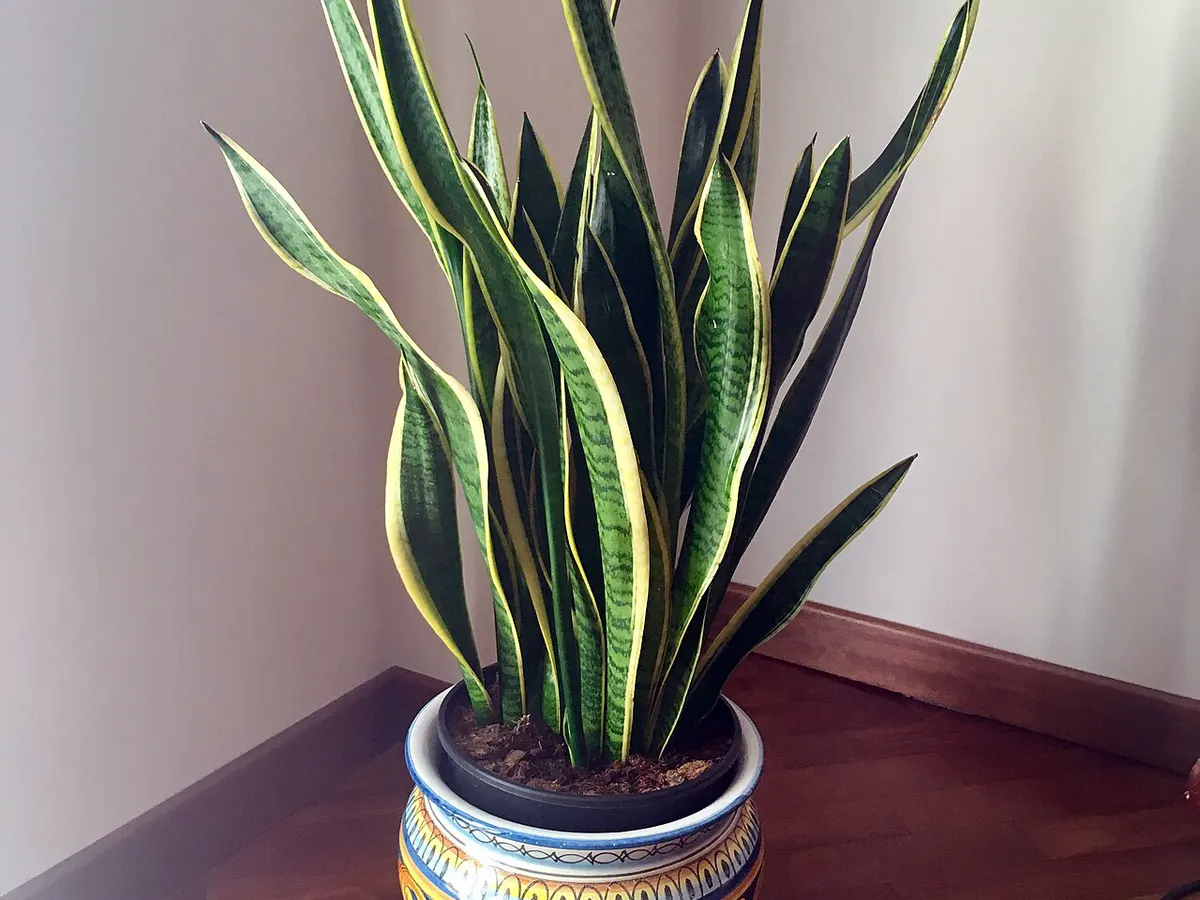
Photo: Enzo Rippa, CC BY-SA 4.0, via Wikimedia Commons
- Light
- Bright, indirect · copes with less
- Water
- Water only when the soil is dry right through.
- Humidity
- Normal room air is fine
- Temperature
- 12–32 °C
- Care level
- Easy-going, a good first plant
- Pets
- Not safe for cats and dogs
How often to water Snake plant
About every 16 days in summer and every 45 days in winter. Water only when the soil is dry right through.
Roughly how often, in a medium pot (12–20 cm) in the light it likes. Smaller pots, brighter spots and warm balconies need water sooner; big pots and dim corners later.
- Spring every 18 days
- Summer every 16 days
- Autumn every 32 days
- Winter every 45 days
Worked out by LeafMinder’s schedule. In the app it then adapts to your home, from your “still damp” and “bone dry” answers.
Feeding and repotting
Feed about every 60 days from April to September, with a houseplant fertiliser at half strength. Not in the colder months. Check whether it needs a bigger pot every 36 months or so, ideally in spring.
Thirsty, or too wet?
- When it would like water
- The soil is dry right through and the pot feels light. After a long dry spell the leaves can look thinner or slightly wrinkled, and they firm up again a few days after watering.
- When it has had too much
- Leaves turn soft, yellow or mushy at the base, and the soil stays damp for a long time. Stop watering, let the pot dry out fully and check the roots if the base feels soft.
Soil and pot
Choose a gritty, fast-draining mix, such as cactus compost or potting compost with plenty of grit or perlite. A heavy pot with a drainage hole keeps the tall leaves from tipping over, and terracotta helps the soil dry out. It's happy a little crowded, so repot about every three years, in spring, when roots push the pot out of shape or fill it so tightly that water runs straight through.
Common problems
- Soft, mushy leaves at the base
- Root rot from too much water or a pot without drainage. Try first: Take it out of the pot, cut away soft or dark roots and any rotten leaves, then repot in dry, gritty mix and wait about a week before watering.
- Leaves bending or flopping over
- Usually overwatering; sometimes too little light over a long time. Try first: Let the soil dry right through, check the roots and move the plant to brighter, indirect light. Folded leaves won't straighten, so you can cut them off at the base.
- Wrinkled or curling leaves
- A very long spell without water, so the leaves have used up their stored moisture. Try first: Water thoroughly until it drains from the bottom, then let it dry fully again. The leaves should firm up over a few days.
- White, cottony clumps where the leaves meet
- Mealybugs, which hide at the base of the leaves and feed on sap. Try first: Wipe them off with a damp cloth or cotton bud, keep the plant apart from others and check every week until they're gone.
- Pale speckles and fine webbing
- Spider mites, more common in warm, dry rooms. Try first: Wipe both sides of each leaf with a damp cloth and repeat weekly. Check neighbouring plants as well.
Not sure what you’re seeing? A photo health check suggests possible causes. How health checks work
Propagation
The easiest way is division in spring: lift the plant, cut the rhizome into pieces that each have leaves and roots, and pot them separately. Leaf cuttings work too: cut a leaf into 5–10 cm sections, let them dry for a few days, then push them, lower end down, into a gritty mix. Roots form slowly, often over several weeks, and cuttings from yellow-edged plants usually grow plain green leaves.
Varieties and relatives
- 'Laurentii': The classic form, with broad yellow edges on dark green, banded leaves. Divide it rather than taking leaf cuttings to keep the yellow edges.
- 'Hahnii': A dwarf form that makes a low, compact rosette of short, wide leaves.
- Cylindrical snake plant (Dracaena angolensis): Round, pencil-like leaves that grow stiff and upright. The same dry-loving care.
- Whale fin snake plant (Dracaena masoniana): One or a few very broad, paddle-shaped leaves instead of a tall clump. Slow-growing, with the same dry care.
Questions people ask
How often should I water a snake plant?
In a medium pot indoors, about every 16–18 days in spring and summer, about once a month in autumn and roughly every six weeks in winter. Always check that the soil has dried right through first.
Is a snake plant toxic to cats and dogs?
Yes. It contains saponins, which can cause nausea, vomiting and diarrhoea if a pet chews it. Keep it out of reach, and call your vet if your pet has eaten some.
Why are my snake plant's leaves falling over?
Leaves that bend or flop are most often a sign of too much water, especially when they're soft at the base. Weak light over a long time can also make them long and floppy. Check the soil and roots first, then move it somewhere brighter.
Can a snake plant live in a dark room?
It copes with low light better than most houseplants and will keep going in a dim corner, but it grows very slowly there. Water even less often in low light, as the soil takes longer to dry. Bright, indirect light keeps it growing and its markings strong.
Sources and licences
This care guide was written with AI and checked against the sources below.
- Care checked against: NC State Extension Gardener Plant Toolbox, Iowa State University Extension and Outreach, ASPCA Animal Poison Control.
- GBIF Backbone Taxonomy: other botanical names. Record. CC BY 4.0. GBIF Secretariat (2023). GBIF Backbone Taxonomy. Checklist dataset https://doi.org/10.15468/39omei accessed via GBIF.org on 2026-11-15.
Material from these sources keeps its own licence; LeafMinder’s copyright doesn’t extend to it, and the sources don’t endorse LeafMinder.
General guidance. Every home is different, so the soil is always the best guide. About this advice
From LeafMinder’s plant care guides: leafminder.eu/plants/snake-plant