



Olive tree
Olea europaea · Oleaceae · Balcony or garden plant
Also called Olive, Common olive
Give it full sun and let the top half of the pot dry before watering. In cold regions, bring it into a bright, cool room or a frost-free stairwell for winter.
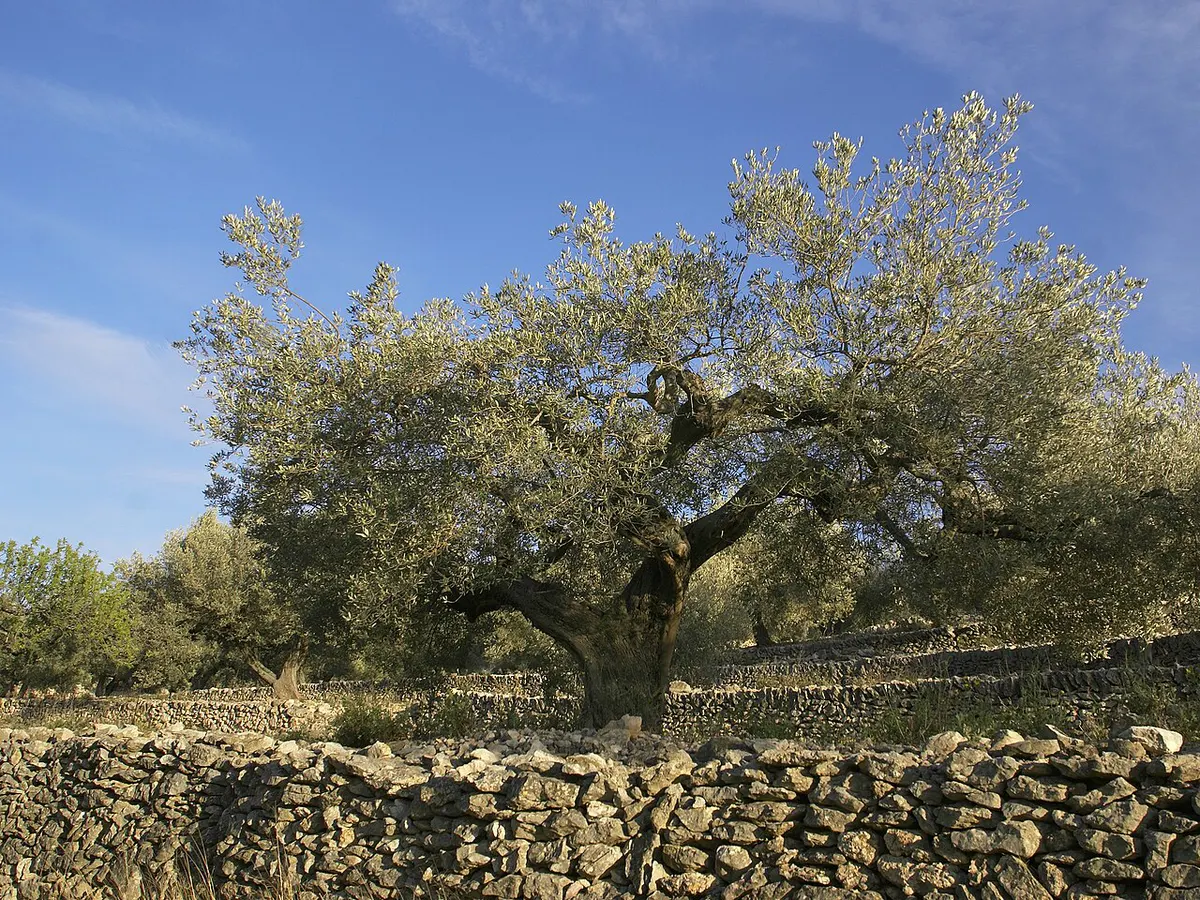
Photo: Hans Hillewaert, CC BY-SA 3.0, via Wikimedia Commons
- Light
- Direct sun
- Water
- Water when about half the pot has dried out.
- Humidity
- Normal room air is fine
- Temperature
- -5–38 °C
- Care level
- Easy-going, a good first plant
- Pets
- Pet safety not confirmed
How often to water Olive tree
About every 5 days in summer and every 12 days in winter. Water when about half the pot has dried out.
Roughly how often, in a medium pot (12–20 cm) in the light it likes. Smaller pots, brighter spots and warm balconies need water sooner; big pots and dim corners later.
- Spring every 6 days
- Summer every 5 days
- Autumn every 9 days
- Winter every 12 days
Worked out by LeafMinder’s schedule. In the app it then adapts to your home, from your “still damp” and “bone dry” answers.
Feeding and repotting
Feed about every 30 days from April to September, with a houseplant fertiliser at half strength. Not in the colder months. Check whether it needs a bigger pot every 36 months or so, ideally in spring.
Thirsty, or too wet?
- When it would like water
- The leaves look duller and greyer than usual and may curl slightly inwards, and the pot feels light. Water thoroughly once about half the pot has dried, until water runs out of the drainage holes.
- When it has had too much
- Leaves turn yellow and drop, and the compost stays dark and damp for days. Let at least the top half of the pot dry before you water again, raise the pot on feet so it drains, and never leave it standing in water.
Soil and pot
Olives like a gritty, free-draining mix: a loam-based compost with extra grit works well. Use a heavy pot with good drainage holes, raised on pot feet. It wants a bigger pot when roots push out of the holes or the compost dries out within a day or two in summer. Repot in spring every three years or so, and in the years between, replace the top few centimetres of compost.
Common problems
- Leaves dropping indoors in winter
- A warm, dim room. Olives need plenty of light and a cool winter rest, and in a heated room with weak light they shed leaves. Try first: Move it to the brightest, coolest frost-free spot you have, such as an unheated room or a bright stairwell, and water less while it rests.
- Yellow leaves and soggy compost
- Waterlogged roots, from watering too often or a pot that can't drain, which can lead to root rot. Try first: Let half the pot dry between waterings, empty the saucer and set the pot on feet. Repot into a gritty mix if the compost stays wet for days.
- Brown bumps on stems and sticky leaves
- Scale insects feeding on the sap; the sticky honeydew can turn black with sooty mould. Try first: Scrape the scales off with a fingernail or soft brush and wipe the leaves with a damp cloth. Check weekly, especially under the leaves and along young stems.
- Dark round spots on the leaves
- Peacock spot, a fungal leaf spot that spreads in long spells of wet, mild weather in autumn and winter. Spots may have a yellow ring, and affected leaves fall. Try first: Pick up fallen leaves, keep the foliage as dry as you can and shelter the tree from long spells of rain. Thinning the crown in spring lets air through.
- Blackened shoot tips after a cold night
- Frost damage; potted olives are more exposed because the ground doesn't protect their roots. Try first: Leave the damaged shoots until spring, then cut back to healthy green wood. Next winter, move it to a frost-free spot or wrap the crown in fleece during cold spells.
Not sure what you’re seeing? A photo health check suggests possible causes. How health checks work
Propagation
Olives aren't easy to propagate at home. The usual method is semi-ripe cuttings in summer: 10–15 cm shoots with the lower leaves removed, dipped in rooting hormone and set in a moist, gritty mix with warmth and high humidity. Rooting is slow and varies a lot between varieties, which is why nurseries often graft the harder ones. Seed is possible but slow, and the young trees don't come true to the parent.
Varieties and relatives
- Arbequina: A Spanish variety with small fruit, widely grown in pots; it roots from cuttings more readily than many others.
- Little Ollie: A compact, rounded form that suits a smaller pot on a balcony or terrace.
- Swan Hill: Bears no flowers or fruit, so there's no pollen and no fallen olives.
- Majestic Beauty: Produces very few fruits, which keeps paving and balconies tidy.
Questions people ask
How often should I water an olive tree?
In a medium pot indoors, about every 5 days in summer, 6 in spring, 9 in autumn and every 12 days in winter. Check first that about half the pot has dried; outdoors in summer heat it may need checking more often.
Is an olive tree toxic to cats and dogs?
Its safety for pets isn't confirmed: the main pet poison list doesn't include the olive tree. Keep it out of reach of pets that like to chew, and call your vet if one eats a good amount of the leaves.
Can my potted olive tree stay outside in winter?
In mild areas, yes: established olives cope with a few degrees of frost. In a pot the roots are more exposed, so where hard frosts are common, bring it into a bright, cool, frost-free place, such as an unheated room or stairwell, until spring.
Why doesn't my potted olive tree flower or fruit?
Olives need full sun and a cool winter, about two months at roughly 4–10 °C, before they flower. A tree kept warm indoors all winter rarely blooms. Many varieties also fruit better with a second variety nearby for pollination.
Sources and licences
This care guide was written with AI and checked against the sources below.
- Care checked against: Royal Horticultural Society, NC State Extension Gardener Plant Toolbox, UC Statewide IPM Program, ASPCA Animal Poison Control, Spanish Journal of Agricultural Research (CSIC).
- GBIF Backbone Taxonomy: other botanical names. Record. CC BY 4.0. GBIF Secretariat (2023). GBIF Backbone Taxonomy. Checklist dataset https://doi.org/10.15468/39omei accessed via GBIF.org on 2026-11-15.
Material from these sources keeps its own licence; LeafMinder’s copyright doesn’t extend to it, and the sources don’t endorse LeafMinder.
General guidance. Every home is different, so the soil is always the best guide. About this advice
From LeafMinder’s plant care guides: leafminder.eu/plants/olive-tree