



Black-eyed Susan vine
Thunbergia alata · Acanthaceae · Balcony or garden plant
Also called Thunbergia, Black-eyed Susan
Give it sun with a little afternoon shade, a trellis to climb and steady moisture through summer. Snip off faded flowers to keep it blooming until autumn.
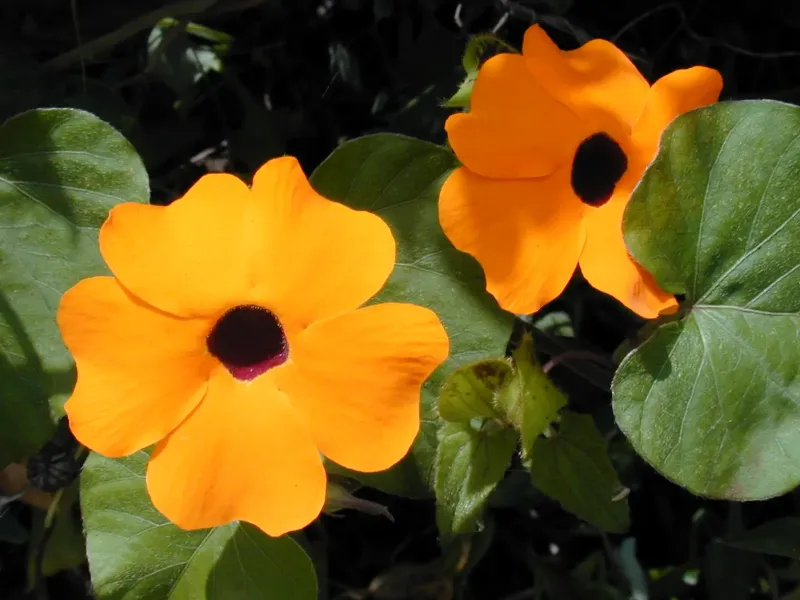
Photo: Forest & Kim Starr · Starr 010419-0035 Thunbergia alata, CC BY 3.0, via Wikimedia Commons · resized and cropped
- Light
- Direct sun
- Water
- Water when the top 2–3 cm of soil are dry.
- Humidity
- Average
- Temperature
- 15–30 °C
- Care level
- Easy-going, a good first plant
- Pets
- Pet safety not confirmed
How often to water Black-eyed Susan vine
About every 2 days in summer and every 3 days in winter. Water when the top 2–3 cm of soil are dry.
Roughly how often, in a medium pot (12–20 cm) in the light it likes. Smaller pots, brighter spots and warm balconies need water sooner; big pots and dim corners later.
- Spring every 2 days
- Summer every 2 days
- Autumn every 3 days
- Winter every 3 days
Worked out by LeafMinder’s schedule. In the app it then adapts to your home, from your “still damp” and “bone dry” answers.
Feeding and repotting
Feed about every 14 days from May to September, with a houseplant fertiliser at half strength. Not in the colder months.
Sources and licences
This care guide was written with AI and checked against the sources below.
- Care checked against: NC State Extension Plant Toolbox.
- World Flora Online Plant List (version 2026-06): author, family, rank, botanical name, other botanical names. Record. CC0 1.0. WFO (2026): World Flora Online Plant List, version 2026-06. https://doi.org/10.5281/zenodo.20782718
- Wikidata: identifier, common names. Record. CC0 1.0. Wikidata contributors, Wikidata (CC0).
- Wikimedia Commons: photo. Forest & Kim Starr · Starr 010419-0035 Thunbergia alata, file page; resized and cropped. CC BY 3.0.
Material from these sources keeps its own licence; LeafMinder’s copyright doesn’t extend to it, and the sources don’t endorse LeafMinder.
General guidance. Every home is different, so the soil is always the best guide. About this advice
From LeafMinder’s plant care guides: leafminder.eu/plants/black-eyed-susan-vine