



Wax begonia
Begonia Semperflorens Cultorum Group · Begoniaceae · Balcony or garden plant
Also called Bedding begonia, Begonia semperflorens
It flowers all summer in sun or part shade; water when the surface feels dry and avoid wetting the leaves. It is usually treated as a summer annual.
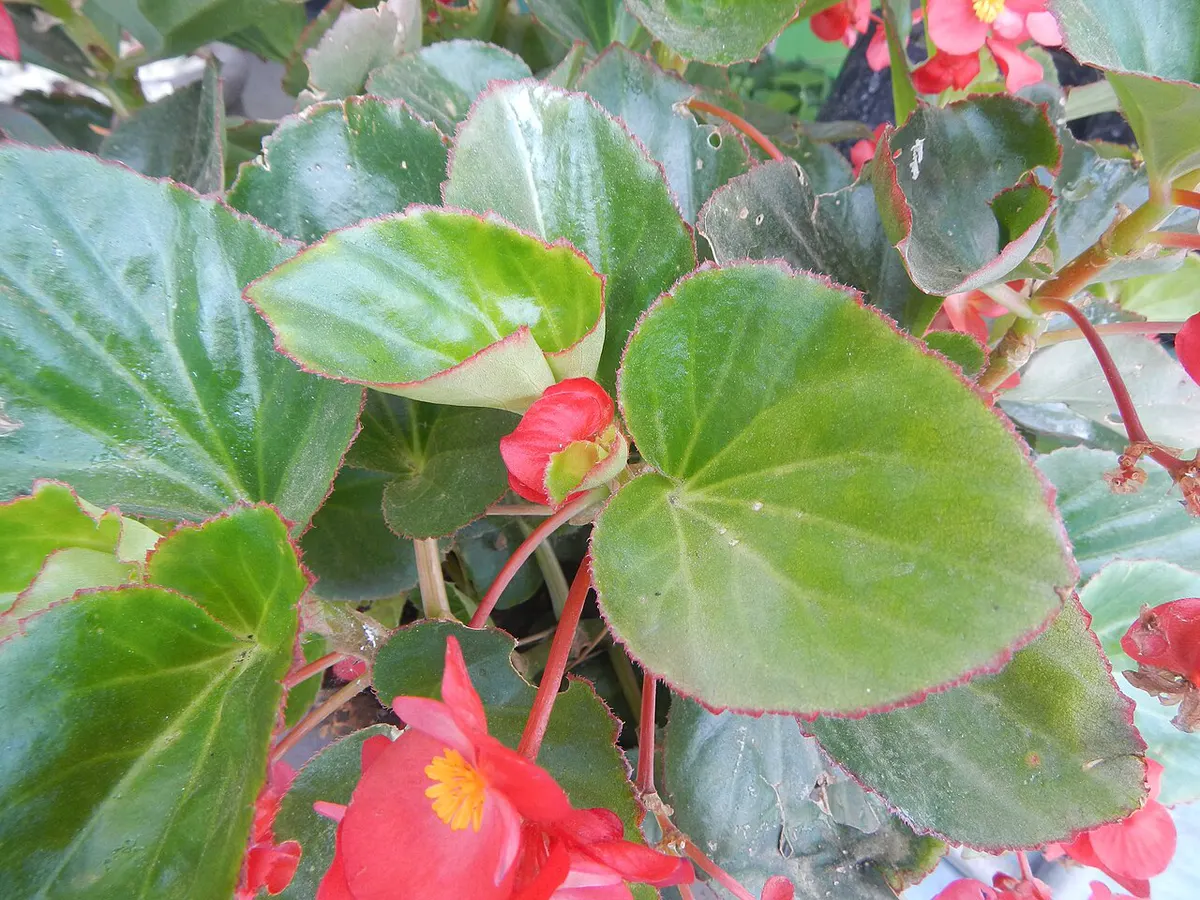
Photo: Judgefloro, Public domain, via Wikimedia Commons
- Light
- Bright, indirect · copes with less
- Water
- Water when the top 2–3 cm of soil are dry.
- Humidity
- Average
- Temperature
- 10–30 °C
- Care level
- Easy-going, a good first plant
- Pets
- Not safe for cats and dogs
How often to water Wax begonia
About every 3 days in summer and every 5 days in winter. Water when the top 2–3 cm of soil are dry.
Roughly how often, in a medium pot (12–20 cm) in the light it likes. Smaller pots, brighter spots and warm balconies need water sooner; big pots and dim corners later.
- Spring every 3 days
- Summer every 3 days
- Autumn every 4 days
- Winter every 5 days
Worked out by LeafMinder’s schedule. In the app it then adapts to your home, from your “still damp” and “bone dry” answers.
Feeding and repotting
Feed about every 14 days from May to September, with a houseplant fertiliser at half strength. Not in the colder months.
Thirsty, or too wet?
- When it would like water
- The soil surface feels dry and the stems and leaves start to soften. In a pot on a sunny balcony this can happen within a day or two in summer, so check often.
- When it has had too much
- The leaves yellow, the stems turn dark and mushy at the base, and the plant slumps even though the soil is damp. Let the surface dry before you water again, and make sure the pot drains freely.
Soil and pot
Any good, free-draining potting mix with some organic matter suits it; in a bed, moist, humus-rich soil that doesn't stay waterlogged. Use pots or window boxes with drainage holes and don't leave them standing in water. It's usually grown for one season, but a plant you keep can go up one pot size when roots fill the pot or the soil dries out within a day.
Common problems
- White powder on the leaves
- Powdery mildew, more likely in still, humid air. Try first: Remove affected leaves, give plants more space, and water the soil in the morning without wetting the leaves.
- Grey fuzz on flowers or leaves
- Grey mould (botrytis), which grows on faded flowers and wet leaves in cool, damp weather. Try first: Pick off spent flowers and affected parts, improve airflow, and water at the base of the plant.
- Stems rotting at the soil line
- Stem or root rot, from soil that stays wet or heavy soil that drains poorly. Try first: Let the surface dry between waterings and use a lighter mix. Badly rotted plants rarely recover, but healthy tips can be rooted.
- Long, floppy stems with few flowers
- Too little light, often after a winter indoors. Try first: Pinch the stem tips back so it grows bushier, and move it somewhere brighter with some morning sun.
- Sticky leaves or white cottony tufts
- Mealybugs, whiteflies or aphids feeding on the sap. Try first: Rinse them off or wipe them away with a cotton swab dipped in alcohol. Test any soap spray on a few leaves first, as begonias can be sensitive to it.
Not sure what you’re seeing? A photo health check suggests possible causes. How health checks work
Propagation
Stem cuttings root easily in spring or early autumn: take 7–10 cm tips, remove the lower leaves, and set them in moist cuttings mix or water in bright, indirect light. It also grows from seed, but the seed is as fine as dust; sow it on the surface without covering it, at about 20–24 °C, roughly 12 weeks before you want plants outside. Cuttings taken in autumn give you plants to flower on a windowsill over winter.
Varieties and relatives
- Bronze-leaved wax begonias: Have dark bronze to chocolate leaves and cope with more sun than the green-leaved kinds.
- Tuberous begonia: Grows from a tuber and has much larger, often double flowers; it prefers shade and rests over winter.
- Elatior begonia: A winter-flowering pot plant with bigger flowers; it's usually bought in bloom and likes evenly, moderately moist soil.
- Bolivian begonia: A trailing begonia with narrow leaves and hanging, bell-like flowers, good for hanging baskets.
Questions people ask
How often should I water a wax begonia?
About every 3 days in spring and summer and every 4–5 days in autumn and winter, in a medium pot indoors. Water when the surface feels dry; pots outside in hot weather may need it more often.
Is wax begonia toxic to cats and dogs?
Yes. The ASPCA lists begonias as toxic to cats and dogs, with the roots the most toxic part. It usually causes drooling and vomiting, so keep it out of reach and call your vet if a pet chews it.
Can I keep a wax begonia indoors over winter?
Yes. Before the first frost, cut it back a little and bring the pot in, or root a few cuttings instead. Give it your brightest window with some sun, water a little less, and pinch it back in spring before it goes outside again.
Does a wax begonia need sun or shade?
Both work. Outdoors it flowers in part shade or sun; bronze-leaved kinds cope best with full sun, while green-leaved ones prefer morning sun and afternoon shade. Indoors, give it your brightest window.
Sources and licences
This care guide was written with AI and checked against the sources below.
General guidance. Every home is different, so the soil is always the best guide. About this advice
From LeafMinder’s plant care guides: leafminder.eu/plants/wax-begonia