



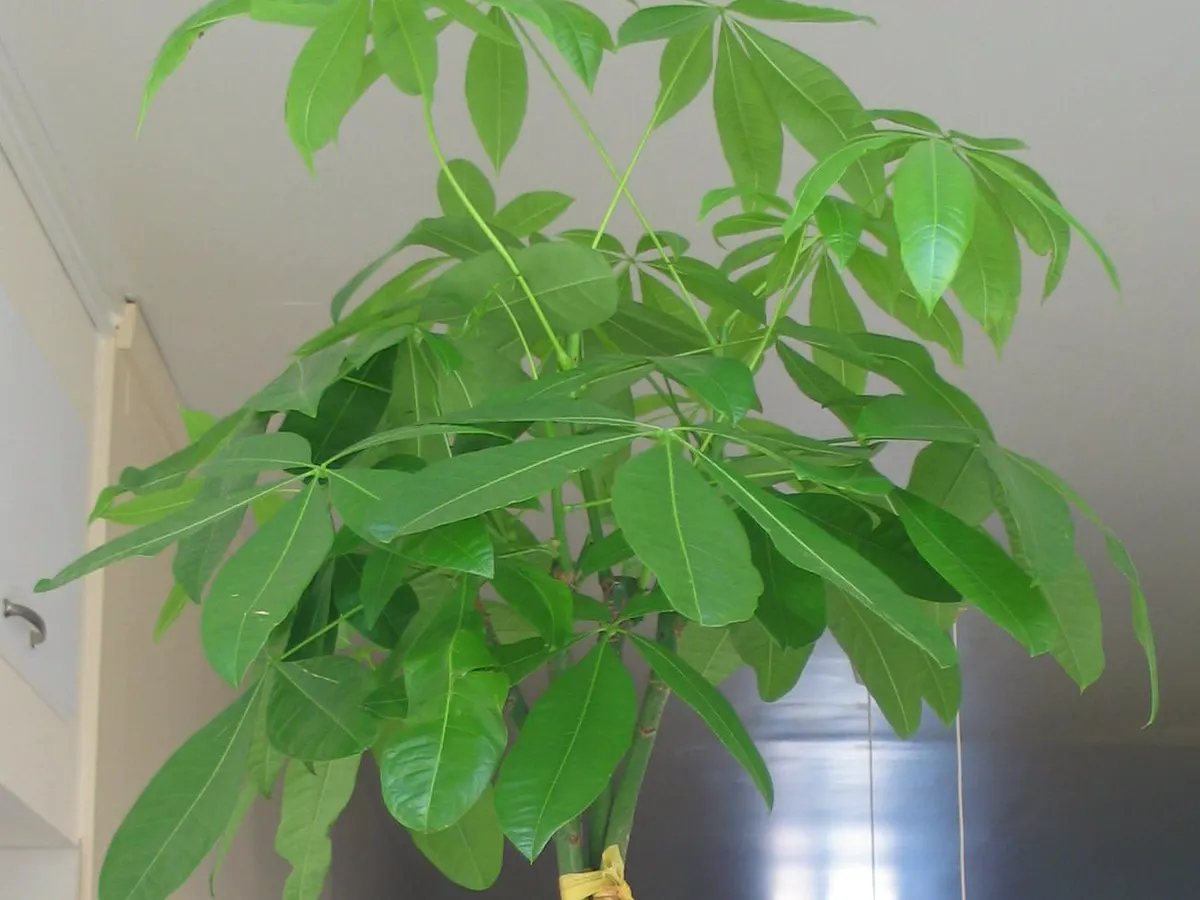
Money tree
Pachira aquatica · Malvaceae · Leafy green plant
Also called Pachira, Guiana chestnut
Let about half the pot dry before watering and never leave it standing in water, as the trunks rot easily. Turn it now and then for even growth.
- Light
- Bright, indirect · copes with less
- Water
- Water when about half the pot has dried out.
- Humidity
- Average
- Temperature
- 15–30 °C
- Care level
- Easy-going, a good first plant
- Pets
- Not known to be toxic to cats and dogs
How often to water Money tree
About every 9 days in summer and every 18 days in winter. Water when about half the pot has dried out.
Roughly how often, in a medium pot (12–20 cm) in the light it likes. Smaller pots, brighter spots and warm balconies need water sooner; big pots and dim corners later.
- Spring every 10 days
- Summer every 9 days
- Autumn every 14 days
- Winter every 18 days
Worked out by LeafMinder’s schedule. In the app it then adapts to your home, from your “still damp” and “bone dry” answers.
Feeding and repotting
Feed about every 30 days from March to September, with a houseplant fertiliser at half strength. Not in the colder months. Check whether it needs a bigger pot every 24 months or so, ideally in spring.
Thirsty, or too wet?
- When it would like water
- The leaves droop, curl or feel limp, and the top half of the pot is dry and light. Water thoroughly until it runs out of the drainage hole, then empty the saucer.
- When it has had too much
- Leaves yellow and drop, and the trunks feel soft or wrinkled near the soil, sometimes with a sour smell. Let about half the pot dry out, empty any standing water, and check the roots if the trunks stay soft.
Soil and pot
Use a free-draining potting mix that still holds some moisture, for example houseplant compost with about a third perlite or fine bark. The pot needs a drainage hole, and the plant should never stand in water. Repot in spring about every two years, moving up only one size, when roots circle the pot or come out of the bottom.
Common problems
- Yellow leaves and soft trunks
- Overwatering or water left in the saucer, which rots the roots and the base of the trunks. Try first: Let about half the pot dry before watering again and empty the saucer 15 minutes after watering. If the trunks stay soft, unpot it, trim away rotten roots and repot into fresh mix.
- Leaves drop after moving the plant
- A change of light, a draught or disturbed roots. Money trees often shed leaves while they settle into a new spot. Try first: Choose a bright place out of draughts and leave it there. Keep watering as usual; new leaves usually come with the next flush of growth.
- Crispy brown leaf edges
- Dry air from heating, uneven watering, or strong direct sun on the leaves. Try first: Move it out of hot direct sun and away from radiators, and keep watering regular. Grouping plants or a tray of wet pebbles raises humidity a little.
- Small brown bumps or sticky leaves
- Scale insects or mealybugs, which feed on the sap and leave sticky honeydew. Try first: Isolate the plant, remove the insects with a cotton bud dipped in rubbing alcohol, then wipe the leaves. Check weekly and repeat.
- Tiny flies around the soil
- Fungus gnats, which breed in mix that stays damp. Try first: Let the top of the mix dry out more between waterings. Yellow sticky traps catch the adults.
Not sure what you’re seeing? A photo health check suggests possible causes. How health checks work
Propagation
Money tree is propagated from stem cuttings in spring or early summer. Cut a healthy shoot 10–15 cm long just below a node, remove the lower leaves and root it in water or in moist, free-draining mix in a warm, bright spot; roots usually form within a few weeks. Cuttings grow into single stems, so a braided plant is made from several young plants grown and woven together over time.
Varieties and relatives
- Pachira glabra: Very similar and often sold as money tree, including many braided plants. Its flowers are all white, while those of Pachira aquatica are tipped with red; indoors both rarely flower, so they're easily mixed up.
- Variegated money tree: A form with leaves marbled cream and green. It grows more slowly and wants a little more light.
Questions people ask
How often should I water a money tree?
About every 9–10 days in spring and summer, about every two weeks in autumn and about every two and a half weeks in winter, in a medium pot indoors. Let about half the pot dry first, and never leave it standing in water.
Is a money tree toxic to cats and dogs?
The ASPCA lists Pachira aquatica as non-toxic to cats and dogs. Eating the leaves can still cause mild vomiting or loose stools, so it's best kept where pets won't chew it.
Why is my money tree dropping leaves?
Usually because something changed: it was moved, sat in a draught, had too much water or lost light in autumn. Keep it in one bright spot, water when half the pot is dry, and give it time; new leaves normally follow.
Should I keep my money tree braided?
Yes, leave the braid as it is and don't cut into it. If the trunks are tied together at the top, loosen the tie as they thicken so it doesn't cut into the bark.
Sources and licences
This care guide was written with AI and checked against the sources below.
- Care checked against: NC State Extension, Gardener Plant Toolbox, New York Botanical Garden, Mertz Library plant guide, ASPCA Animal Poison Control, Wikipedia (cross-check only).
- GBIF Backbone Taxonomy: other botanical names. Record. CC BY 4.0. GBIF Secretariat (2023). GBIF Backbone Taxonomy. Checklist dataset https://doi.org/10.15468/39omei accessed via GBIF.org on 2026-11-15.
Material from these sources keeps its own licence; LeafMinder’s copyright doesn’t extend to it, and the sources don’t endorse LeafMinder.
General guidance. Every home is different, so the soil is always the best guide. About this advice
From LeafMinder’s plant care guides: leafminder.eu/plants/money-tree