



Lucky bamboo
Dracaena braunii · Asparagaceae · Leafy green plant
Also called Ribbon plant, Dracaena sanderiana, Friendship bamboo
If it grows in water, keep the roots covered and change the water every week or two, ideally with filtered or rainwater. In soil, keep it lightly moist.
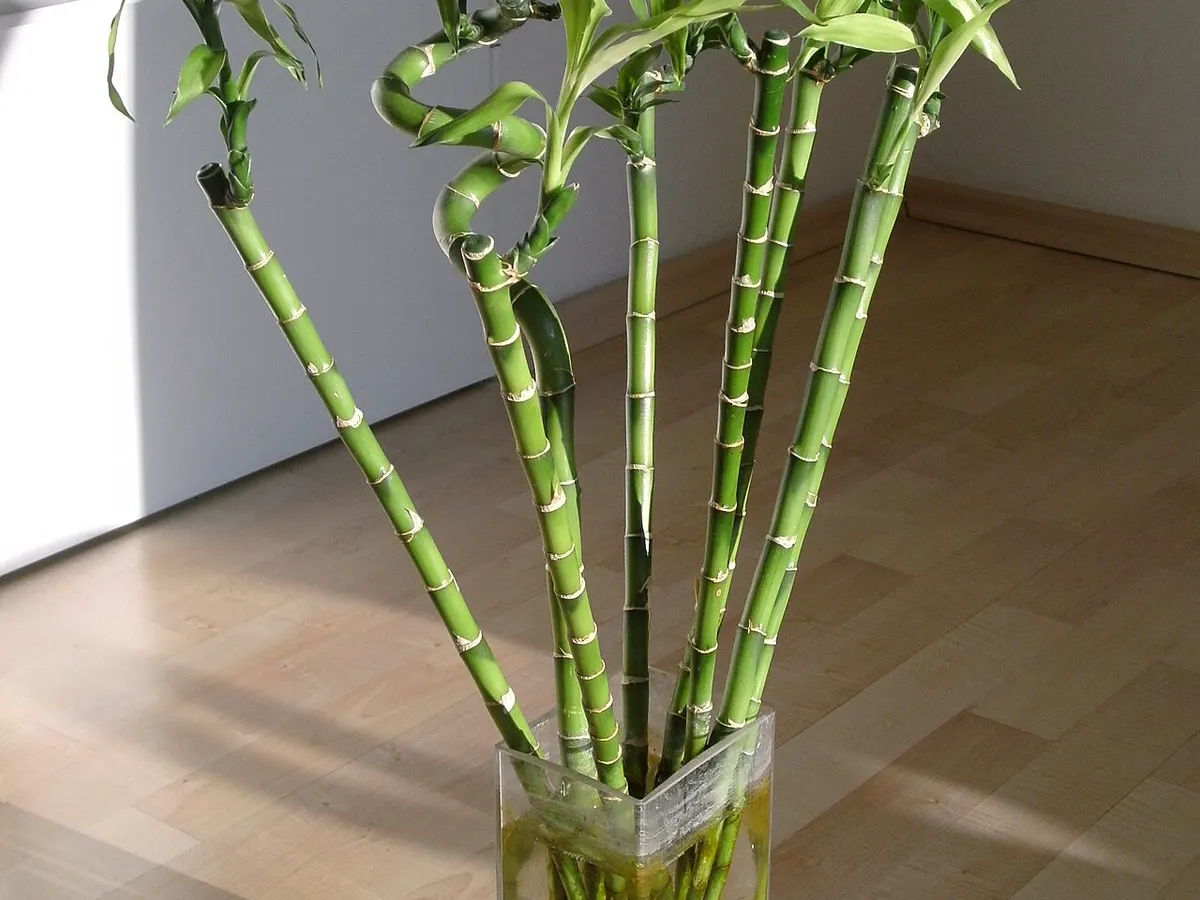
Photo: Bernard Ladenthin, CC0 1.0, via Wikimedia Commons
- Light
- Medium, a few steps from a window · copes with less
- Water
- Keep the soil lightly moist, never soggy.
- Humidity
- Average
- Temperature
- 16–30 °C
- Care level
- Easy-going, a good first plant
- Pets
- Not safe for cats and dogs
How often to water Lucky bamboo
About every 7 days in summer and every 9 days in winter. Keep the soil lightly moist, never soggy.
Roughly how often, in a medium pot (12–20 cm) in the light it likes. Smaller pots, brighter spots and warm balconies need water sooner; big pots and dim corners later.
- Spring every 8 days
- Summer every 7 days
- Autumn every 8 days
- Winter every 9 days
Worked out by LeafMinder’s schedule. In the app it then adapts to your home, from your “still damp” and “bone dry” answers.
Feeding and repotting
Feed about every 60 days from March to September, with a houseplant fertiliser at half strength. Not in the colder months. Check whether it needs a bigger pot every 24 months or so, ideally in spring.
Thirsty, or too wet?
- When it would like water
- In soil, the leaves soften and droop and the top of the mix feels dry. In water, the level has dropped below the roots. Top up or water so the roots stay covered or the mix lightly moist.
- When it has had too much
- In soil that stays soggy, the leaves yellow and the stems turn soft and yellow from the base. Let the pot drain, never leave it in a full saucer, and remove any mushy stems before they affect the others.
Soil and pot
Lucky bamboo grows in water or in soil. In water, keep the roots covered, add pebbles to hold the stems upright, and change the water every week or two. In soil, use a free-draining houseplant mix in a pot with a drainage hole and keep it lightly moist. Move it to a slightly larger container when the roots fill it, roughly every two years.
Common problems
- Yellow leaves or yellow stems
- Often tap water high in chlorine, fluoride or minerals, too much direct sun, soggy soil or too much fertiliser. Try first: Switch to filtered or rainwater, move it out of direct sun and feed only lightly. A stem that has gone yellow from the base won't recover, so remove it.
- Brown leaf tips
- Dry air, or salts and chemicals from tap water building up. Try first: Use filtered or rainwater, change the water regularly and trim the tips with clean scissors.
- Green slime in the vase
- Algae growing in water that gets light and isn't changed often. Try first: Wash the container and pebbles, rinse the roots and refill with fresh water. An opaque container keeps light off the water.
- Bad smell, black or mushy roots
- Stale water, or roots rotting in water that is rarely changed. Try first: Trim away soft roots, rinse the stems and change the water every week or two.
- White fluff or fine webbing on the leaves
- Mealybugs or spider mites. Try first: Wipe or rinse the leaves and remove mealybugs with a cotton bud dipped in rubbing alcohol. Check again weekly.
Not sure what you’re seeing? A photo health check suggests possible causes. How health checks work
Propagation
Lucky bamboo roots easily in water. In spring or summer, cut a side shoot or the top of a tall stem just above a node, remove the lowest leaves and stand the cutting in clean water with the lower node submerged; roots usually appear within two to three weeks. The stem left behind often sprouts new shoots just below the cut.
Varieties and relatives
- 'White Stripe': Deep green leaves with creamy white edges.
- 'Silver Ribbon': Slightly twisted leaves striped with silvery green.
- Corn plant (Dracaena fragrans): A close relative grown in soil, with broad, arching leaves on thick canes.
- Song of India (Dracaena reflexa): Another dracaena, with narrow yellow-edged leaves on branching stems.
Questions people ask
How often should I water a lucky bamboo?
In soil, about every 7–9 days all year round in a medium pot indoors, keeping the mix lightly moist but never soggy. In water, keep the roots covered and change the water every week or two.
Is lucky bamboo toxic to cats and dogs?
Yes. Like other dracaenas it contains saponins, and the ASPCA lists it as toxic to cats and dogs. Chewing it can cause vomiting, drooling and loss of appetite, and dilated pupils in cats. Keep it out of reach and call your vet if a pet eats some.
What water is best for lucky bamboo?
Filtered, rain or distilled water. It is sensitive to the chlorine, fluoride and minerals in tap water, which can turn the leaves yellow. Leaving tap water to stand uncovered for a day lets chlorine escape, but the minerals and fluoride stay.
Is lucky bamboo a real bamboo?
No. It's a dracaena (Dracaena braunii, often sold as Dracaena sanderiana) from tropical Africa. Only its jointed stems look like bamboo.
Sources and licences
This care guide was written with AI and checked against the sources below.
- Care checked against: NC State Extension, Gardener Plant Toolbox, Clemson Cooperative Extension, Home & Garden Information Center, UF/IFAS Extension Nassau County, ASPCA Animal Poison Control.
- GBIF Backbone Taxonomy: other botanical names. Record. CC BY 4.0. GBIF Secretariat (2023). GBIF Backbone Taxonomy. Checklist dataset https://doi.org/10.15468/39omei accessed via GBIF.org on 2026-11-15.
Material from these sources keeps its own licence; LeafMinder’s copyright doesn’t extend to it, and the sources don’t endorse LeafMinder.
General guidance. Every home is different, so the soil is always the best guide. About this advice
From LeafMinder’s plant care guides: leafminder.eu/plants/lucky-bamboo