



Yucca
Yucca gigantea · Asparagaceae · Leafy green plant
Also called Spineless yucca, Yucca elephantipes, Giant yucca
Give it the sunniest spot you have and let about half the pot dry before watering. It can spend summer on a balcony, but bring it in before frost.
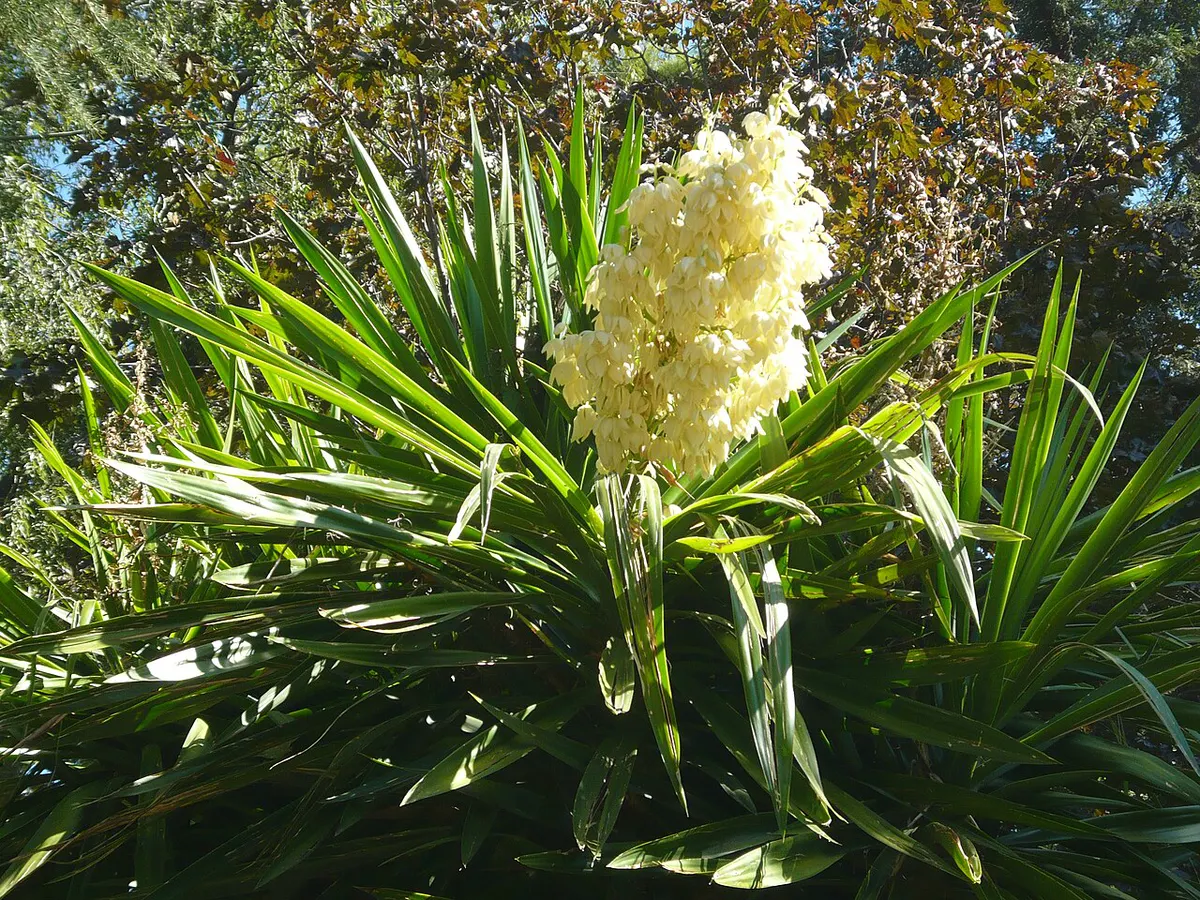
Photo: Cillas, CC BY-SA 4.0, via Wikimedia Commons
- Light
- Direct sun
- Water
- Water when about half the pot has dried out.
- Humidity
- Normal room air is fine
- Temperature
- 7–32 °C
- Care level
- Easy-going, a good first plant
- Pets
- Not safe for cats and dogs
How often to water Yucca
About every 9 days in summer and every 20 days in winter. Water when about half the pot has dried out.
Roughly how often, in a medium pot (12–20 cm) in the light it likes. Smaller pots, brighter spots and warm balconies need water sooner; big pots and dim corners later.
- Spring every 10 days
- Summer every 9 days
- Autumn every 15 days
- Winter every 20 days
Worked out by LeafMinder’s schedule. In the app it then adapts to your home, from your “still damp” and “bone dry” answers.
Feeding and repotting
Feed about every 30 days from March to September, with a houseplant fertiliser at half strength. Not in the colder months. Check whether it needs a bigger pot every 36 months or so, ideally in spring.
Thirsty, or too wet?
- When it would like water
- Lower leaves soften and start to curl, and the pot feels light when you lift it. Push a finger into the soil: if it's dry about halfway down, it's time to water.
- When it has had too much
- Leaves yellow from the base up, and the trunk can feel soft near the soil. Let the pot dry out well, empty the saucer, and check the roots if the trunk stays soft.
Soil and pot
Use a gritty, free-draining mix: houseplant or loam-based compost with plenty of grit, perlite or coarse sand added. A heavy pot with a drainage hole keeps the tall trunk steady and lets extra water out. It's ready for a bigger pot, about every three years, when roots circle the bottom or poke out of the hole, or when the plant tips over easily.
Common problems
- Yellow lower leaves
- A few older leaves yellowing and drying is normal as the plant grows. Many at once, with damp soil, usually means too much water. Try first: Pull off the dry ones gently. If the soil is wet, let about half the pot dry before you water again.
- Soft or wrinkled trunk
- Rot at the base from soil that stays wet, often in winter when the plant uses little water. Try first: Stop watering and check the base. If rot has spread, cut off a healthy top section and root it as a new plant.
- Leaning, stretched growth with pale leaves
- Not enough light. Yuccas grow towards the window, and new leaves come in thin and floppy. Try first: Move it to the sunniest spot you have, and turn the pot every few weeks so it grows evenly.
- White fluff or brown bumps on the leaves
- Mealybugs or scale insects, which hide in the leaf bases and on the undersides. Try first: Wipe them off with a cloth or cotton bud dipped in soapy water, and check again every week for a few weeks.
- Brown spots on the leaves
- Leaf spot fungi, helped along by water sitting on the leaves. Try first: Remove badly spotted leaves, water the soil rather than the crown, and give the plant more air.
Not sure what you’re seeing? A photo health check suggests possible causes. How health checks work
Propagation
The easiest way is to pot up the offsets that grow at the base, in spring, once they have a few leaves of their own. You can also cut a tall trunk into sections or take the leafy top: let the cut dry for a day or two, then root it in a gritty mix kept barely moist. Roots usually form within a few weeks in warmth and good light.
Varieties and relatives
- 'Variegata': Leaves with broad cream stripes. It wants the same sun, though the pale parts can scorch a little faster in a hot window.
- 'Marginata': Pale green leaves with a narrow cream stripe along each edge.
- Beaked yucca: A different species from Mexico and Texas, with stiff, narrow, blue-grey leaves and sharp tips. It's grown outdoors in dry, sunny gardens rather than as a houseplant.
Questions people ask
How often should I water a yucca?
About every 9–10 days in spring and summer, every two weeks or so in autumn and about every three weeks in winter, in a medium pot indoors. Wait until about half the pot has dried first.
Is yucca toxic to cats and dogs?
Yes. The leaves and roots contain saponins, which can cause vomiting if a cat or dog chews them. Keep it out of reach, and call your vet if a pet has eaten some.
Can my yucca go outside in summer?
Yes, a sunny balcony or patio suits it from late spring. Move it into full sun over a week or two so the leaves don't scorch, and bring it in before frost, once nights drop towards 7 °C.
Can I cut back a tall yucca?
Yes. In spring, cut the trunk at the height you want; new shoots usually appear just below the cut within a few weeks. The top part can be rooted as a new plant.
Sources and licences
This care guide was written with AI and checked against the sources below.
- Care checked against: NC State Extension Gardener Plant Toolbox, Royal Horticultural Society, ASPCA Animal Poison Control.
- GBIF Backbone Taxonomy: other botanical names. Record. CC BY 4.0. GBIF Secretariat (2023). GBIF Backbone Taxonomy. Checklist dataset https://doi.org/10.15468/39omei accessed via GBIF.org on 2026-11-15.
Material from these sources keeps its own licence; LeafMinder’s copyright doesn’t extend to it, and the sources don’t endorse LeafMinder.
General guidance. Every home is different, so the soil is always the best guide. About this advice
From LeafMinder’s plant care guides: leafminder.eu/plants/yucca