



Maidenhair fern (Adiantum raddianum)
Adiantum raddianum · Pteridaceae · Fern
Also called Delta maidenhair, Adiantum
Never let it dry out completely; even one dry day can crisp the fronds. If it happens, cut off the dead fronds and keep the soil moist, as it often regrows.
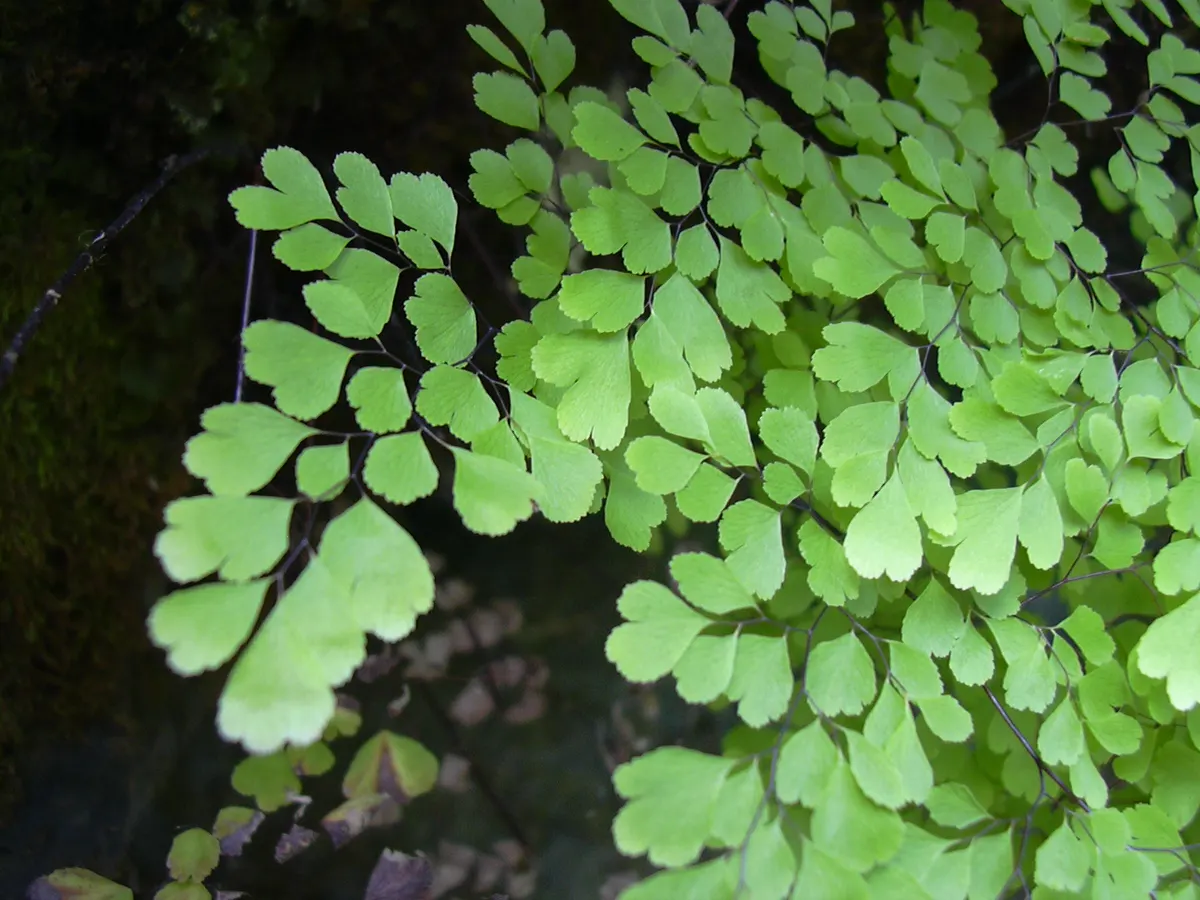
Photo: Forest & Kim Starr, CC BY 3.0, via Wikimedia Commons
- Light
- Medium, a few steps from a window
- Water
- Keep the soil lightly moist, never soggy.
- Humidity
- Likes humid air
- Temperature
- 15–26 °C
- Care level
- Particular about its conditions
- Pets
- Pet safety not confirmed
How often to water Maidenhair fern
About every 3 days in summer and every 4 days in winter. Keep the soil lightly moist, never soggy.
Roughly how often, in a medium pot (12–20 cm) in the light it likes. Smaller pots, brighter spots and warm balconies need water sooner; big pots and dim corners later.
- Spring every 3 days
- Summer every 3 days
- Autumn every 4 days
- Winter every 4 days
Worked out by LeafMinder’s schedule. In the app it then adapts to your home, from your “still damp” and “bone dry” answers.
Feeding and repotting
Feed about every 30 days from March to September, with a houseplant fertiliser at half strength. Not in the colder months. Check whether it needs a bigger pot every 12 months or so, ideally in spring.
Thirsty, or too wet?
- When it would like water
- The fine fronds lose their sheen, droop and feel papery, and the surface of the mix looks pale. Water straight away; it can't sit dry for long.
- When it has had too much
- Fronds yellow and the stems at the base turn dark and soft, in mix that stays soggy and smells stale. Empty the saucer, water again only once the surface has lost its wet shine, and make sure the pot drains.
Soil and pot
Choose a light, peat-free mix that holds moisture yet drains freely, such as houseplant compost with some leaf mould or fine bark. A pot with drainage holes is essential; plastic or glazed pots stay moist longer than terracotta. It grows quickly from creeping rhizomes, so repot each spring, roughly every 12 months, when the clump fills the pot and the mix dries out within a day or two.
Common problems
- Fronds turning crispy and brown
- The mix dried out, even briefly, or the air is too dry. Try first: Cut the dead fronds off at the base, keep the mix evenly moist, and raise humidity with a tray of wet gravel or a humidifier. The rhizomes often send up new fronds within a few weeks.
- Brown tips on otherwise green fronds
- Low humidity, common near radiators in winter. Try first: Move it away from heat and draughts, group it with other plants, or stand it on a tray of moist gravel. A bright bathroom often suits it.
- Pale, bleached or scorched fronds
- Direct sun. Try first: Move it to bright, indirect light, such as a north- or east-facing window.
- Small brown bumps on the stems
- Scale insects. Spore cases sit in neat rows under the curled edges of the leaflets, so check where the bumps are first. Try first: Remove scale by hand or with a jet of water. Many sprays damage ferns, so test any product on one frond first.
- Yellow fronds and soft stems at the base
- Mix that stays waterlogged, or a pot without drainage, leading to root rot. Try first: Let it drain, empty the saucer and water when the surface is no longer wet, just moist. If the roots are mushy, repot into fresh mix.
Not sure what you’re seeing? A photo health check suggests possible causes. How health checks work
Propagation
The easy way is division in early spring: lift the plant, gently pull or cut the clump of rhizomes into a few pieces, each with roots and some fronds, and pot them in moist mix. Keep them warm and humid while they settle. Growers also raise it from spores sown on a sterile, moist surface at about 21 °C, which is slow and takes patience.
Varieties and relatives
- 'Fragrantissimum': A vigorous, larger form with lush, lightly fragrant fronds; one of the most common in shops.
- 'Kensington Gem': Smaller, delicate leaflets on a neat plant.
- 'Microphyllum': A dwarf form with tiny leaflets, about 30 cm tall at most; good in terrariums.
- Southern maidenhair fern (Adiantum capillus-veneris): A close relative that grows wild in southern Europe on damp rocks and walls; its leaflets are more clearly fan-shaped.
Questions people ask
How often should I water a maidenhair fern?
About every 3 days in spring and summer and every 4 days in autumn and winter, in a medium pot indoors. Aim for mix that is lightly moist all the time, never soggy and never dry.
Is a maidenhair fern toxic to cats and dogs?
Its safety for pets isn't confirmed by the sources we rely on, so keep it out of reach of cats and dogs to be careful. If your pet has eaten a lot of it and seems unwell, call your vet.
Can a dried-out maidenhair fern come back?
Often, yes. Cut off all the crisp fronds at the base, keep the mix evenly moist and the air humid, and new fronds usually rise from the rhizomes within a few weeks.
Should I mist a maidenhair fern?
Misting raises humidity for only a few minutes, so it can't make up for dry air on its own. A tray of moist gravel, a humidifier, grouping plants together or a bright bathroom do more.
Sources and licences
This care guide was written with AI and checked against the sources below.
- Care checked against: NC State Extension Gardener Plant Toolbox, Clemson Cooperative Extension, Home & Garden Information Center, Royal Horticultural Society.
- GBIF Backbone Taxonomy: other botanical names. Record. CC BY 4.0. GBIF Secretariat (2023). GBIF Backbone Taxonomy. Checklist dataset https://doi.org/10.15468/39omei accessed via GBIF.org on 2026-11-15.
Material from these sources keeps its own licence; LeafMinder’s copyright doesn’t extend to it, and the sources don’t endorse LeafMinder.
General guidance. Every home is different, so the soil is always the best guide. About this advice
From LeafMinder’s plant care guides: leafminder.eu/plants/maidenhair-fern