



Staghorn fern
Platycerium bifurcatum · Polypodiaceae · Fern
Also called Elkhorn fern, Platycerium
Water by soaking the root ball or mount about once a week, then let it drain; do not remove the brown shield fronds at the base. Mist it in dry rooms.
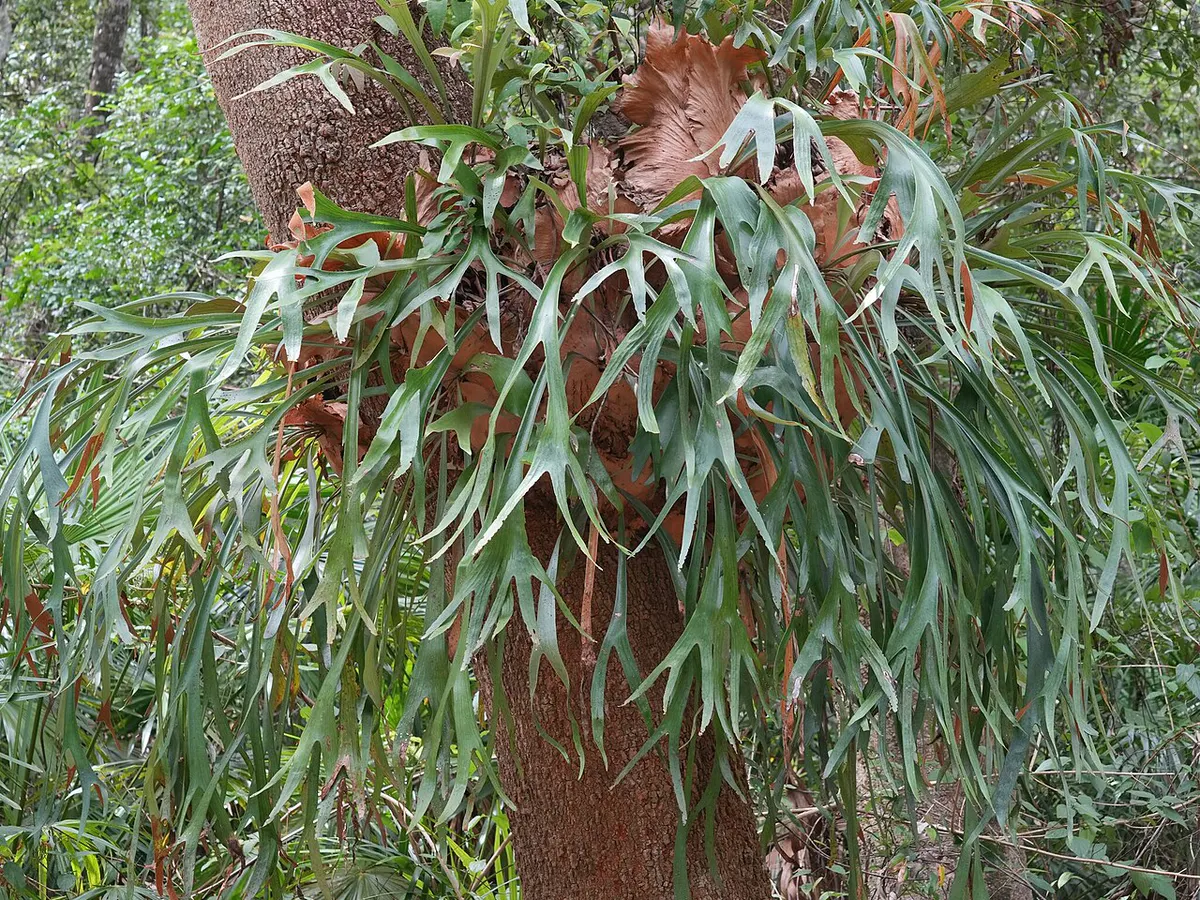
Photo: themaskedlapwing, CC0 1.0, via Wikimedia Commons
- Light
- Bright, indirect
- Water
- Water when the top 2–3 cm of soil are dry.
- Humidity
- Average
- Temperature
- 15–27 °C
- Care level
- Needs a little attention
- Pets
- Not known to be toxic to cats and dogs
How often to water Staghorn fern
About every 6 days in summer and every 11 days in winter. Water when the top 2–3 cm of soil are dry.
Roughly how often, in a medium pot (12–20 cm) in the light it likes. Smaller pots, brighter spots and warm balconies need water sooner; big pots and dim corners later.
- Spring every 7 days
- Summer every 6 days
- Autumn every 9 days
- Winter every 11 days
Worked out by LeafMinder’s schedule. In the app it then adapts to your home, from your “still damp” and “bone dry” answers.
Feeding and repotting
Feed about every 30 days from March to September, with a houseplant fertiliser at half strength. Not in the colder months. Check whether it needs a bigger pot every 36 months or so, ideally in spring.
Thirsty, or too wet?
- When it would like water
- The moss behind the shield fronds feels dry and the mount or pot feels light. The antler fronds look slightly limp and dull. Soak the root ball for a few minutes and let it drain, and it should perk up within a day.
- When it has had too much
- The shield fronds turn black and soft from the base, and dark spots may appear on the antlers. Let the moss dry further between soakings, and give it brighter light and more air.
Soil and pot
In nature it grows on tree bark, so it does best mounted on a board over a pad of sphagnum moss, or in a pot or wire basket of loose orchid bark and sphagnum. Never use ordinary potting soil, and make sure any pot has drainage holes. It wants a bigger mount or basket when the shield fronds grow over the edges, roughly every three years.
Common problems
- Brown, papery fronds at the base
- These are the shield fronds. They turn brown as they age, but they still hold the plant in place, protect the roots and catch water. Try first: Leave them on. New green shields grow over the old ones.
- Black, soft patches at the base
- Too much water, especially in a cool or dim spot, so the root area starts to rot. Try first: Let the moss dry out more between soakings and move the plant to brighter light.
- Pale, slow growth and thin antlers
- Too little light. Very low light also invites pests and disease. Try first: Move it to bright, indirect light, near an east or west window, out of hot midday sun.
- Cottony white or brown bumps on the fronds
- Mealybugs or scale insects, which hide on the undersides and around the base. Try first: Remove them gently with a soft brush and rinse with water. Don't rub off the fine silvery fuzz on healthy fronds, as it protects the leaf.
- Brown felt under the antler tips
- Spores, a sign of a mature, healthy plant. Try first: Nothing to do. It is not a disease and doesn't need removing.
Not sure what you’re seeing? A photo health check suggests possible causes. How health checks work
Propagation
The easiest way is from pups, the small plants that appear around the sides of a mature fern. In spring or summer, cut one away with its roots and a little moss and fix it to its own small mount or pot. Large plants can also be divided when you remount them. Growing from spores is possible but slow and fiddly, and is usually left to nurseries.
Varieties and relatives
- 'Netherlands': A popular, compact form with greyish-green, lobed fronds that spread in all directions.
- Giant staghorn fern (Platycerium superbum): Much bigger, with a tall shield and wide hanging antlers. It makes no pups and is grown from spores.
- Platycerium veitchii: Upright, silvery fronds covered in white fuzz. Like the common staghorn, it is one of the more cold-tolerant kinds.
Questions people ask
How often should I water a staghorn fern?
About every 6 days in summer, every 7 in spring, every 9 in autumn and about every 11 in winter, in a medium pot indoors. Check that the top of the moss has dried first; a mount in a warm, dry room may need water a little sooner.
Is a staghorn fern toxic to cats and dogs?
No, it is listed as non-toxic to cats and dogs. Chewing any plant can still upset a pet's stomach, and a wall mount keeps it out of reach anyway.
Should I remove the brown fronds at the base of my staghorn fern?
No. The flat shield fronds turn brown with age but keep holding the plant to its mount, protecting the roots and catching water. New green shields grow over them each year.
How do I water a mounted staghorn fern?
Take it down and soak the moss and root ball in a sink of room-temperature water for 10–15 minutes, then let it drip before hanging it back up. In dry, heated rooms, misting the fronds between soakings helps.
Sources and licences
This care guide was written with AI and checked against the sources below.
- Care checked against: UF/IFAS Gardening Solutions, NC State Extension Gardener Plant Toolbox, ASPCA.
General guidance. Every home is different, so the soil is always the best guide. About this advice
From LeafMinder’s plant care guides: leafminder.eu/plants/staghorn-fern