



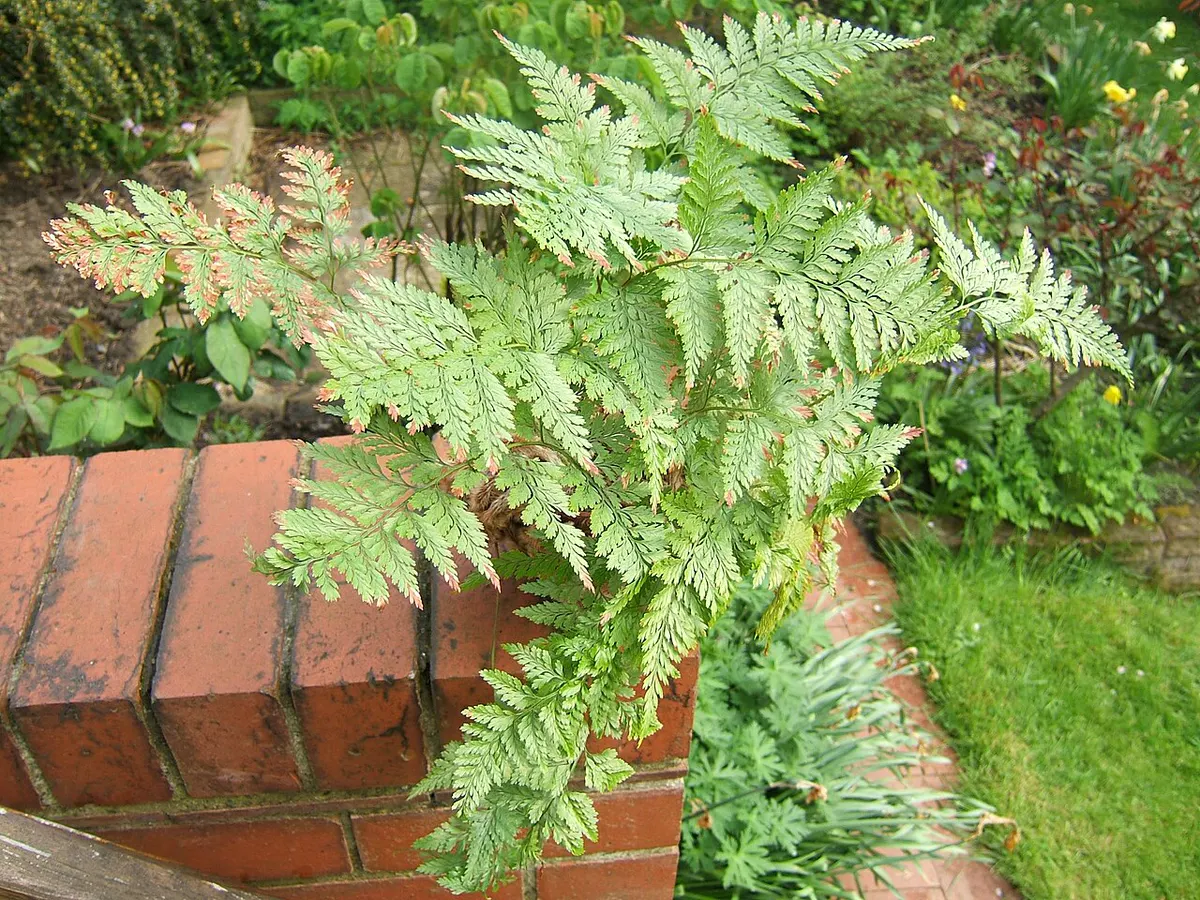
Rabbit's foot fern
Davallia spp. · Davalliaceae · Fern
Also called Hare's foot fern, Davallia
Water when the surface feels dry and keep the furry rhizomes on top of the soil, never buried. It tolerates drier air than most ferns.
- Light
- Bright, indirect
- Water
- Water when the top 2–3 cm of soil are dry.
- Humidity
- Average
- Temperature
- 13–27 °C
- Care level
- Needs a little attention
- Pets
- Not known to be toxic to cats and dogs
How often to water Rabbit's foot fern
About every 5 days in summer and every 7 days in winter. Water when the top 2–3 cm of soil are dry.
Roughly how often, in a medium pot (12–20 cm) in the light it likes. Smaller pots, brighter spots and warm balconies need water sooner; big pots and dim corners later.
- Spring every 5 days
- Summer every 5 days
- Autumn every 6 days
- Winter every 7 days
Worked out by LeafMinder’s schedule. In the app it then adapts to your home, from your “still damp” and “bone dry” answers.
Feeding and repotting
Feed about every 30 days from March to September, with a houseplant fertiliser at half strength. Not in the colder months. Check whether it needs a bigger pot every 24 months or so, ideally in spring.
Thirsty, or too wet?
- When it would like water
- The fronds lose their sheen and curl a little, and the surface of the mix feels dry to the touch. The furry rhizomes hold some water, so a short dry spell does no harm; water thoroughly and let it drain.
- When it has had too much
- Fronds turn yellow and limp, and the rhizomes may darken and feel soft. Let the top few centimetres dry before the next watering, empty the saucer, and make sure no rhizomes sit buried in wet mix.
Soil and pot
Use an open, free-draining mix: peat-free potting mix with orchid bark and a little grit works well, or a mix sold for orchids. A wide, shallow pot or a hanging basket with drainage holes suits the creeping rhizomes. Rhizomes spreading over the surface and the rim are normal, not a sign it needs repotting. Move it up one size in spring when roots fill the pot or push out of the drainage holes and water runs straight through.
Common problems
- Brown, crispy fronds
- Very dry air, a radiator nearby, cold draughts, or direct midday sun scorching the fronds. Try first: Move it to bright, indirect light away from heat and draughts. Group it with other plants or stand it on a tray of damp gravel, and trim brown fronds at the base.
- Yellow fronds and soft, dark rhizomes
- Mix that stays wet, a pot standing in water, or rhizomes buried under the soil, where they rot easily. Try first: Let the top 2–3 cm dry between waterings, empty the saucer and lift any buried rhizomes back onto the surface. Cut away rhizome pieces that have gone mushy.
- Fine webbing and pale, speckled fronds
- Spider mites, which thrive in warm, dry rooms. Try first: Rinse the fronds gently with lukewarm water, raise the humidity around the plant, and check again every few days for a few weeks.
- White, fluffy clusters around the rhizomes
- Mealybugs, which hide under the rhizomes, at the base of fronds and among dry fronds. Try first: Remove them with a cotton swab dipped in rubbing alcohol and clear out dead fronds. Ferns are sensitive to many sprays, so test any product on one frond first.
- Brown bumps on stems or rhizomes
- Scale insects. Brown dots in neat rows on the underside of the fronds are something else: those are spore cases, and they are normal. Try first: Scale scrapes off with a fingernail or a soft brush. Wipe the spots and repeat weekly until no new ones appear.
Not sure what you’re seeing? A photo health check suggests possible causes. How health checks work
Propagation
The easiest way is division in spring: cut the mat of rhizomes into pieces, each with roots and a few fronds, and set them on fresh mix. You can also take a rhizome tip 5–8 cm long with one or two fronds, pin it onto moist mix with a bent wire without burying it, and cover it loosely with a clear bag. Keep it in bright, indirect light until new fronds appear. Spores work too, but slowly.
Varieties and relatives
- Davallia solida var. fejeensis: The usual rabbit's foot fern, with finely cut, lacy fronds; long sold as Davallia fejeensis.
- Davallia canariensis: The deer's foot fern from the Canary Islands and the Iberian Peninsula, with thick, furry rhizomes; it holds the RHS Award of Garden Merit.
- Davallia mariesii: The squirrel's foot fern from East Asia: smaller and semi-evergreen, with creeping, hairy rhizomes.
- Humata tyermanii: Often sold as white rabbit's foot fern; once placed in Davallia, its rhizomes are covered in silvery-white hairs.
Questions people ask
How often should I water a rabbit's foot fern?
About every 5 days in spring and summer, every 6 days in autumn and about once a week in winter, in a medium pot indoors. Check that the top 2–3 cm of mix feel dry first.
Is a rabbit's foot fern toxic to cats and dogs?
No. The ASPCA lists rabbit's foot ferns as non-toxic to cats and dogs. Chewing any plant can still upset a pet's stomach a little, so it's best kept out of nibbling reach.
Should I bury the furry rhizomes of a rabbit's foot fern?
No. The furry 'feet' are creeping stems, not roots. They root where they touch the mix and rot if buried, so leave them on top, even when they spill over the edge of the pot.
Why are my rabbit's foot fern's fronds turning brown?
An old frond browning now and then is natural; cut it off at the base. Many brown fronds point to dry air, heat, direct sun or a watering problem, so check the spot and the mix first.
Sources and licences
This care guide was written with AI and checked against the sources below.
General guidance. Every home is different, so the soil is always the best guide. About this advice
From LeafMinder’s plant care guides: leafminder.eu/plants/rabbits-foot-fern