



Golden pothos
Epipremnum aureum · Araceae · Trailing or climbing plant
Also called Devil's ivy, Pothos, Epipremnum
Let the top few centimetres dry out. Drooping leaves mean it's thirsty, yellow ones usually mean too much water.
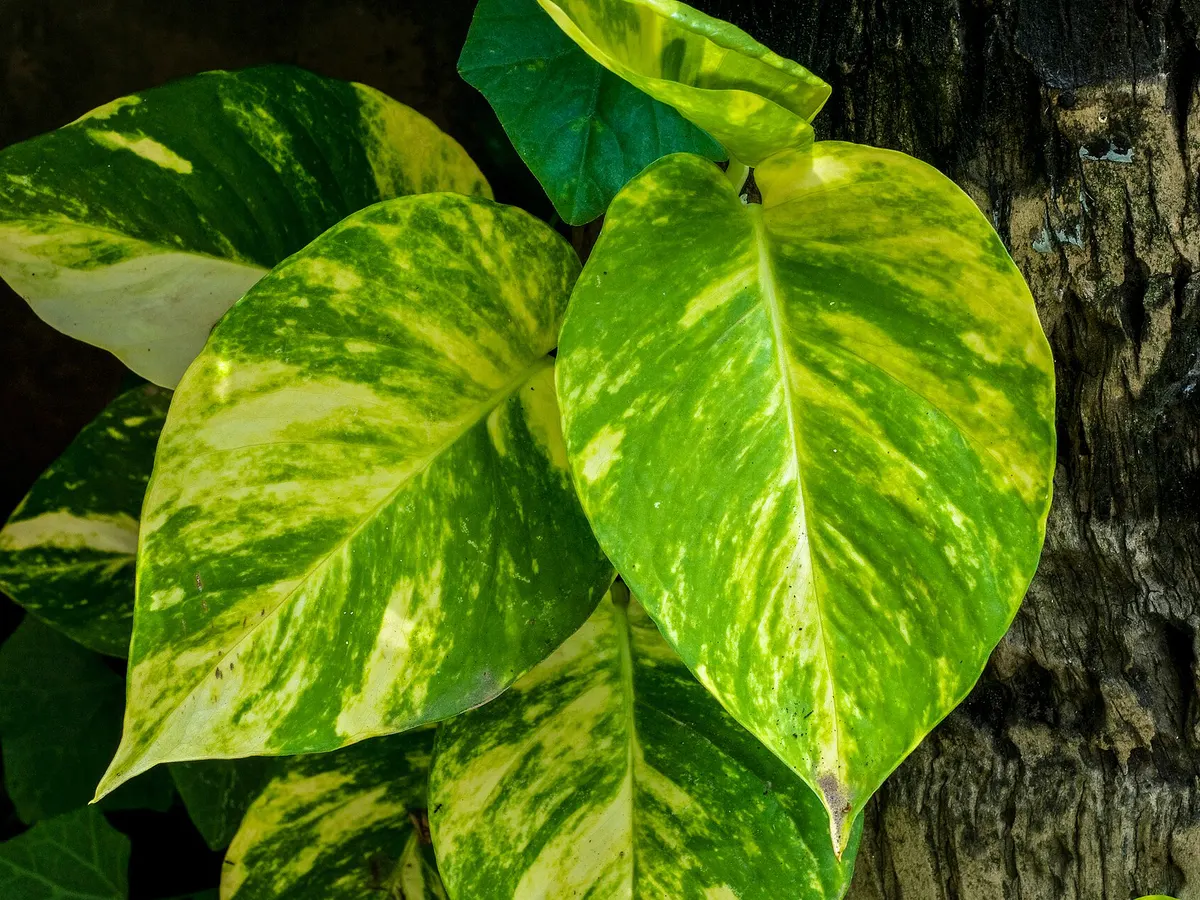
Photo: Joydeep, CC BY-SA 3.0, via Wikimedia Commons
- Light
- Bright, indirect · copes with less
- Water
- Water when the top 2–3 cm of soil are dry.
- Humidity
- Average
- Temperature
- 15–30 °C
- Care level
- Easy-going, a good first plant
- Pets
- Not safe for cats and dogs
How often to water Golden pothos
About every 6 days in summer and every 11 days in winter. Water when the top 2–3 cm of soil are dry.
Roughly how often, in a medium pot (12–20 cm) in the light it likes. Smaller pots, brighter spots and warm balconies need water sooner; big pots and dim corners later.
- Spring every 7 days
- Summer every 6 days
- Autumn every 9 days
- Winter every 11 days
Worked out by LeafMinder’s schedule. In the app it then adapts to your home, from your “still damp” and “bone dry” answers.
Feeding and repotting
Feed about every 30 days from March to September, with a houseplant fertiliser at half strength. Not in the colder months. Check whether it needs a bigger pot every 24 months or so, ideally in spring.
Thirsty, or too wet?
- When it would like water
- The leaves droop and go soft, and the top few centimetres of soil feel dry. It perks up within a few hours of a good drink, but try to water just before it gets to that point.
- When it has had too much
- Leaves turn yellow, sometimes with dark brown or black edges, and the soil stays damp. Let the top 2–3 cm dry before watering again and make sure the pot drains.
Soil and pot
Any good, free-draining potting compost suits it, ideally loosened with a handful of perlite. Use a pot or hanging basket with drainage holes. Repot about every two years, in spring, when roots come out of the bottom or circle the pot, or when the soil dries out in just a couple of days.
Common problems
- Yellow leaves
- Most often too much water. One old leaf yellowing now and then is normal, as pothos sheds its oldest leaves. Try first: Let the top 2–3 cm of soil dry before watering and check that the pot drains. Pick off the yellow leaves.
- Limp, drooping leaves
- The plant is thirsty and the soil has dried out. Try first: Water thoroughly until it runs out of the bottom. It should recover within hours; next time, water a little sooner.
- Long, bare stems with small leaves
- Too little light, so the stems stretch out looking for it. Try first: Move it to brighter, indirect light and trim the bare stems back to encourage new growth nearer the pot.
- Black or dark brown leaf edges
- Usually overwatering, which can lead to root rot. Try first: Let the soil dry more between waterings. If the roots are brown and mushy, trim them and repot in fresh mix.
- White fluff or small brown bumps on stems
- Mealybugs or scale insects feeding on the sap. Try first: Wipe them off with a damp cloth, keep the plant apart from others and check weekly until no new ones appear.
Not sure what you’re seeing? A photo health check suggests possible causes. How health checks work
Propagation
Pothos roots very easily. Cut a 10–15 cm piece of stem just below a node, the point where a leaf joins the stem and a small brown root often shows, and remove the lowest leaf. Stand it in water or push it into moist potting mix in a warm, bright spot; roots usually form within two to three weeks. Spring and summer are fastest, and several cuttings in one pot make a fuller plant.
Varieties and relatives
- 'Marble Queen': Leaves heavily marbled with creamy white. It grows a little slower and needs more light to keep its pattern.
- 'Neon': Bright yellow-green leaves with no marbling, at their best in good light.
- Satin pothos (Scindapsus pictus): A different genus, with matte, silver-splashed leaves. Similar easy care.
- Heartleaf philodendron (Philodendron hederaceum): Often mixed up with pothos. Its leaves are thinner, softer and more clearly heart-shaped, and its care is much the same.
Questions people ask
How often should I water a pothos?
In a medium pot indoors, about once a week in spring and summer (every 6–7 days), every 9 days or so in autumn and about every 11 days in winter. Check that the top 2–3 cm of soil are dry first.
Is pothos toxic to cats and dogs?
Yes. It contains insoluble calcium oxalate crystals, which irritate the mouth and can cause drooling, vomiting and trouble swallowing. Hang it or place it out of reach, and call your vet if a pet chews it.
Why is my pothos losing its variegation?
Low light is the usual reason: the plant makes more green to catch what light there is. Move it to bright, indirect light and new leaves should show more colour; leaves that have already turned green stay green.
How do I make my pothos fuller?
Trim long stems back to just above a leaf in spring or summer, which encourages new shoots. Root the cuttings and plant them back into the same pot to fill out the top.
From the journal
Sources and licences
This care guide was written with AI and checked against the sources below.
- Care checked against: NC State Extension Gardener Plant Toolbox, Iowa State University Extension and Outreach, ASPCA Animal Poison Control.
- GBIF Backbone Taxonomy: other botanical names. Record. CC BY 4.0. GBIF Secretariat (2023). GBIF Backbone Taxonomy. Checklist dataset https://doi.org/10.15468/39omei accessed via GBIF.org on 2026-11-15.
Material from these sources keeps its own licence; LeafMinder’s copyright doesn’t extend to it, and the sources don’t endorse LeafMinder.
General guidance. Every home is different, so the soil is always the best guide. About this advice
From LeafMinder’s plant care guides: leafminder.eu/plants/golden-pothos