



Heartleaf philodendron
Philodendron hederaceum · Araceae · Trailing or climbing plant
Also called Sweetheart plant, Philodendron scandens, Philodendron Brasil, Philodendron micans
Water when the top few centimetres are dry. Long, bare stems mean it wants more light; trim them and root the cuttings in water.
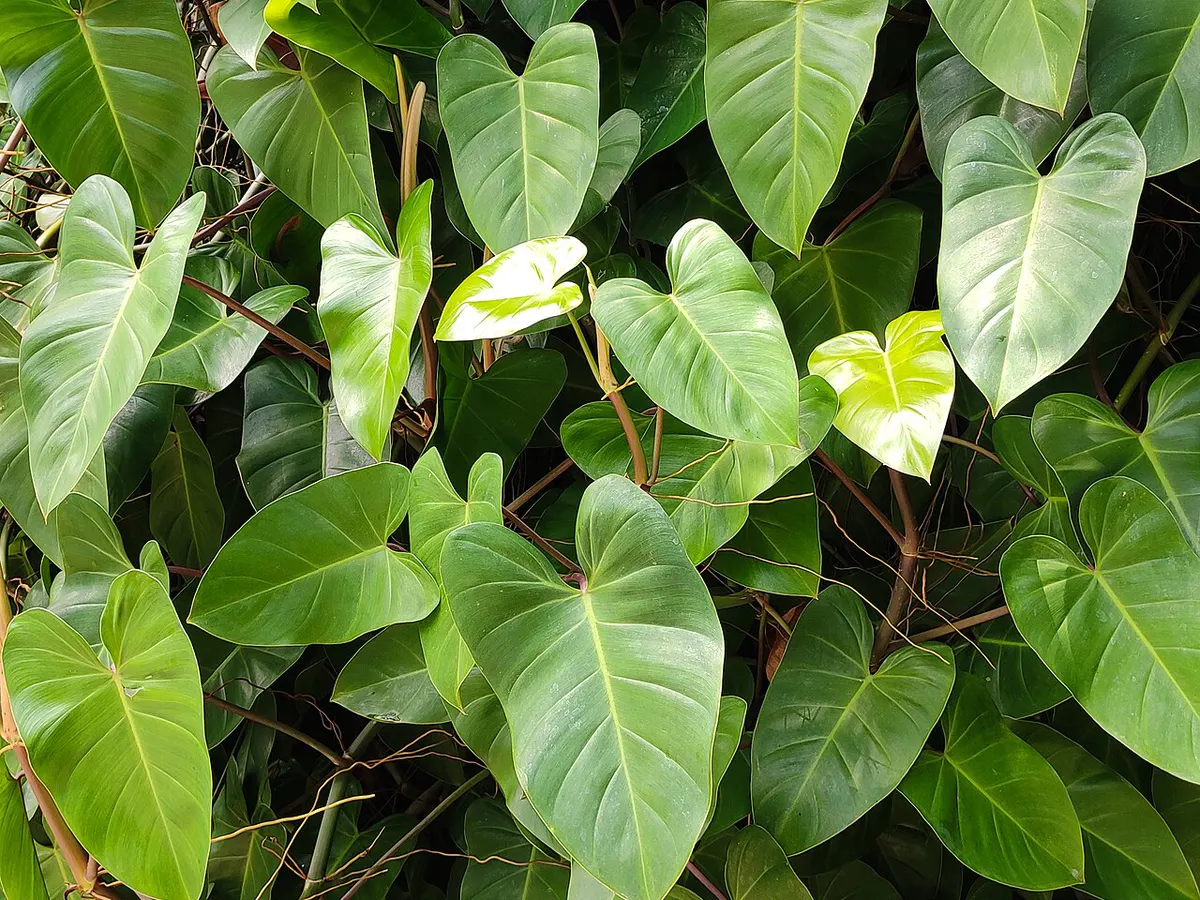
Photo: Moheen Reeyad, CC BY-SA 4.0, via Wikimedia Commons
- Light
- Bright, indirect · copes with less
- Water
- Water when the top 2–3 cm of soil are dry.
- Humidity
- Average
- Temperature
- 15–30 °C
- Care level
- Easy-going, a good first plant
- Pets
- Not safe for cats and dogs
How often to water Heartleaf philodendron
About every 6 days in summer and every 11 days in winter. Water when the top 2–3 cm of soil are dry.
Roughly how often, in a medium pot (12–20 cm) in the light it likes. Smaller pots, brighter spots and warm balconies need water sooner; big pots and dim corners later.
- Spring every 7 days
- Summer every 6 days
- Autumn every 9 days
- Winter every 11 days
Worked out by LeafMinder’s schedule. In the app it then adapts to your home, from your “still damp” and “bone dry” answers.
Feeding and repotting
Feed about every 30 days from March to September, with a houseplant fertiliser at half strength. Not in the colder months. Check whether it needs a bigger pot every 24 months or so, ideally in spring.
Thirsty, or too wet?
- When it would like water
- The leaves go soft and hang limply from the stems, and the top few centimetres of soil feel dry. It perks up within a few hours of a good drink.
- When it has had too much
- Leaves turn yellow, often several at once, and the stems near the soil may darken and go soft. Let the top few centimetres dry out, empty the saucer and check that the pot drains freely.
Soil and pot
A general-purpose potting mix works well, lightened with some perlite or bark so it drains quickly; slow-draining mixes are the main cause of root rot. Always use a pot with drainage holes. Repot in spring, about every two years, when roots come out of the drainage holes or the soil dries out within a day or two of watering. One size up is enough.
Common problems
- Long, bare stems with small leaves
- Too little light. It survives in dim rooms but stretches towards the light and grows sparse. Try first: Move it to bright, indirect light. Trim the long stems just above a leaf to make it bushier and root the cuttings.
- Yellow leaves and soft stems at the base
- Overwatering or a mix that drains slowly, which leads to root rot. Try first: Let the soil dry further between waterings. If the roots are brown and mushy, trim them off and repot into fresh, airy mix.
- Brown, curling leaf tips
- Too much fertiliser, or the soil drying out completely between waterings. Try first: Flush the pot with plenty of water and feed only once a month from spring to early autumn, at half strength.
- Fine webbing and pale speckles on the leaves
- Spider mites, which like warm, dry air. Try first: Rinse the leaves well under the shower, including the undersides, and repeat weekly. Insecticidal soap helps if they persist.
- White cottony spots or small brown bumps on stems
- Mealybugs or scale insects, which feed on sap. Aphids and thrips also appear now and then. Try first: Remove them with a cotton bud dipped in rubbing alcohol, keep the plant apart from others and check again every few days.
Not sure what you’re seeing? A photo health check suggests possible causes. How health checks work
Propagation
It's one of the easiest plants to propagate. Cut a piece of stem with at least one or two nodes, the bumps where leaves and small aerial roots grow, and stand it in water or push it into moist potting mix. Roots usually appear within a few weeks in a warm, bright spot. It works at any time of year, though growth is quickest in spring and summer.
Varieties and relatives
- 'Brasil': Dark green leaves with a lime to yellow stripe down the middle. The pattern varies from leaf to leaf.
- 'Lemon Lime': Bright chartreuse leaves that are most vivid when new. Same easy care as the green form.
- 'Micans': A velvety-leaved form with bronze-green to purplish leaves, smaller than the usual green type.
- Golden pothos: Often confused with it. Pothos has thicker, more pointed leaves with a groove along the leaf stalk.
Questions people ask
How often should I water a heartleaf philodendron?
About every 6–7 days in spring and summer, every 9 days or so in autumn and about every 11 days in winter, in a medium pot indoors. Check that the top few centimetres of soil are dry first.
Is heartleaf philodendron toxic to cats and dogs?
Yes. All parts contain calcium oxalate crystals, which irritate the mouth and can cause drooling, swelling, trouble swallowing and vomiting. Keep it out of reach, which is easy in a hanging pot, and call a vet if a pet chews it.
How do I make my heartleaf philodendron fuller?
Give it brighter, indirect light and pinch or cut the stem tips regularly, just above a leaf, so it branches. Root the cuttings and plant them back into the same pot to fill out the top.
What is the difference between a heartleaf philodendron and a pothos?
Philodendron leaves are thinner, softer and more heart-shaped, and new leaves unfold from a thin sheath that dries off. Pothos leaves are thicker and waxier, with a groove running along the leaf stalk. Their care is very similar.
Sources and licences
This care guide was written with AI and checked against the sources below.
General guidance. Every home is different, so the soil is always the best guide. About this advice
From LeafMinder’s plant care guides: leafminder.eu/plants/heartleaf-philodendron