



Clivia
Clivia miniata · Amaryllidaceae · Flowering houseplant
Also called Bush lily, Natal lily
A cool, fairly dry rest at around 10 to 12 °C from late autumn to midwinter helps it flower. It blooms best when crowded in its pot, so repot only every few years.
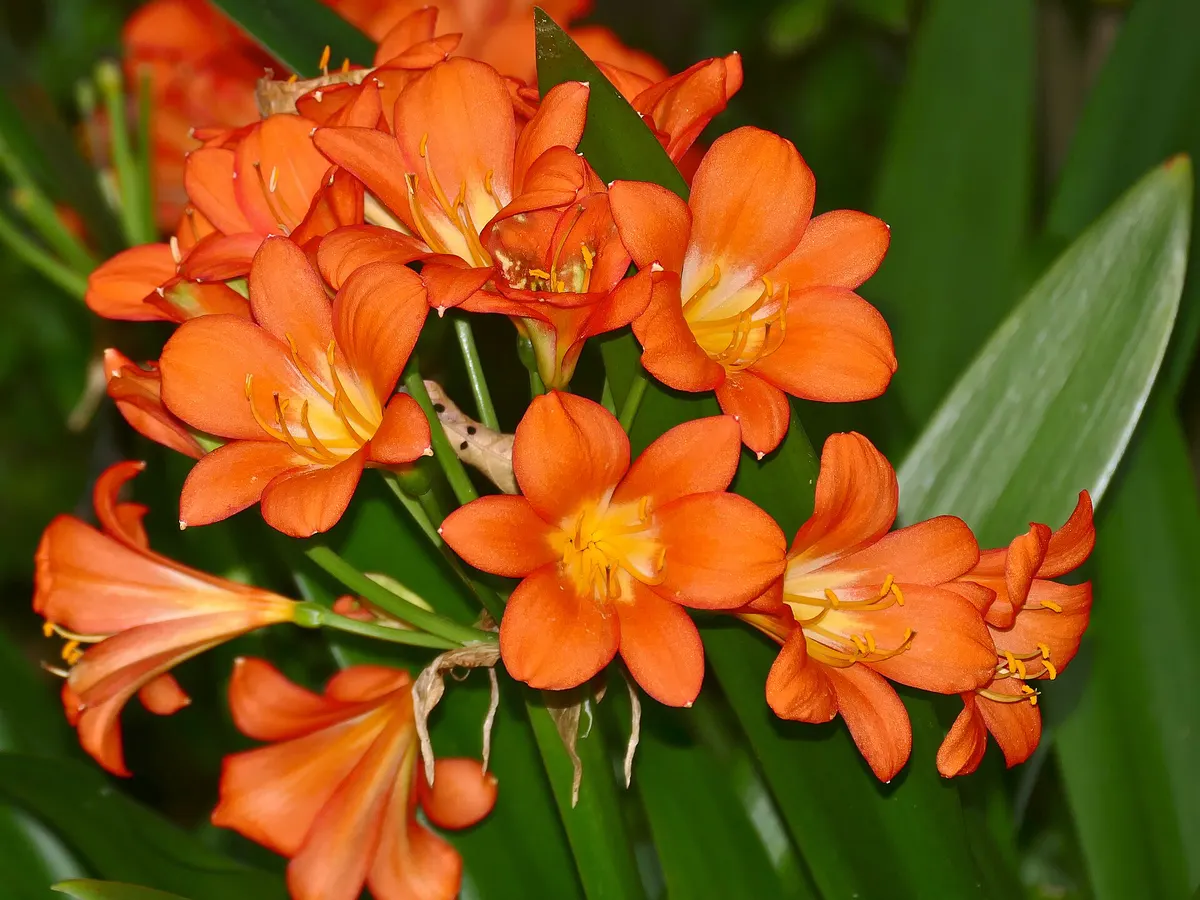
Photo: Bernard DUPONT from FRANCE, CC BY-SA 2.0, via Wikimedia Commons
- Light
- Medium, a few steps from a window · copes with less
- Water
- Water when the top 2–3 cm of soil are dry.
- Humidity
- Average
- Temperature
- 10–27 °C
- Care level
- Easy-going, a good first plant
- Pets
- Not safe for cats and dogs
How often to water Clivia
About every 9 days in summer and every 25 days in winter. Water when the top 2–3 cm of soil are dry.
Roughly how often, in a medium pot (12–20 cm) in the light it likes. Smaller pots, brighter spots and warm balconies need water sooner; big pots and dim corners later.
- Spring every 10 days
- Summer every 9 days
- Autumn every 17 days
- Winter every 25 days
Worked out by LeafMinder’s schedule. In the app it then adapts to your home, from your “still damp” and “bone dry” answers.
Feeding and repotting
Feed about every 30 days from March to August, with a houseplant fertiliser at half strength. Not in the colder months. Check whether it needs a bigger pot every 36 months or so, ideally in spring.
Thirsty, or too wet?
- When it would like water
- The top 2–3 cm of soil feel dry and the pot is noticeably lighter. The thick roots store water, so the leaves rarely droop; go by the soil, not the leaves.
- When it has had too much
- Leaves yellow from the base, the base of the plant feels soft and the soil stays wet for days. Let the pot dry out, check for brown, mushy roots, and water less often from then on.
Soil and pot
Use a free-draining houseplant mix with some grit or bark added, in a heavy pot with a drainage hole, so the tall plant does not tip over. Clivia flowers best when its roots are snug, so it can stay in the same pot for three years or more. Move it up only a few centimetres when roots push out of the drainage hole or lift the plant out of the pot, ideally in spring after flowering.
Common problems
- Healthy leaves but no flowers
- Usually a winter that was too warm, a pot that is too big, or a plant that is still young; clivias take a few years before they first bloom. Try first: From late autumn to midwinter, give it a cool rest around 10–12 °C with only a little water, then bring it back to normal room warmth and water a little more as spring starts.
- Flowers open low down, hidden among the leaves
- The flower stalk did not stretch, most often because the winter rest was too warm. Try first: This year's flowers will still open. Give it a cooler rest next winter, around 10 °C from November to February.
- Pale or brown patches on the leaves
- Leaf scorch from direct summer sun, often through window glass. Try first: Move it to bright light without strong midday sun. The marks stay, but new leaves will grow clean.
- White fluffy tufts between the leaves
- Mealybugs, which hide in the leaf bases; scale and spider mites also turn up now and then. Try first: Wipe them off with a cotton bud dipped in rubbing alcohol, check the leaf bases every week, and keep the plant apart from others until it is clear.
- Yellow leaves and a soft base
- Too much water, especially during the cool winter rest, which can lead to root or crown rot. Try first: Let the soil dry out, pour water onto the soil rather than into the centre of the plant, and water only now and then while it is cool.
Not sure what you’re seeing? A photo health check suggests possible causes. How health checks work
Propagation
The easiest way is to separate offsets. After flowering, in spring or early summer, ease a side shoot that has several leaves of its own away from the parent with its roots, and pot it in a small pot of the same free-draining mix. Keep it warm and in bright, indirect light; it usually flowers in two or three years. Clivia can also be grown from fresh seed from its red berries, but seedlings take three to four years to bloom. Wear gloves, as the sap can irritate skin.
Varieties and relatives
- Yellow clivia (Clivia miniata var. citrina): Pale lemon-yellow flowers instead of orange; it is grown and cared for the same way.
- Clivia nobilis: A related species with hanging, tube-shaped red and yellow flowers with green tips, rather than open trumpets.
- Amaryllis (Hippeastrum): A relative in the same family that grows from a bulb; it rests dry after flowering, while clivia stays in leaf all year.
Questions people ask
How often should I water a clivia?
About every 9–10 days in spring and summer and every two to three weeks in autumn, in a medium pot indoors. During the cool winter rest, about every three and a half weeks is enough. Check that the top few centimetres are dry first.
Is clivia toxic to cats and dogs?
Yes. The plant contains lycorine and related alkaloids, which can cause vomiting, drooling and diarrhoea, and the underground parts are the most toxic. Keep it out of reach, and call your vet if a pet chews it.
How do I get my clivia to flower?
Give it a cool, fairly dry rest at around 10–12 °C from late autumn to midwinter, then move it back to normal warmth and water a little more. Keep it slightly pot-bound and in bright light without hot sun; a young plant may need a few years before its first flowers.
Can my clivia go outside in summer?
Yes, a warm, sheltered spot in light shade suits it from early summer. Keep it out of direct sun and bring it back in before the nights turn cold; it copes with short spells around 5 °C, but not with frost.
Sources and licences
This care guide was written with AI and checked against the sources below.
- Care checked against: NC State Extension Gardener Plant Toolbox, Royal Horticultural Society, ASPCA Animal Poison Control.
- GBIF Backbone Taxonomy: other botanical names. Record. CC BY 4.0. GBIF Secretariat (2023). GBIF Backbone Taxonomy. Checklist dataset https://doi.org/10.15468/39omei accessed via GBIF.org on 2026-11-15.
Material from these sources keeps its own licence; LeafMinder’s copyright doesn’t extend to it, and the sources don’t endorse LeafMinder.
General guidance. Every home is different, so the soil is always the best guide. About this advice
From LeafMinder’s plant care guides: leafminder.eu/plants/clivia