



Kalanchoe
Kalanchoe blossfeldiana · Crassulaceae · Flowering houseplant
Also called Flaming Katy, Christmas kalanchoe, Florist kalanchoe
Let about half the pot dry before watering; it stores water in its leaves. To flower again it needs about six weeks of short days, with 14 hours of darkness each night.
- Light
- Direct sun
- Water
- Water when about half the pot has dried out.
- Humidity
- Normal room air is fine
- Temperature
- 10–30 °C
- Care level
- Easy-going, a good first plant
- Pets
- Not safe for cats and dogs
How often to water Kalanchoe
About every 8 days in summer and every 17 days in winter. Water when about half the pot has dried out.
Roughly how often, in a medium pot (12–20 cm) in the light it likes. Smaller pots, brighter spots and warm balconies need water sooner; big pots and dim corners later.
- Spring every 9 days
- Summer every 8 days
- Autumn every 13 days
- Winter every 17 days
Worked out by LeafMinder’s schedule. In the app it then adapts to your home, from your “still damp” and “bone dry” answers.
Feeding and repotting
Feed about every 30 days from March to September, with a houseplant fertiliser at half strength. Not in the colder months. Check whether it needs a bigger pot every 24 months or so, ideally in spring.
Thirsty, or too wet?
- When it would like water
- The fleshy leaves feel softer and slightly wrinkled, and the pot is light, with the mix dry about halfway down. Water well, then let the excess drain.
- When it has had too much
- Leaves turn yellow or translucent and the stems go soft and dark at the base. Hold off until about half the pot has dried, empty the saucer, and if the stem is rotting, take healthy tip cuttings to start again.
Soil and pot
Use a free-draining cactus and succulent mix, or houseplant compost with about a third perlite or grit. A pot with drainage holes matters more than anything; terracotta helps the mix dry evenly. Repot after flowering, about every 2 years, into a pot only slightly larger, when roots fill the pot or the plant becomes top-heavy.
Common problems
- No new flowers
- Too much light at night. It only sets buds after weeks of long, dark nights. Try first: From early autumn, give it about 14 hours of full darkness each night for six weeks, then go back to normal care once buds show.
- Soft, mushy stems at the base
- Root or stem rot from soil that stays wet. Try first: Let the mix dry much further between waterings. If the base has rotted, root the healthy tips as cuttings.
- Long, leggy stems with gaps between leaves
- Not enough light. Try first: Move it to your sunniest window and cut leggy stems back after flowering to keep it compact.
- White powdery patches on leaves
- Powdery mildew, helped along by still, humid air. Try first: Remove affected leaves, give it more space for air to move, and water the soil rather than the leaves.
- White fluff or small green insects on new growth
- Mealybugs or aphids. Try first: Wipe them off with a cotton bud dipped in rubbing alcohol or pick them off by hand, keep the plant apart from others, and check again weekly.
Not sure what you’re seeing? A photo health check suggests possible causes. How health checks work
Propagation
Take 5–7 cm tip cuttings from non-flowering shoots in spring or early summer, remove the lowest leaves and let the cut ends dry for a few days. Root them in a mix of half peat-free compost and half perlite, in bright indirect light; roots usually form in two to three weeks. Single leaves can root too, though more slowly.
Varieties and relatives
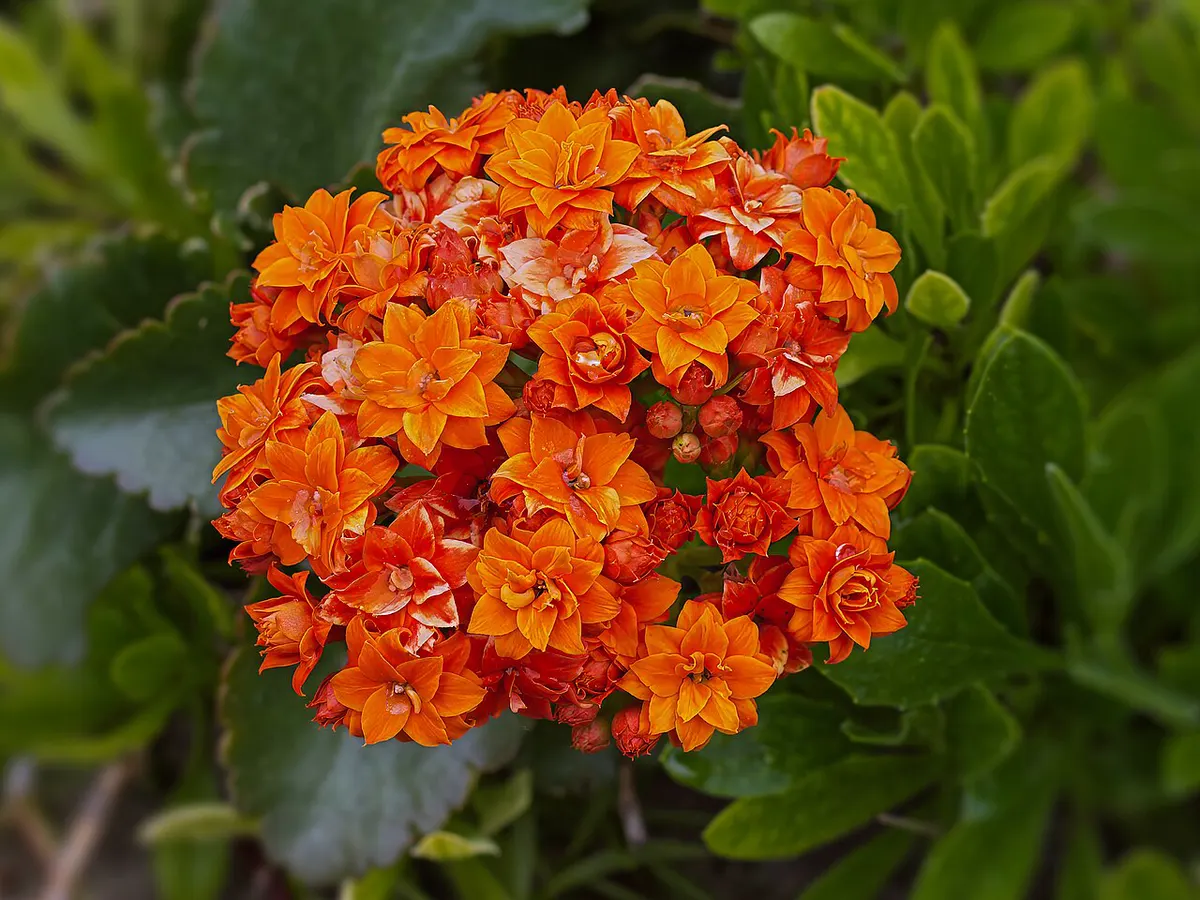
- Double-flowered kalanchoe: Flowers with many petals that look like tiny roses; care is the same as for the single-flowered kinds.
- Panda plant (Kalanchoe tomentosa): Grown for its soft, furry grey leaves with rusty tips rather than for its flowers.
- Paddle plant (Kalanchoe luciae): Large, flat, round leaves in stacked pairs that blush red in strong sun.
- Mother of thousands (Kalanchoe daigremontiana): Forms tiny plantlets along the leaf edges that drop and root wherever they land.
Questions people ask
How often should I water a kalanchoe?
About every 8–9 days in spring and summer, every 2 weeks in autumn and about every two and a half weeks in winter, in a medium pot indoors. Wait until about half the pot has dried first.
Is kalanchoe toxic to cats and dogs?
Yes. It contains bufadienolides, which can cause vomiting and diarrhoea and, rarely, heart rhythm problems. Keep it out of reach and call your vet if a pet has chewed it.
How do I get my kalanchoe to flower again?
It's a short-day plant: from about October, give it roughly 14 hours of complete darkness every night for six weeks, in a cool room or under a box, and plenty of light by day. Water and feed sparingly during this time. Once buds show, normal room light is fine.
Should I cut off my kalanchoe's dead flowers?
Yes, snip spent flower stems back to the leaves. It keeps the plant tidy, can encourage more blooms, and makes reblooming easier later.
Sources and licences
This care guide was written with AI and checked against the sources below.
General guidance. Every home is different, so the soil is always the best guide. About this advice
From LeafMinder’s plant care guides: leafminder.eu/plants/kalanchoe