



Pink jasmine
Jasminum polyanthum · Oleaceae · Flowering houseplant
Also called Jasmine, Chinese jasmine, Jasminum
A cool spot, below about 15 °C, in autumn and early winter is what sets the flower buds. Water when the surface feels dry and give the twining stems a support.
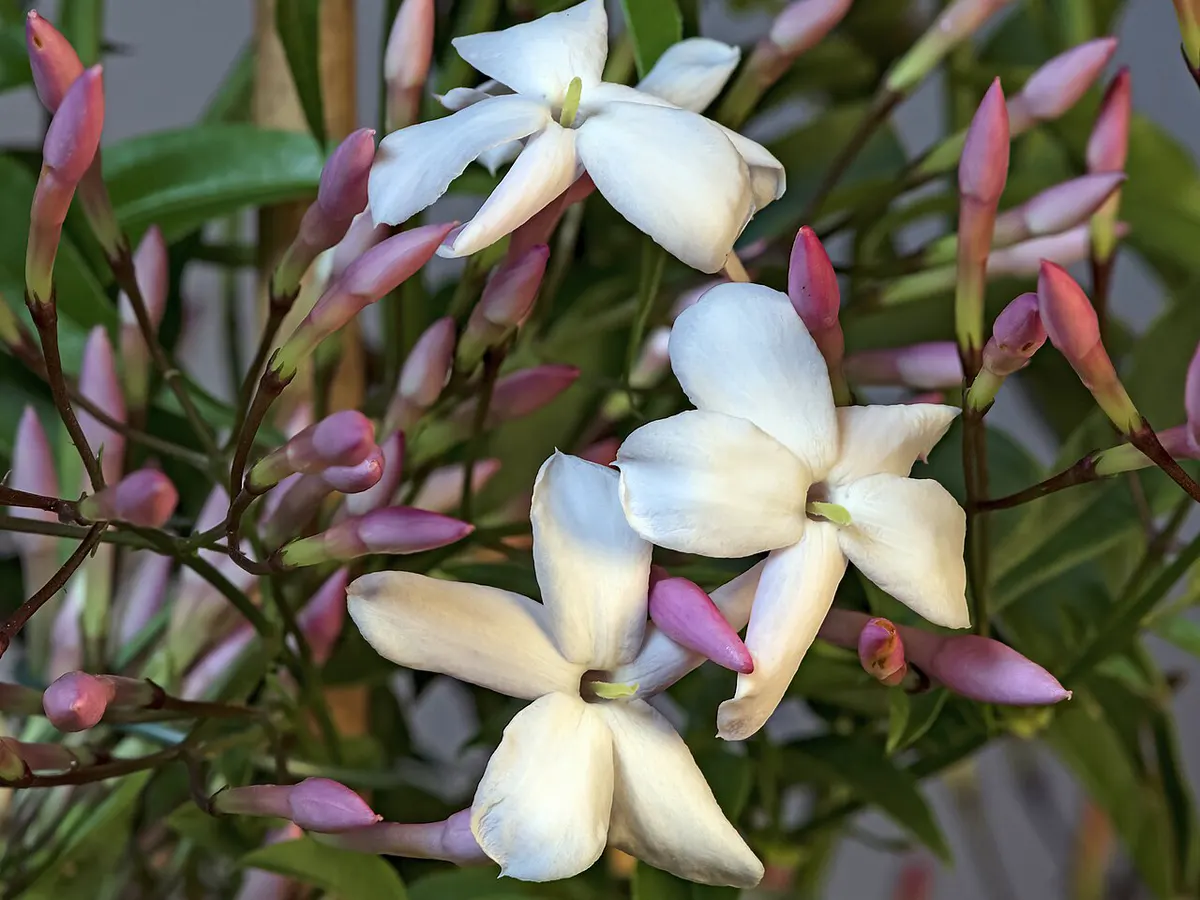
Photo: Didier Descouens, CC BY-SA 4.0, via Wikimedia Commons
- Light
- Direct sun
- Water
- Water when the top 2–3 cm of soil are dry.
- Humidity
- Average
- Temperature
- 5–25 °C
- Care level
- Needs a little attention
- Pets
- Not known to be toxic to cats and dogs
How often to water Pink jasmine
About every 3 days in summer and every 5 days in winter. Water when the top 2–3 cm of soil are dry.
Roughly how often, in a medium pot (12–20 cm) in the light it likes. Smaller pots, brighter spots and warm balconies need water sooner; big pots and dim corners later.
- Spring every 3 days
- Summer every 3 days
- Autumn every 4 days
- Winter every 5 days
Worked out by LeafMinder’s schedule. In the app it then adapts to your home, from your “still damp” and “bone dry” answers.
Feeding and repotting
Feed about every 21 days from March to August, with a houseplant fertiliser at half strength. Not in the colder months. Check whether it needs a bigger pot every 24 months or so, ideally in spring.
Thirsty, or too wet?
- When it would like water
- The newest shoot tips go limp, the leaves lose their freshness and the top few centimetres of mix feel dry. It drinks quickly in a sunny window in spring and summer, so check it often then.
- When it has had too much
- Leaves yellow and drop from the inside of the plant, and the mix stays wet for days. Let the top 2–3 cm dry before watering, empty the saucer and make sure the pot drains freely.
Soil and pot
A good, free-draining multipurpose potting mix suits it, ideally with a little grit or perlite. Use a pot with drainage holes and give the twining stems a hoop, trellis or canes to climb. Repot every two years or so, in spring after flowering, moving up one size when roots fill the pot or it dries out within a day of watering.
Common problems
- Plenty of leaves but no flowers
- Buds form in autumn in response to cool nights and shorter days. Kept warm all autumn, or pruned late in summer, it grows but doesn't flower. Try first: From early autumn give it about six weeks somewhere bright and cool, with nights around 5–15 °C and no lamps on it in the evening. Stop pruning by late summer.
- Buds drop or dry up
- A sudden move into a warm, dry room, or soil that dried out while the buds were forming. Try first: Once buds show, bring it into the warmth gradually, keep it bright and water evenly until it has flowered.
- Fine webbing and pale, speckled leaves
- Spider mites, which thrive in warm, dry indoor air. Try first: Rinse the plant in the shower, wipe the undersides of the leaves, raise the humidity and repeat weekly until no mites return.
- White cottony tufts or brown bumps on stems
- Mealybugs or scale insects, both common on jasmine kept indoors. Try first: Remove them with a cotton bud dipped in rubbing alcohol, check the twining stems closely and repeat every week for a few weeks.
- Yellow leaves and soil that stays wet
- Too much water, especially in winter when growth slows. Try first: Water only when the top of the mix is dry and expect it to need less in the cooler months.
Not sure what you’re seeing? A photo health check suggests possible causes. How health checks work
Propagation
Take cuttings about 10 cm long from semi-ripe shoots in summer, or from soft new shoots in spring. Strip the lowest leaves, push them into a damp mix of potting compost and perlite or grit, cover loosely to hold in humidity, and keep them warm and bright out of direct sun. Layering also works: in autumn, pin a low stem into a pot of mix and cut it free once it has rooted.
Varieties and relatives
- Arabian jasmine (Jasminum sambac): A shrubby jasmine with simple, rounded leaves. It wants warmth all year and flowers in the warm months rather than in late winter.
- Common jasmine (Jasminum officinale): A hardier, summer-flowering climber, usually grown outdoors in a sunny, sheltered spot rather than as a houseplant.
- Star jasmine (Trachelospermum jasminoides): Not a true jasmine, but similarly scented, with glossy leaves and white starry flowers in summer. Mostly grown outdoors.
- Stephanotis (Marsdenia floribunda): Called Madagascar jasmine for its waxy, scented white flowers, but unrelated. It wants steady warmth, not a cool spell.
Questions people ask
How often should I water a pink jasmine?
About every 3 days in spring and summer, every 4 days in autumn and every 5 days in winter, in a medium pot indoors. Check that the top few centimetres are dry first.
Is jasmine toxic to cats and dogs?
No. The ASPCA lists true jasmines (Jasminum) as non-toxic to cats and dogs. Some unrelated plants called jasmine or jessamine are toxic, so check the botanical name, and a pet that eats a lot of any plant may still get an upset stomach.
Why isn't my jasmine flowering?
It sets its buds after a spell of cool nights and shorter days in autumn. A spot that stays warm all autumn, or pruning late in summer, gives plenty of leaves but no flowers.
When should I prune a pink jasmine?
Straight after it finishes flowering in spring. Cut flowered stems back to a strong side shoot and thin out tangled growth, but stop by late summer so you don't remove next year's buds.
Sources and licences
This care guide was written with AI and checked against the sources below.
- Care checked against: Royal Horticultural Society, Royal Horticultural Society, Ask Extension (Extension Foundation), ASPCA Animal Poison Control.
- GBIF Backbone Taxonomy: other botanical names. Record. CC BY 4.0. GBIF Secretariat (2023). GBIF Backbone Taxonomy. Checklist dataset https://doi.org/10.15468/39omei accessed via GBIF.org on 2026-11-15.
Material from these sources keeps its own licence; LeafMinder’s copyright doesn’t extend to it, and the sources don’t endorse LeafMinder.
General guidance. Every home is different, so the soil is always the best guide. About this advice
From LeafMinder’s plant care guides: leafminder.eu/plants/jasmine