



Bird of paradise
Strelitzia reginae · Strelitziaceae · Flowering houseplant
Also called Crane flower, Strelitzia
Give it the brightest spot you have and let the top few centimetres dry between waterings. It flowers more readily when slightly pot-bound and after a cooler, drier winter.
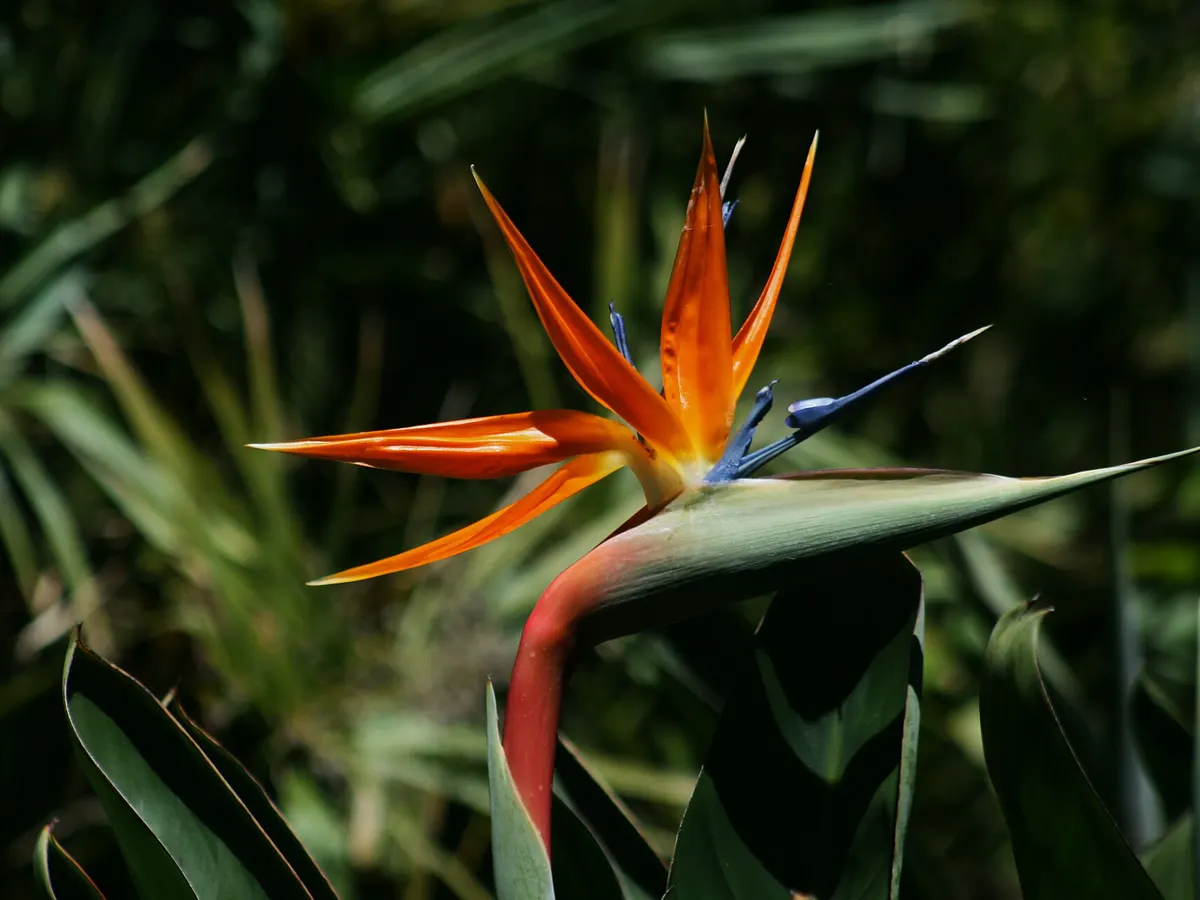
Photo: Brocken Inaglory, CC BY-SA 3.0, via Wikimedia Commons
- Light
- Direct sun
- Water
- Water when the top 2–3 cm of soil are dry.
- Humidity
- Average
- Temperature
- 12–30 °C
- Care level
- Needs a little attention
- Pets
- Not safe for cats and dogs
How often to water Bird of paradise
About every 5 days in summer and every 11 days in winter. Water when the top 2–3 cm of soil are dry.
Roughly how often, in a medium pot (12–20 cm) in the light it likes. Smaller pots, brighter spots and warm balconies need water sooner; big pots and dim corners later.
- Spring every 6 days
- Summer every 5 days
- Autumn every 8 days
- Winter every 11 days
Worked out by LeafMinder’s schedule. In the app it then adapts to your home, from your “still damp” and “bone dry” answers.
Feeding and repotting
Feed about every 21 days from March to September, with a houseplant fertiliser at half strength. Not in the colder months. Check whether it needs a bigger pot every 24 months or so, ideally in spring.
Thirsty, or too wet?
- When it would like water
- The top few centimetres of soil are dry and the leaves start to curl inwards along their length. If it stays dry, the leaf edges brown.
- When it has had too much
- Leaves yellow and droop, the base can feel soft and the soil stays wet for days. Let it dry out, empty the saucer, and check for rotten, mushy roots if it doesn't recover.
Soil and pot
Use a rich, free-draining mix; a loam-based compost with some grit or bark added works well. The pot needs drainage holes, and a heavy pot helps keep a tall plant steady. It flowers best when slightly pot-bound, so repot only when roots fill the pot or start to distort it, about every two years in spring, moving up just one size. In other springs, replace the top 5 cm of soil.
Common problems
- No flowers
- Too little direct light, a plant that is still young, or a pot that's too big. It also flowers more readily after a cooler, drier winter. Try first: Give it the sunniest spot you have, feed every three weeks from spring to early autumn, and let it get snug in its pot. Patience helps too: plants need to be several years old to bloom.
- Leaves split or torn along the veins
- Natural for this plant. The leaves tear easily in wind, when brushed past or in very dry air. Try first: Nothing is needed; it doesn't harm the plant. Keep it out of busy walkways and draughts, and cut badly damaged leaves off at the base if they bother you.
- Leaves curling, brown edges
- Thirst or very dry air, often near a radiator. Try first: Water thoroughly as soon as the top few centimetres are dry, and move it away from direct heat. Raised humidity helps new leaves open cleanly.
- Yellow leaves and a soft base
- Root rot from soil that stays wet, especially in a cool winter spot. Try first: Stop watering and let it dry. Take it out of the pot, cut away brown, mushy roots and repot in fresh, free-draining mix. Water sparingly in winter.
- Sticky leaves, bumps, white fluff or fine webbing
- Scale insects, mealybugs or spider mites feeding on the sap. Try first: Wipe the leaves on both sides with soapy water, paying attention to where leaves meet the stems, and repeat weekly until they're gone.
Not sure what you’re seeing? A photo health check suggests possible causes. How health checks work
Propagation
Division is the easiest way. In spring, take a large plant out of its pot and cut away an outer shoot with its own leaves and roots, using a sharp, clean knife, as the roots are tough. Pot it in free-draining mix, water it well and keep it warm and bright while it settles. Seed is possible but slow: the hard seed coat needs nicking and soaking, it germinates at around 18–21 °C over one to several months, and seedlings take years to flower.
Varieties and relatives
- Giant white bird of paradise (Strelitzia nicolai): Much bigger, with banana-like leaves and white and blue flowers. Rarely flowers indoors and is mostly grown for its leaves.
- 'Mandela's Gold': A form with yellow and blue flowers instead of orange. Same care.
- Strelitzia juncea: A close relative whose leaves are reduced to upright, rush-like spikes, with the same flowers. Copes well with dry spells.
Questions people ask
How often should I water a bird of paradise?
About every 5–6 days in spring and summer, every 8 days in autumn and about every 11 days in winter, in a medium pot indoors. Water when the top few centimetres are dry.
Is a bird of paradise toxic to cats and dogs?
Yes, it is toxic to cats and dogs. Eating it, especially the fruit and seeds, can cause nausea, vomiting and drowsiness. Keep it out of reach and call your vet if a pet chews it.
Why isn't my bird of paradise flowering?
It usually needs to be mature, several years old, with plenty of direct sun. A snug pot, regular feeding in the growing season and a cooler, drier winter all help buds form.
Why are my bird of paradise leaves splitting?
The leaves tear easily along their veins, from wind, brushing past or dry air. It looks untidy but is normal and doesn't harm the plant.
Sources and licences
This care guide was written with AI and checked against the sources below.
- Care checked against: RHS, NC State Extension Gardener Plant Toolbox, RHS, ASPCA Animal Poison Control.
- GBIF Backbone Taxonomy: other botanical names. Record. CC BY 4.0. GBIF Secretariat (2023). GBIF Backbone Taxonomy. Checklist dataset https://doi.org/10.15468/39omei accessed via GBIF.org on 2026-11-15.
Material from these sources keeps its own licence; LeafMinder’s copyright doesn’t extend to it, and the sources don’t endorse LeafMinder.
General guidance. Every home is different, so the soil is always the best guide. About this advice
From LeafMinder’s plant care guides: leafminder.eu/plants/bird-of-paradise