



Lipstick plant
Aeschynanthus radicans · Gesneriaceae · Flowering houseplant
Also called Aeschynanthus
Let the top few centimetres dry between waterings and give it bright, indirect light. A slightly cooler, drier spell in winter encourages flowers in spring.
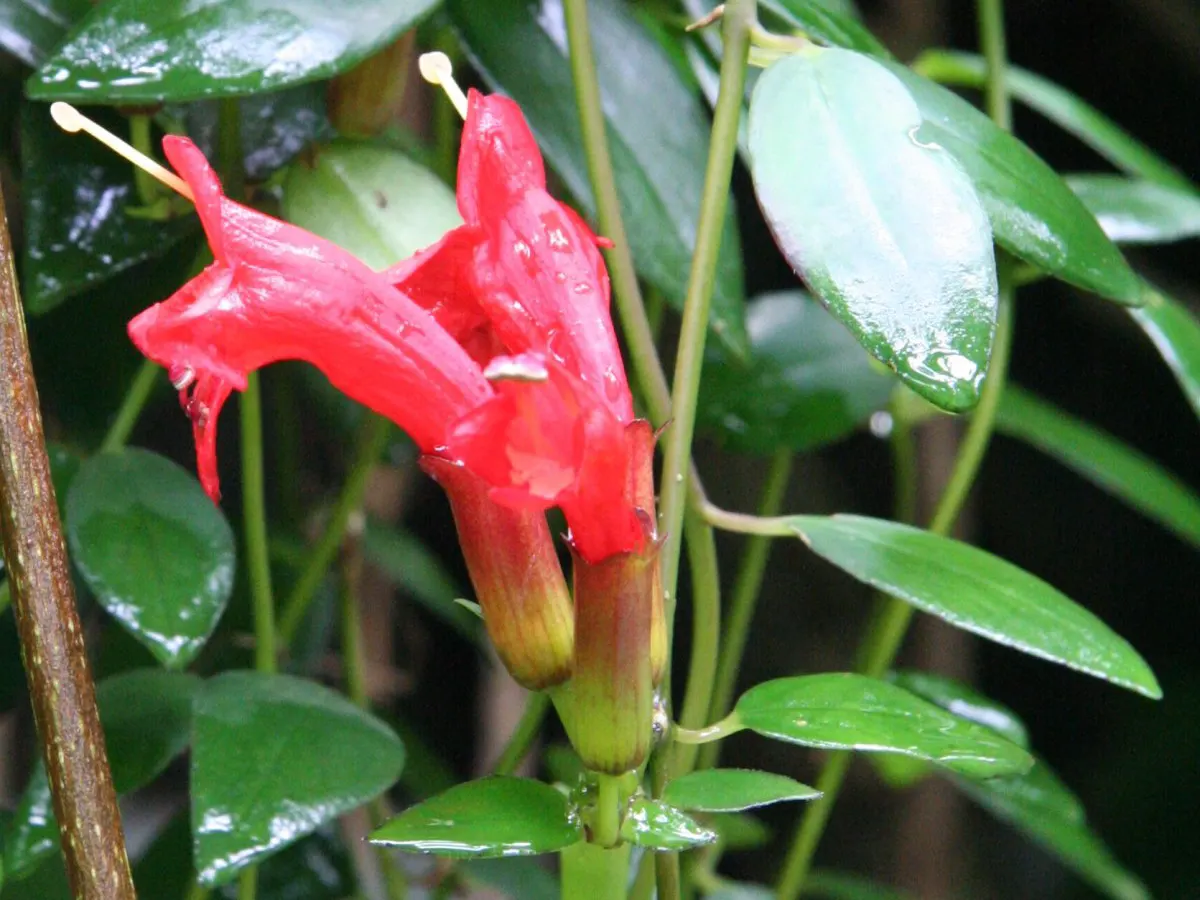
Photo: Michael Wolf, CC BY-SA 3.0, via Wikimedia Commons
- Light
- Bright, indirect
- Water
- Water when the top 2–3 cm of soil are dry.
- Humidity
- Likes humid air
- Temperature
- 15–27 °C
- Care level
- Needs a little attention
- Pets
- Not known to be toxic to cats and dogs
How often to water Lipstick plant
About every 5 days in summer and every 9 days in winter. Water when the top 2–3 cm of soil are dry.
Roughly how often, in a medium pot (12–20 cm) in the light it likes. Smaller pots, brighter spots and warm balconies need water sooner; big pots and dim corners later.
- Spring every 6 days
- Summer every 5 days
- Autumn every 8 days
- Winter every 9 days
Worked out by LeafMinder’s schedule. In the app it then adapts to your home, from your “still damp” and “bone dry” answers.
Feeding and repotting
Feed about every 21 days from March to September, with a houseplant fertiliser at half strength. Not in the colder months. Check whether it needs a bigger pot every 24 months or so, ideally in spring.
Thirsty, or too wet?
- When it would like water
- The leaves lose their gloss, feel limp or slightly wrinkled and the stems hang more loosely, while the top few centimetres of soil are dry. Water thoroughly and let the excess drain away.
- When it has had too much
- Leaves yellow and drop, the stems turn soft near the soil and the mix smells sour. Let the top few centimetres dry before watering again, and check the roots if the plant keeps declining.
Soil and pot
Use a light, airy mix that drains well, such as houseplant compost with perlite or fine orchid bark; a mix for African violets also suits it. A hanging pot with a drainage hole lets the stems trail. It likes to be slightly snug, so repot about every two years in spring, one size up, when roots fill the pot or water runs straight through.
Common problems
- Leaves dropping suddenly
- Cold or draughts, especially below about 10 °C, or soil left too dry. Try first: Move it away from cold windows and doors, keep it above 15 °C and water as soon as the top few centimetres are dry.
- Lots of leaves but no flowers
- Too little light, no slightly cooler rest in winter, or flower tips cut off by pruning at the wrong time. Try first: Give it bright, indirect light, a cooler, drier spell in winter and light feeding from spring; prune only after flowering.
- Long, bare stems
- Older stems naturally lose leaves near the base, more so in low light. Try first: Cut long stems back by up to a third after flowering; they branch from below the cut. Root the tips to fill out the pot.
- Grey fuzzy mould or spots on the leaves
- Botrytis or leaf spot, encouraged by still, damp air and wet leaves. Try first: Remove affected leaves, water the soil rather than the leaves and give the plant better air movement.
- White fluff, sticky leaves or small bumps
- Mealybugs, aphids or scale insects. Try first: Isolate the plant, wipe the pests off with a damp cloth or a cotton bud dipped in rubbing alcohol, and check weekly.
Not sure what you’re seeing? A photo health check suggests possible causes. How health checks work
Propagation
Take stem cuttings about 10 cm long, with three nodes, in spring or summer. Remove the lower leaves, keep only the top few, and set them in a moist mix of perlite and vermiculite, or seed compost with perlite. Cover loosely to keep the air humid; roots usually form in about two weeks. Several cuttings in one pot make a fuller plant.
Varieties and relatives
- 'Mona Lisa': A widely sold form with orange-red flowers.
- 'Rasta': Tightly curled, twisted leaves and bright red flowers.
- 'Variegata': Green leaves marked with cream and yellow; it needs good light to keep its colours.
- Goldfish plant (Nematanthus gregarius): A relative from the same family with small, glossy leaves and puffed orange flowers shaped like little fish; care is similar.
Questions people ask
How often should I water a lipstick plant?
About every 5–6 days in spring and summer and every 8–9 days in autumn and winter, in a medium pot indoors. Check that the top few centimetres of soil are dry first.
Is the lipstick plant toxic to cats and dogs?
No. The ASPCA lists the lipstick plant as non-toxic to cats and dogs. Chewing any plant can still upset a pet's stomach, so a hanging pot out of reach is a good home for it.
Why isn't my lipstick plant flowering?
The usual reasons are too little light or a winter that is too warm and wet. Give it bright, indirect light, a slightly cooler, drier spell in winter and light feeding from spring. Flowers form at the stem tips, so avoid pruning just before the flowering season.
When should I prune a lipstick plant?
Right after it finishes flowering. Cut leggy stems back by up to a third to make it branch, and root the cuttings to fill gaps in the pot.
Sources and licences
This care guide was written with AI and checked against the sources below.
- Care checked against: NC State Extension Gardener Plant Toolbox, ASPCA Animal Poison Control.
- GBIF Backbone Taxonomy: other botanical names. Record. CC BY 4.0. GBIF Secretariat (2023). GBIF Backbone Taxonomy. Checklist dataset https://doi.org/10.15468/39omei accessed via GBIF.org on 2026-11-15.
Material from these sources keeps its own licence; LeafMinder’s copyright doesn’t extend to it, and the sources don’t endorse LeafMinder.
General guidance. Every home is different, so the soil is always the best guide. About this advice
From LeafMinder’s plant care guides: leafminder.eu/plants/lipstick-plant