



Swiss cheese vine
Monstera adansonii · Araceae · Trailing or climbing plant
Also called Monkey mask, Adanson's monstera
Water when the top few centimetres are dry and give it something to climb, or let it trail. Pale or yellow leaves with wet soil mean it needs less water.
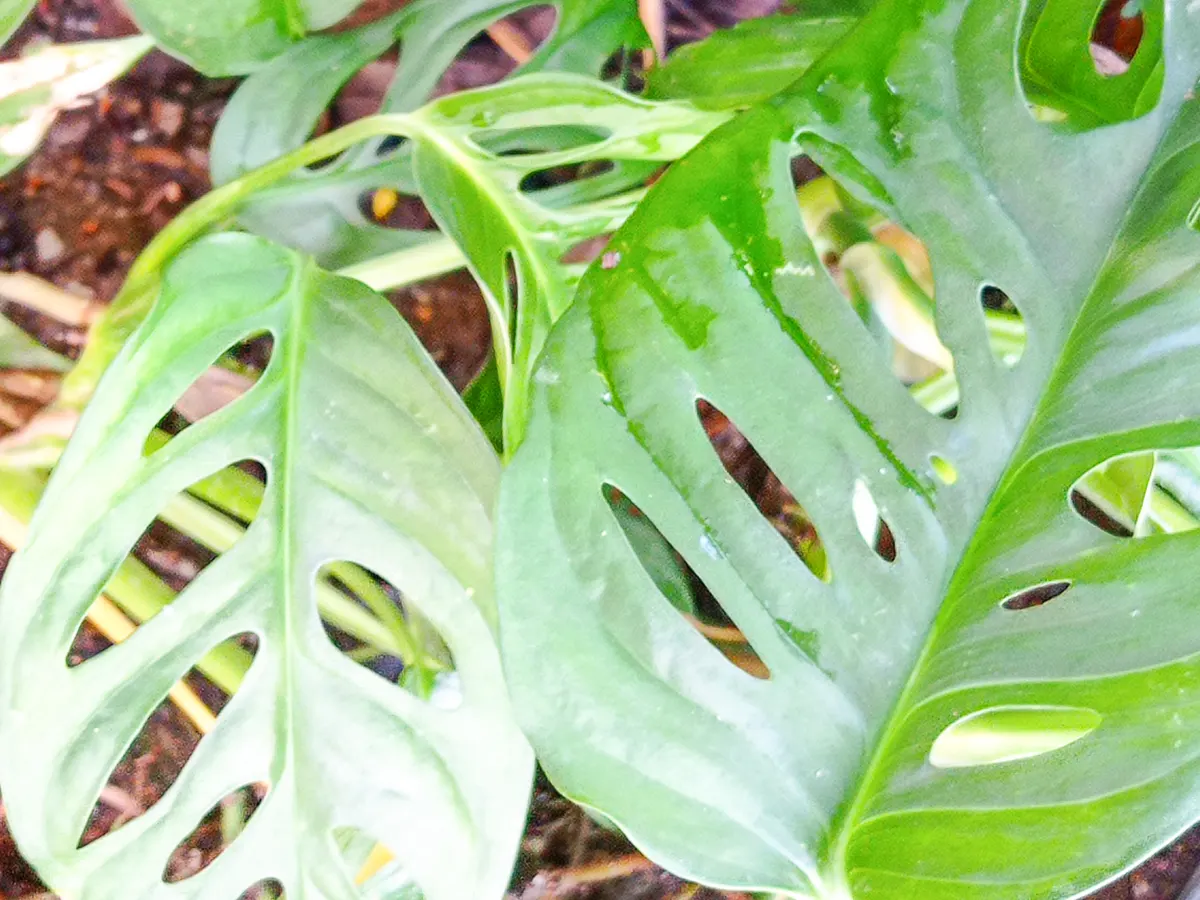
Photo: Diogo Luiz, CC BY-SA 4.0, via Wikimedia Commons
- Light
- Bright, indirect
- Water
- Water when the top 2–3 cm of soil are dry.
- Humidity
- Likes humid air
- Temperature
- 16–30 °C
- Care level
- Easy-going, a good first plant
- Pets
- Not safe for cats and dogs
How often to water Swiss cheese vine
About every 6 days in summer and every 11 days in winter. Water when the top 2–3 cm of soil are dry.
Roughly how often, in a medium pot (12–20 cm) in the light it likes. Smaller pots, brighter spots and warm balconies need water sooner; big pots and dim corners later.
- Spring every 7 days
- Summer every 6 days
- Autumn every 9 days
- Winter every 11 days
Worked out by LeafMinder’s schedule. In the app it then adapts to your home, from your “still damp” and “bone dry” answers.
Feeding and repotting
Feed about every 30 days from March to September, with a houseplant fertiliser at half strength. Not in the colder months. Check whether it needs a bigger pot every 24 months or so, ideally in spring.
Thirsty, or too wet?
- When it would like water
- The top few centimetres of soil feel dry, the pot is light when you lift it, and the thin leaves start to hang limp or curl slightly at the edges.
- When it has had too much
- Leaves turn pale or yellow while the soil still feels damp, and stems near the soil may soften. Let the top 2–3 cm dry before watering again and make sure the pot drains freely.
Soil and pot
Use an airy, well-draining houseplant mix; adding some orchid bark or perlite helps the roots breathe. Always use a pot with a drainage hole and empty the saucer after watering. Repot about every two years, or sooner when roots circle the pot or poke out of the drainage hole and the soil dries out within a couple of days.
Common problems
- Yellow leaves and soil that stays wet
- Too much water or a pot that doesn't drain, which can lead to root rot. Try first: Let the top 2–3 cm dry before you water. If the soil smells sour, check the roots and repot into fresh, airy mix, cutting away any brown, mushy roots.
- Long bare stems with small leaves
- Not enough light, so the vine stretches towards the window. Try first: Move it closer to a bright window, out of strong direct sun. Trim the longest stems back to just above a leaf to encourage fuller growth.
- Brown, papery patches on the leaves
- Strong direct sun scorching the thin leaves, or the soil drying out completely. Try first: Move it to bright, filtered light and water a little more regularly. Damaged patches won't turn green again, but new leaves will grow clean.
- Fine webbing and tiny pale speckles
- Spider mites, which thrive in warm, dry air. Try first: Rinse the leaves under lukewarm water, wipe both sides and repeat every few days for two to three weeks. Keep the plant apart from others until it's clear.
- White, cottony tufts where leaves meet the stem
- Mealybugs, which feed on the sap. Try first: Dab them off with a cotton bud dipped in rubbing alcohol and check again every week, including under the leaves.
Not sure what you’re seeing? A photo health check suggests possible causes. How health checks work
Propagation
Stem cuttings root easily, best in spring and summer. Cut a piece with at least one node (the bump where a leaf and aerial root grow) and one or two leaves. Root it in a glass of water or in moist, airy mix, kept warm and out of direct sun; roots usually appear within a few weeks. Pot it up once the roots are a few centimetres long.
Varieties and relatives
- Monstera adansonii 'Archipelago': A variegated form with creamy white patches on the leaves. It grows more slowly and needs bright, indirect light to keep its markings.
- Monstera (Monstera deliciosa): Its larger cousin, with big leaves that split from the edge as well as forming holes. It needs much more space.
- Mini monstera (Rhaphidophora tetrasperma): A different genus with deeply split, not holed, leaves. Care is very similar.
- Monstera standleyana: A climbing monstera with solid, unholed leaves, often sold with white or cream variegation.
Questions people ask
How often should I water a Swiss cheese vine?
About every 6 days in summer, weekly in spring, every 9 days or so in autumn and about every 11 days in winter, in a medium pot indoors. Check that the top 2–3 cm of soil are dry first.
Is Monstera adansonii toxic to cats and dogs?
Yes. Like other monsteras it contains calcium oxalate crystals, which irritate the mouth and stomach and can cause drooling and vomiting. Keep it out of reach, and call your vet if a pet chews it. The sap can also irritate skin, so gloves help when you prune.
Why doesn't my Swiss cheese vine have holes in its leaves?
Young plants and plants in low light often make smaller leaves with few or no holes. Give it bright, indirect light and something to climb; as it matures, new leaves usually grow larger with more holes.
Should a Swiss cheese vine climb or trail?
Either works. In the wild it climbs with aerial roots, and on a moss pole or trellis it tends to make bigger leaves. In a hanging pot it trails happily, with somewhat smaller leaves.
Sources and licences
This care guide was written with AI and checked against the sources below.
- Care checked against: NC State Extension, Gardener Plant Toolbox, Penn State Extension, ASPCA Animal Poison Control.
- GBIF Backbone Taxonomy: other botanical names. Record. CC BY 4.0. GBIF Secretariat (2023). GBIF Backbone Taxonomy. Checklist dataset https://doi.org/10.15468/39omei accessed via GBIF.org on 2026-11-15.
Material from these sources keeps its own licence; LeafMinder’s copyright doesn’t extend to it, and the sources don’t endorse LeafMinder.
General guidance. Every home is different, so the soil is always the best guide. About this advice
From LeafMinder’s plant care guides: leafminder.eu/plants/swiss-cheese-vine