



Mini monstera
Rhaphidophora tetrasperma · Araceae · Trailing or climbing plant
Also called Monstera minima, Philodendron Ginny, Rhaphidophora
It climbs quickly when given a pole and bright, indirect light. Water when the top few centimetres are dry.
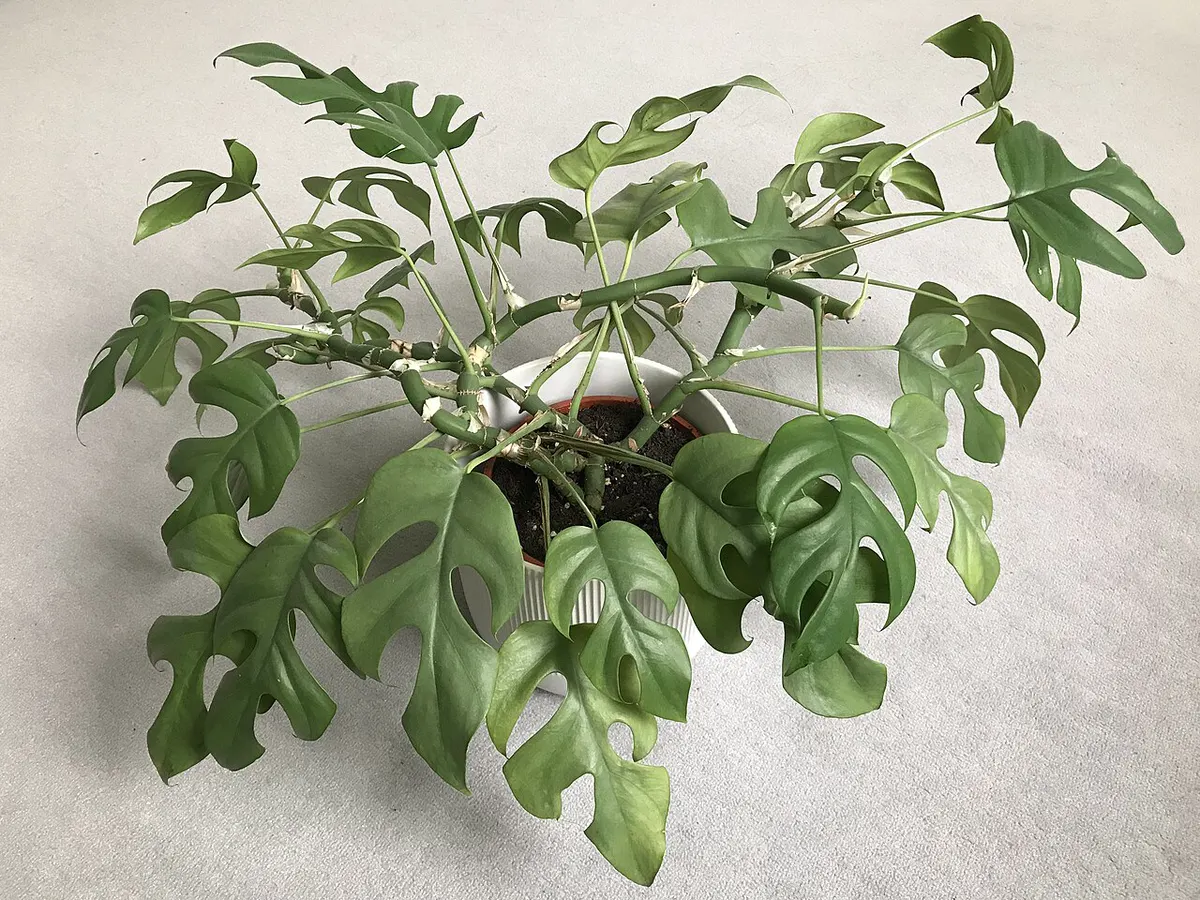
Photo: Jule.Kat, CC BY-SA 4.0, via Wikimedia Commons
- Light
- Bright, indirect
- Water
- Water when the top 2–3 cm of soil are dry.
- Humidity
- Average
- Temperature
- 15–30 °C
- Care level
- Needs a little attention
- Pets
- Not safe for cats and dogs
How often to water Mini monstera
About every 6 days in summer and every 11 days in winter. Water when the top 2–3 cm of soil are dry.
Roughly how often, in a medium pot (12–20 cm) in the light it likes. Smaller pots, brighter spots and warm balconies need water sooner; big pots and dim corners later.
- Spring every 7 days
- Summer every 6 days
- Autumn every 9 days
- Winter every 11 days
Worked out by LeafMinder’s schedule. In the app it then adapts to your home, from your “still damp” and “bone dry” answers.
Feeding and repotting
Feed about every 30 days from March to September, with a houseplant fertiliser at half strength. Not in the colder months. Check whether it needs a bigger pot every 24 months or so, ideally in spring.
Thirsty, or too wet?
- When it would like water
- The leaves droop or curl inwards and the top few centimetres of mix are dry. A thorough watering usually perks it up within a day.
- When it has had too much
- Leaves turn yellow, often the lower ones first, and the mix stays wet for days. Let the top few centimetres dry before watering again and make sure the pot drains freely.
Soil and pot
Give it a chunky, peat-free aroid mix: houseplant compost with bark and perlite, rich but airy. Use a pot with drainage holes. Repot in spring about every 2 years, or when roots circle the pot or grow out of the holes, moving up just one pot size.
Common problems
- Yellow leaves
- Usually too much water, sometimes too little light. Try first: Let the top few centimetres dry between waterings and move it closer to a bright window, out of hot direct sun.
- Drooping or curling leaves
- Thirst: the mix has dried out too far. Try first: Water thoroughly and let the excess drain away.
- Brown edges or crispy spots
- Dry air, or scorch from direct sun. Try first: Move it out of strong sun and raise humidity by grouping plants or using a tray of moist gravel.
- Fine webbing and speckled leaves
- Spider mites, common in warm, dry rooms. Try first: Rinse the leaves in the shower and wipe both sides weekly until new leaves stay clean.
- Small flies around the pot
- Fungus gnats breeding in mix that stays damp. Try first: Let the surface dry out more between waterings; yellow sticky traps catch the adults.
Not sure what you’re seeing? A photo health check suggests possible causes. How health checks work
Propagation
It's easy from stem cuttings in spring or summer. Cut just below a node, ideally one with a small aerial root, keep one or two leaves, and root it in water or moist mix in bright, indirect light. Roots usually show within a few weeks; pot up water-rooted cuttings once the roots are a few centimetres long. Wear gloves, as the sap can irritate skin.
Varieties and relatives
- 'Variegata': A rarer, smaller form marbled with cream or white; it grows more slowly than the green plant.
- Monstera (Monstera deliciosa): The plant it's named after: a different genus with much larger leaves that split and form holes as they mature.
- Swiss cheese vine (Monstera adansonii): A trailing monstera with oval leaves full of holes rather than deep splits.
- Shingle plant (Rhaphidophora hayi): A relative whose young leaves lie flat against a support, overlapping like roof tiles.
Questions people ask
How often should I water a mini monstera?
About every 6 days in summer, weekly in spring and every 9–11 days in autumn and winter, in a medium pot indoors. Water once the top few centimetres are dry.
Is a mini monstera toxic to cats and dogs?
Yes. Like other aroids it contains calcium oxalate crystals, which irritate the mouth and stomach and can cause drooling and trouble swallowing. Keep it out of reach and call your vet if a pet chews it.
Is a mini monstera a real monstera?
No. Rhaphidophora tetrasperma belongs to the same family as monstera but a different genus. It's sold as mini monstera or Monstera minima because its split leaves look like a small monstera's.
Does a mini monstera need a moss pole?
Not strictly, but it's a climber: with a pole or trellis it grows taller and its leaves often get bigger. Without one it trails or sprawls, which suits a hanging pot.
Sources and licences
This care guide was written with AI and checked against the sources below.
- Care checked against: NC State Extension Gardener Plant Toolbox, Royal Horticultural Society.
General guidance. Every home is different, so the soil is always the best guide. About this advice
From LeafMinder’s plant care guides: leafminder.eu/plants/mini-monstera