



String of turtles
Peperomia prostrata · Piperaceae · Trailing or climbing plant
Also called Turtle vine
The small, thick leaves store water, so let about half the pot dry before watering. Keep it out of strong direct sun, which bleaches the pattern.
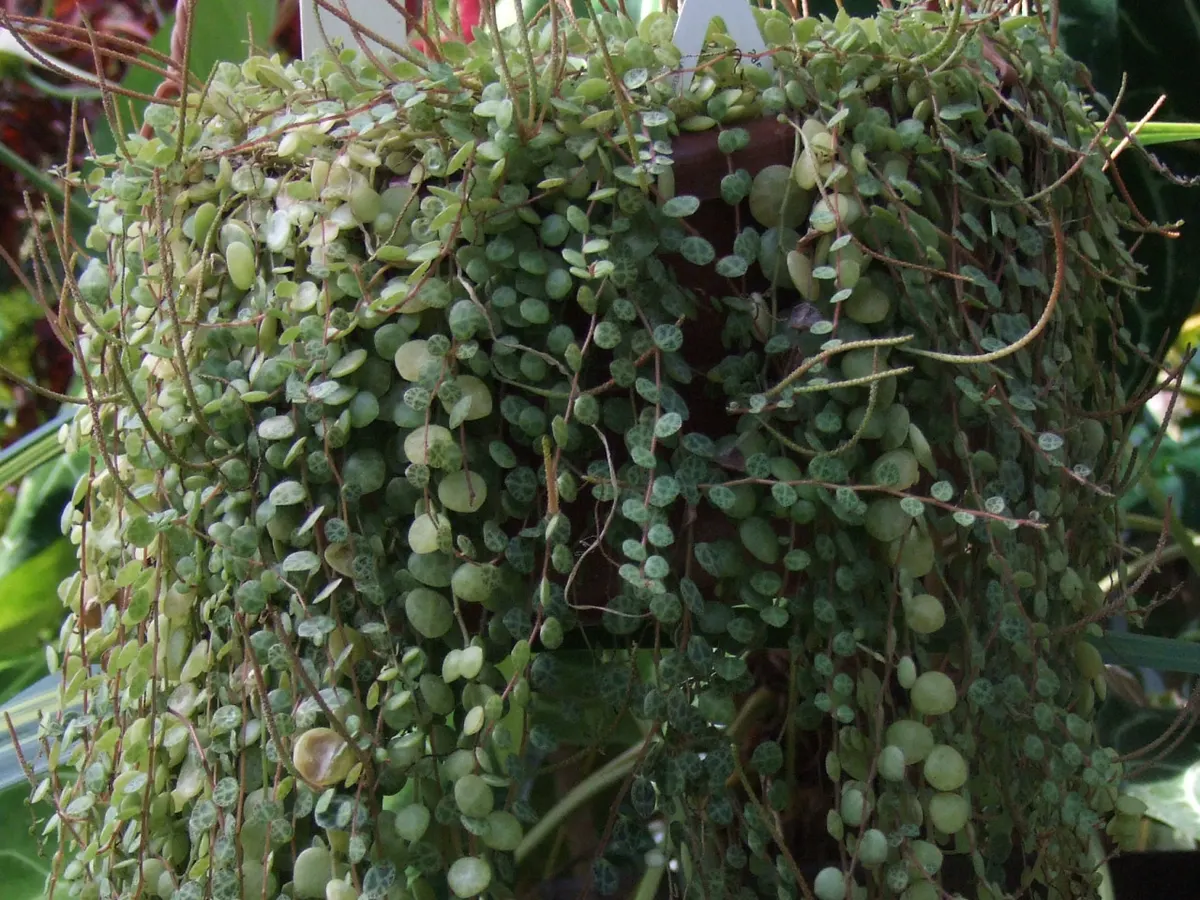
Photo: Jerzy Opioła, CC BY-SA 4.0, via Wikimedia Commons
- Light
- Bright, indirect
- Water
- Water when about half the pot has dried out.
- Humidity
- Average
- Temperature
- 16–27 °C
- Care level
- Needs a little attention
- Pets
- Not known to be toxic to cats and dogs
How often to water String of turtles
About every 7 days in summer and every 14 days in winter. Water when about half the pot has dried out.
Roughly how often, in a medium pot (12–20 cm) in the light it likes. Smaller pots, brighter spots and warm balconies need water sooner; big pots and dim corners later.
- Spring every 8 days
- Summer every 7 days
- Autumn every 11 days
- Winter every 14 days
Worked out by LeafMinder’s schedule. In the app it then adapts to your home, from your “still damp” and “bone dry” answers.
Feeding and repotting
Feed about every 30 days from March to September, with a houseplant fertiliser at half strength. Not in the colder months. Check whether it needs a bigger pot every 24 months or so, ideally in spring.
Thirsty, or too wet?
- When it would like water
- The little leaves feel softer and a touch less plump, the pot feels light and the soil is dry about halfway down. Water thoroughly then, and let the excess drain away.
- When it has had too much
- Stems turn soft and dark near the soil, and leaves go limp or drop. Let the pot dry well, trim any mushy stems, and if the roots are brown and soft, repot the healthy parts into fresh, airy mix.
Soil and pot
Use a light, airy mix: a houseplant mix with plenty of perlite or fine bark works well. Choose a shallow pot or hanging basket with drainage holes, only a little wider than the root ball, since extra soil stays wet. It grows slowly and likes being a bit snug, so repot every two years or so in spring, or when roots push through the holes.
Common problems
- Mushy stems and falling leaves
- Overwatering and root rot, the most common problem with this plant. Try first: Let about half the pot dry before watering, empty the saucer and trim off soft stems. If the roots have rotted, repot healthy pieces into fresh mix.
- The turtle pattern fades or leaves turn brown
- Strong direct sun bleaches and scorches the small leaves. Try first: Move it to bright, indirect light, such as an east-facing window or a spot set back from a sunny one.
- Long bare stems with small, widely spaced leaves
- Not enough light, so it stretches toward the window. Try first: Give it a brighter spot and pinch back long stems; the trimmed pieces can be rooted to fill out the pot.
- Shrivelled, wrinkled leaves
- The pot stayed dry too long, or the roots have rotted and can no longer take up water. Try first: Check the soil: if it is bone dry, water thoroughly; if it is wet, look at the roots before watering again.
- White cottony bits on the stems
- Mealybugs; spider mites, scale and fungus gnats can also appear. Try first: Dab mealybugs off with a cotton bud dipped in rubbing alcohol, and let the top of the soil dry between waterings to discourage fungus gnats.
Not sure what you’re seeing? A photo health check suggests possible causes. How health checks work
Propagation
Take stem cuttings a few centimetres long in spring or summer, each with several leaves and at least one node. Lay them on, or press them lightly into, a moist, free-draining mix, or root them in water first. Keep them warm, in bright, indirect light and slightly humid air, for example under a loose clear cover. Single leaves with a short stalk can root too, but more slowly.
Varieties and relatives
- Trailing jade (Peperomia rotundifolia): Round, plain bright green leaves on trailing stems, without the turtle-shell pattern.
- Vining peperomia (Peperomia serpens): Larger, heart-shaped leaves on longer vining stems, often variegated with cream.
Questions people ask
How often should I water a string of turtles?
About once a week in spring and summer, every 11 days or so in autumn and every two weeks in winter, in a medium pot indoors. Let about half the soil dry first, since the thick little leaves store water.
Is string of turtles toxic to cats and dogs?
It is considered non-toxic to cats and dogs, like the other peperomias on pet-safety lists. Chewing any plant can still upset a pet's stomach, so it is best kept where pets can't nibble it.
Why is my string of turtles losing its pattern?
Usually too much direct sun, which bleaches the veined pattern, or too little light, which makes new leaves small and plain. Bright, indirect light keeps the markings clear.
Is string of turtles a succulent?
Not quite. It is a peperomia from tropical South American forests, with semi-succulent leaves that store some water. So it dislikes wet soil like a succulent, but wants gentler light and a little more humidity than desert plants.
Sources and licences
This care guide was written with AI and checked against the sources below.
General guidance. Every home is different, so the soil is always the best guide. About this advice
From LeafMinder’s plant care guides: leafminder.eu/plants/string-of-turtles