



Watermelon peperomia
Peperomia argyreia · Piperaceae · Leafy green plant
Also called Watermelon begonia, Peperomia
Let about half the pot dry before watering; the leaf stalks rot if the soil stays wet. Keep it out of direct sun, which fades the silver stripes.
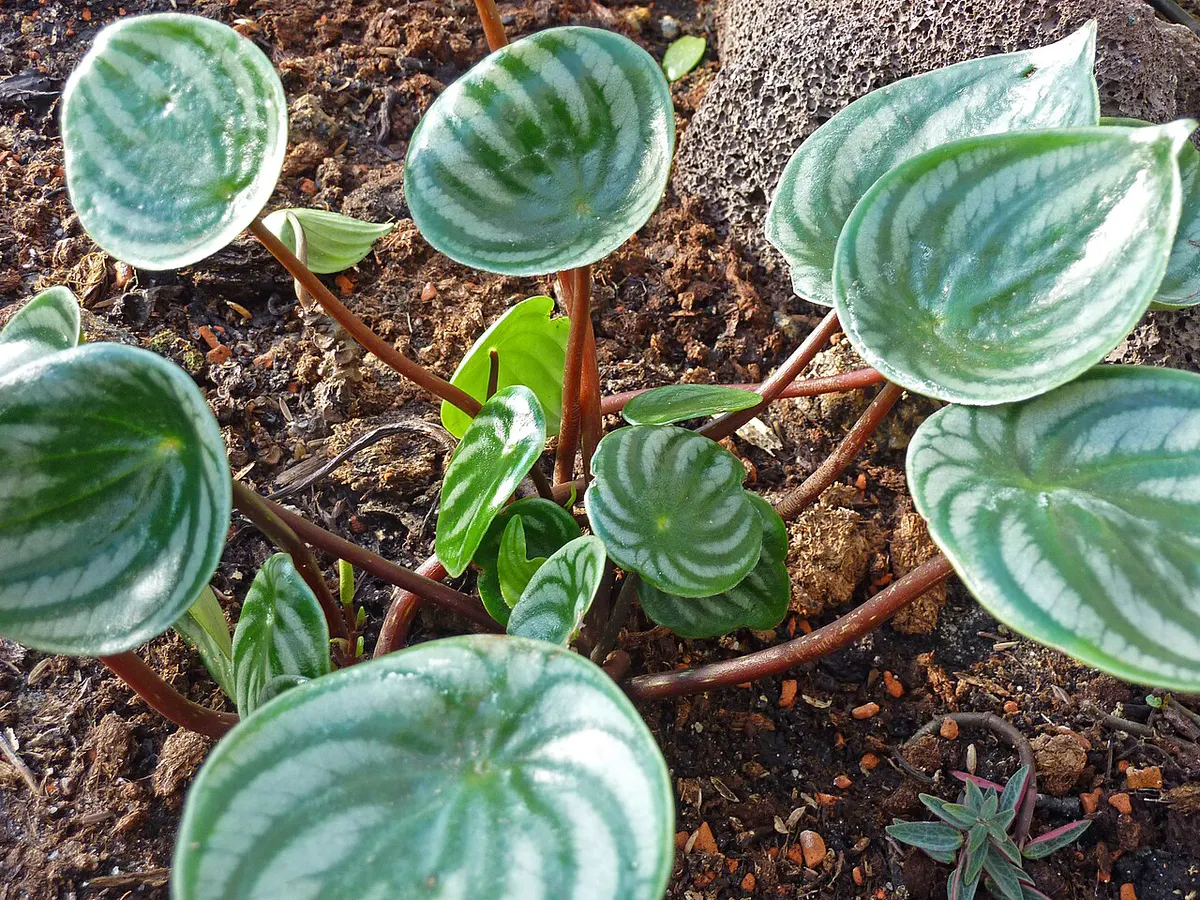
Photo: James Steakley, CC BY-SA 3.0, via Wikimedia Commons
- Light
- Bright, indirect
- Water
- Water when about half the pot has dried out.
- Humidity
- Average
- Temperature
- 16–27 °C
- Care level
- Needs a little attention
- Pets
- Not known to be toxic to cats and dogs
How often to water Watermelon peperomia
About every 7 days in summer and every 14 days in winter. Water when about half the pot has dried out.
Roughly how often, in a medium pot (12–20 cm) in the light it likes. Smaller pots, brighter spots and warm balconies need water sooner; big pots and dim corners later.
- Spring every 8 days
- Summer every 7 days
- Autumn every 11 days
- Winter every 14 days
Worked out by LeafMinder’s schedule. In the app it then adapts to your home, from your “still damp” and “bone dry” answers.
Feeding and repotting
Feed about every 30 days from March to September, with a houseplant fertiliser at half strength. Not in the colder months. Check whether it needs a bigger pot every 24 months or so, ideally in spring.
Thirsty, or too wet?
- When it would like water
- The thick leaves feel softer and slightly limp, sometimes curling a little, and the pot is light, with the soil dry about halfway down. Water well and the leaves firm up again within a day or so.
- When it has had too much
- The red leaf stalks turn dark and mushy at the base, and leaves come away at a touch. Let the pot dry out, keep water off the crown, and if many stalks are soft, root the healthy leaves as cuttings.
Soil and pot
Use a light, free-draining mix, such as houseplant compost with plenty of perlite or a little orchid bark. A small pot with drainage holes, only slightly wider than the roots, keeps the soil from staying wet. It is happy pot-bound and grows slowly, so move it up one size only when roots fill the pot or grow out of the holes, about every two years in spring.
Common problems
- Leaves falling off, with soft, dark stalks
- Soil kept too wet, so the stalks rot where they meet the crown. Try first: Let about half the pot dry between waterings, water around the edge rather than into the centre, and root any healthy leaves that come away.
- Faded stripes or brown, scorched patches
- Direct sun, which bleaches the silver bands and can burn the leaves. Try first: Move it to bright, indirect light, a little back from the window or behind a sheer curtain.
- Small, dull leaves on long, leaning stalks
- Too little light; unlike some peperomias, it doesn't cope well with shade. Try first: Give it a brighter spot with indirect light, and turn the pot now and then so it grows evenly.
- Drooping or blackened leaves after a cold spell
- Cold draughts or temperatures below about 16 °C. Try first: Keep it away from cold windows and doors in winter, and remove damaged leaves.
- White cottony spots or small brown bumps
- Mealybugs, scale or aphids. Try first: Isolate it, wipe off the pests with a damp cloth or cotton bud, and repeat weekly until they are gone.
Not sure what you’re seeing? A photo health check suggests possible causes. How health checks work
Propagation
Leaf cuttings are the classic method. In spring or early summer, cut a healthy leaf with 2–3 cm of stalk and set the stalk into moist, airy mix so the leaf stands upright. Keep it warm, around 20 °C, in bright, indirect light and water sparingly; small plantlets appear at the base after several weeks. A crowded clump can also be divided when you repot.
Varieties and relatives
- Emerald ripple peperomia: A relative with deeply crinkled leaves that copes better with lower light.
- Peperomia albovittata: A smaller relative with narrow, pointed leaves striped silver between darker veins, often sold as 'Piccolo Banda'.
Questions people ask
How often should I water a watermelon peperomia?
About once a week in summer and every 8 days in spring, around every 11 days in autumn and every two weeks in winter, in a medium pot indoors. Water when about half the pot has dried.
Is watermelon peperomia toxic to cats and dogs?
No. The ASPCA lists Peperomia argyreia as non-toxic to cats and dogs. Any plant can upset a pet's stomach if a lot is eaten, so keep it where it won't be nibbled.
Why is my watermelon peperomia losing leaves?
Usually the soil has stayed wet: the stalks rot where they join the crown and the leaves come away. Cold draughts and a sudden move can do it too. Let the pot dry about halfway down between waterings and keep it above about 16 °C.
Why are the stripes on my watermelon peperomia fading?
Most often it's direct sun, which bleaches the silver bands. Move it to bright, indirect light; new leaves will come in with crisper markings, though faded ones won't recover.
Sources and licences
This care guide was written with AI and checked against the sources below.
- Care checked against: NC State Extension Gardener Plant Toolbox, Clemson Cooperative Extension Home & Garden Information Center, RHS, ASPCA Animal Poison Control.
- GBIF Backbone Taxonomy: other botanical names. Record. CC BY 4.0. GBIF Secretariat (2023). GBIF Backbone Taxonomy. Checklist dataset https://doi.org/10.15468/39omei accessed via GBIF.org on 2026-11-15.
Material from these sources keeps its own licence; LeafMinder’s copyright doesn’t extend to it, and the sources don’t endorse LeafMinder.
General guidance. Every home is different, so the soil is always the best guide. About this advice
From LeafMinder’s plant care guides: leafminder.eu/plants/watermelon-peperomia