



String of hearts
Ceropegia linearis subsp. woodii · Apocynaceae · Trailing or climbing plant
Also called Rosary vine, Chain of hearts, Ceropegia woodii
Its small tubers store water, so let most of the pot dry before watering. Small, widely spaced leaves mean it needs more light.
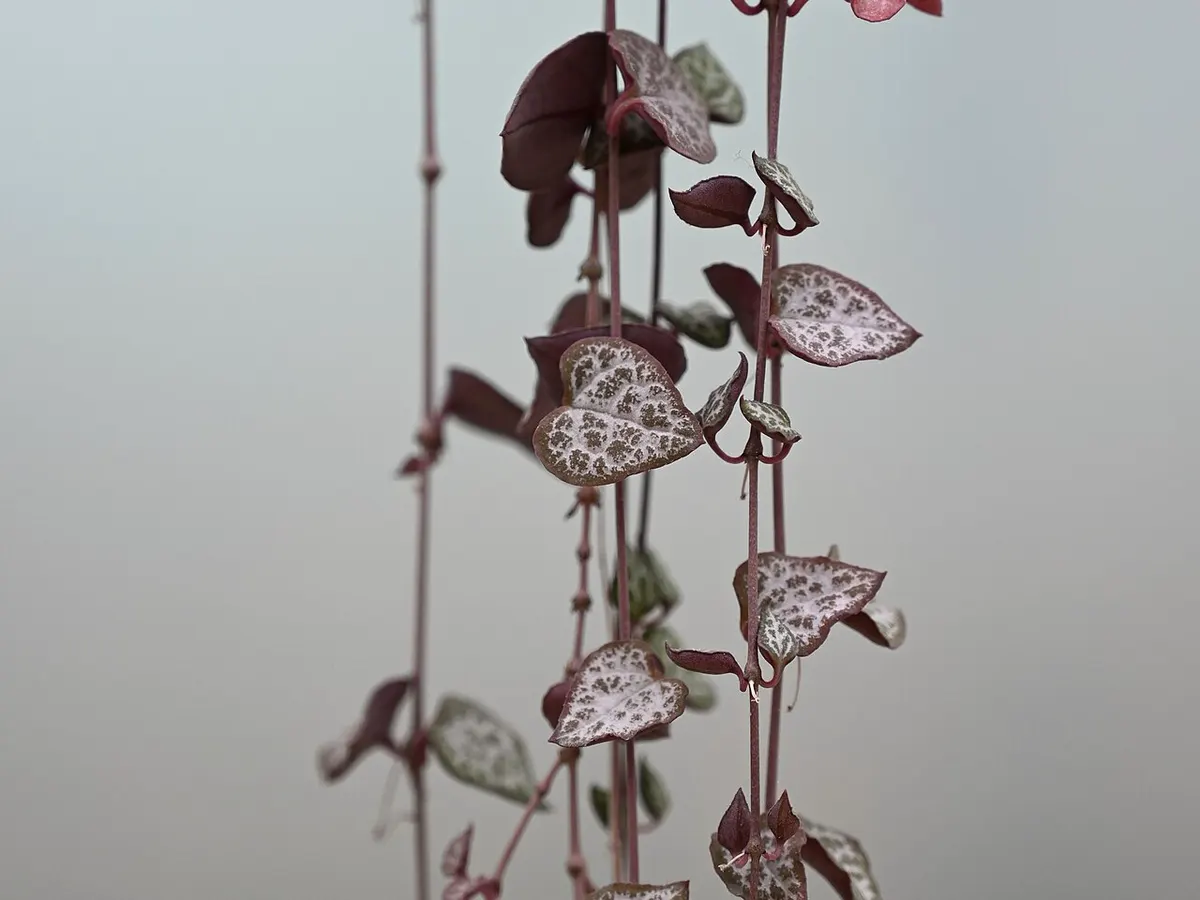
Photo: Agnieszka Kwiecień, Nova, CC BY-SA 4.0, via Wikimedia Commons
- Light
- Bright, indirect
- Water
- Water when about half the pot has dried out.
- Humidity
- Normal room air is fine
- Temperature
- 12–30 °C
- Care level
- Easy-going, a good first plant
- Pets
- Pet safety not confirmed
How often to water String of hearts
About every 11 days in summer and every 24 days in winter. Water when about half the pot has dried out.
Roughly how often, in a medium pot (12–20 cm) in the light it likes. Smaller pots, brighter spots and warm balconies need water sooner; big pots and dim corners later.
- Spring every 12 days
- Summer every 11 days
- Autumn every 18 days
- Winter every 24 days
Worked out by LeafMinder’s schedule. In the app it then adapts to your home, from your “still damp” and “bone dry” answers.
Feeding and repotting
Feed about every 30 days from April to September, with a houseplant fertiliser at half strength. Not in the colder months. Check whether it needs a bigger pot every 24 months or so, ideally in spring.
Thirsty, or too wet?
- When it would like water
- The heart-shaped leaves feel thin and soft instead of firm, and may start to wrinkle. Before watering, check that most of the pot has dried.
- When it has had too much
- Leaves turn yellow, go see-through or drop, and stems near the soil turn soft. Hold off watering until the pot has dried well, and check the tubers and roots if it keeps declining.
Soil and pot
Use a cactus and succulent mix, or houseplant compost with plenty of perlite or grit. A pot with a drainage hole is essential; a shallow or hanging pot suits its small roots. It likes being a little crowded, so repot only every two years or so, in spring, when the soil dries unusually fast or tubers cover the surface.
Common problems
- Yellow, mushy leaves
- Too much water. Its tubers and leaves store water, so soggy compost rots the roots. Try first: Let most of the pot dry between waterings, and water even less in winter.
- Long gaps between small leaves
- Too little light. The stems stretch towards the window. Try first: Move it to brighter light, such as near an east or west window. Trim the bare stretches and use them as cuttings.
- Pale leaves without silver marbling
- Low light. The leaves colour up in stronger light. Try first: Give it a brighter spot, and introduce direct sun gradually so the leaves don't scorch.
- White fluff along the stems
- Mealybugs, the pest it attracts most. Aphids and scale can also appear. Try first: Dab them off with a cotton bud dipped in soapy water, and check again weekly.
- Crispy brown patches on the leaves
- Sunburn from strong sun the plant isn't used to, often after moving it outside. Try first: Shade it from harsh midday sun and get it used to brighter light slowly.
Not sure what you’re seeing? A photo health check suggests possible causes. How health checks work
Propagation
It's easy in spring and summer. Lay a stem with its small, bead-like tubers on moist (not wet) cactus mix, pressing the tubers lightly into the surface; once they root, cut the stem from the parent plant. You can also root 10–15 cm stem cuttings in gritty compost or water, somewhere warm. Several rooted pieces in one pot give a fuller look.
Varieties and relatives
- Variegated string of hearts: Leaves marked with cream and pink, on pinkish stems. It grows more slowly and needs bright light.
- 'Silver Glory': Rounder leaves washed almost entirely with silver, edged with a thin dark green line.
- Parachute plant: Ceropegia sandersonii, a climbing relative with fleshy green leaves and large, parachute-shaped flowers.
Questions people ask
How often should I water a string of hearts?
About every 11–12 days in spring and summer, roughly every 18 days in autumn and every 24 days in winter, in a medium pot indoors. Let most of the pot dry out first.
Is string of hearts toxic to cats and dogs?
Its safety for cats and dogs hasn't been confirmed by reliable sources, so keep the trailing stems out of pets' reach. If a pet eats some and seems unwell, call your vet.
Why is my string of hearts losing leaves?
Most often it's too much water, especially in winter, or not enough light. Check the soil and roots, let it dry out more between waterings, and move it somewhere brighter.
What are the little beads on the stems?
They're aerial tubers, small stores of water and food. Pressed onto moist soil, they grow roots and become new plants.
Sources and licences
This care guide was written with AI and checked against the sources below.
General guidance. Every home is different, so the soil is always the best guide. About this advice
From LeafMinder’s plant care guides: leafminder.eu/plants/string-of-hearts