



Spider plant
Chlorophytum comosum · Asparagaceae · Leafy green plant
Also called Airplane plant, Spider ivy, Chlorophytum
Water when the top few centimetres are dry. Brown tips are common with hard tap water and do not harm the plant; the baby plantlets root easily.
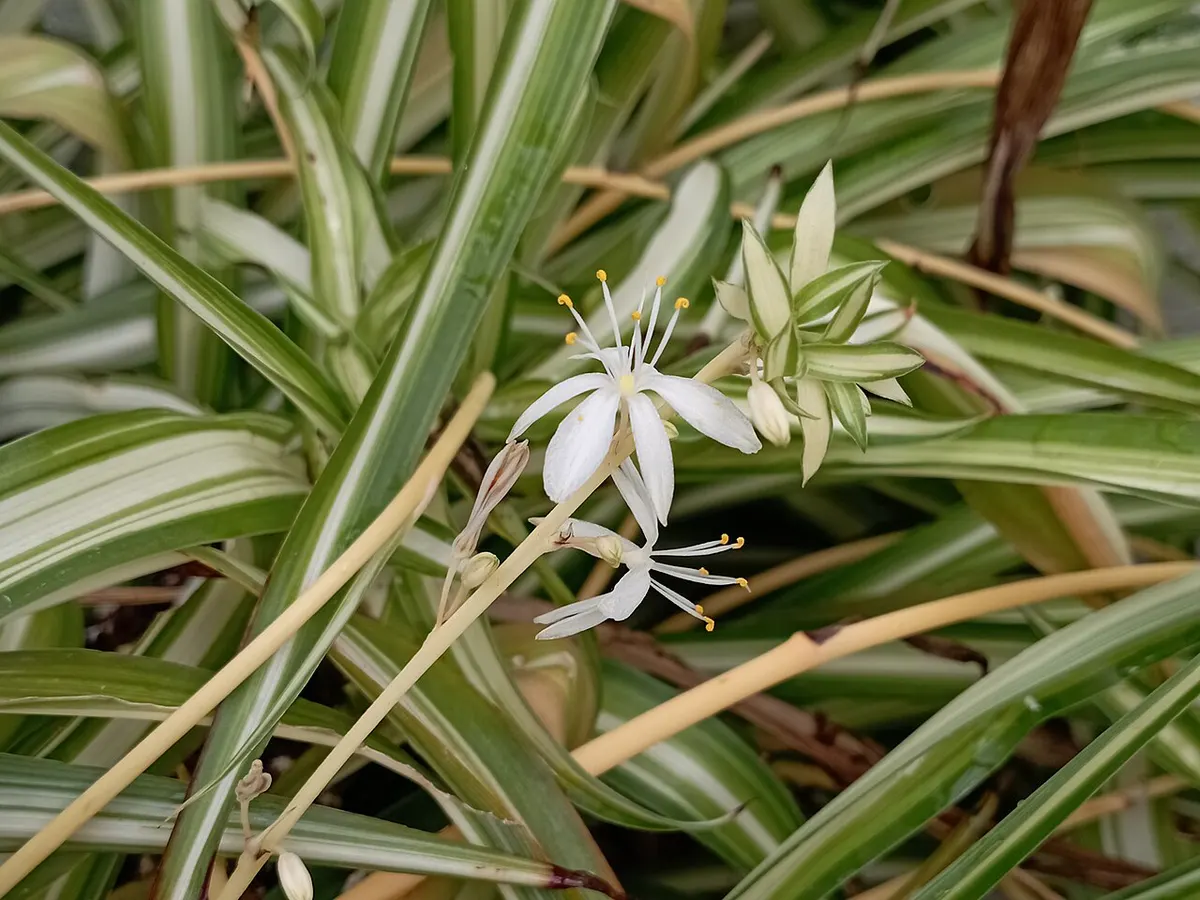
Photo: Juan Carlos Fonseca Mata, CC BY-SA 4.0, via Wikimedia Commons
- Light
- Bright, indirect · copes with less
- Water
- Water when the top 2–3 cm of soil are dry.
- Humidity
- Average
- Temperature
- 10–27 °C
- Care level
- Easy-going, a good first plant
- Pets
- Not known to be toxic to cats and dogs
How often to water Spider plant
About every 6 days in summer and every 11 days in winter. Water when the top 2–3 cm of soil are dry.
Roughly how often, in a medium pot (12–20 cm) in the light it likes. Smaller pots, brighter spots and warm balconies need water sooner; big pots and dim corners later.
- Spring every 7 days
- Summer every 6 days
- Autumn every 9 days
- Winter every 11 days
Worked out by LeafMinder’s schedule. In the app it then adapts to your home, from your “still damp” and “bone dry” answers.
Feeding and repotting
Feed about every 30 days from March to September, with a houseplant fertiliser at half strength. Not in the colder months. Check whether it needs a bigger pot every 12 months or so, ideally in spring.
Thirsty, or too wet?
- When it would like water
- The leaves lose their gloss, turn pale and start to flop, and the pot feels light. The thick, fleshy roots hold a reserve, so it bounces back quickly after a good drink.
- When it has had too much
- The leaves yellow or go soft at the base and the soil smells sour. Empty the saucer, let the top few centimetres dry, and if it doesn't perk up, check the roots and trim any brown, mushy parts.
Soil and pot
A peat-free houseplant compost works well, with a handful of perlite to help it drain. Use a pot with a drainage hole and tip out the saucer after watering. The fleshy white roots fill a pot fast: when they push the plant up, circle the bottom or poke through the hole, move it to a pot one size bigger, usually about once a year.
Common problems
- Brown leaf tips
- Fluoride and salts in tap water, dry air from a radiator, or soil drying out too far between waterings. Try first: Use rainwater or filtered water if you can, flush the pot through with plenty of plain water now and then, and trim the brown tips with clean scissors. The plant isn't harmed.
- Pale or yellowing leaves
- Too little light, or strong direct sun bleaching the leaves. Try first: Move it to bright light without hot midday sun, for example a little back from a sunny window.
- No baby plants
- Young plants can take a year to start. Plantlets form after a few weeks of short days and long, unbroken nights, so a lamp on all evening, low light or an oversized pot can hold them back. Try first: In autumn, give it bright days and dark nights, and keep it slightly snug in its pot.
- Sticky new growth with small green or black insects
- Aphids feeding on soft new leaves and flower stems. Try first: Rinse the plant in the shower and repeat after a few days; wipe off any stragglers with a damp cloth.
- Growth slows and the plant looks tired
- The pot is packed with roots. Try first: In spring, repot it into fresh compost, or divide the clump into two or three pieces.
Not sure what you’re seeing? A photo health check suggests possible causes. How health checks work
Propagation
One of the easiest plants to share. Pin a plantlet into a small pot of moist compost while it's still attached to its runner, and cut it free once it has rooted, after two or three weeks. You can also cut off plantlets that already show small root nubs and stand them in water until the roots are a few centimetres long. Large clumps can be divided in spring, each piece with its own growing point.
Varieties and relatives
- 'Variegatum': Green leaves with cream edges; the classic form most people know.
- 'Vittatum': A broad cream stripe down the middle of each leaf, with longer, more arching leaves.
- 'Bonnie': Compact, with leaves that curl and twist. Comes in green and striped forms.
- Fire flash (Chlorophytum orchidastrum): A relative with wide, glossy leaves and bright orange stalks. It makes no plantlets and likes a little more warmth and humidity.
Questions people ask
How often should I water a spider plant?
In a medium pot indoors, about once a week in spring, every 6 days or so in summer, every 9 days in autumn and about every 11 days in winter. Check first: water when the top 2–3 cm of soil are dry.
Is a spider plant toxic to cats and dogs?
No. The ASPCA lists the spider plant as non-toxic to cats and dogs. Cats often love chewing the leaves, and eating a lot of any plant can still upset a stomach, so a hanging pot keeps the leaves intact.
Why does my spider plant have brown tips?
Usually water quality or dry air. Spider plants are sensitive to fluoride and salts in tap water, so rainwater or filtered water helps, along with flushing the pot now and then. Trim the brown ends; they won't turn green again, but new leaves should stay clean.
Should I cut the babies off my spider plant?
Only if you want to. The plantlets don't harm the mother plant, but removing old, heavy ones keeps it tidy and puts energy into new leaves. Pot up any you'd like to keep or give away.
From the journal
Sources and licences
This care guide was written with AI and checked against the sources below.
- Care checked against: NC State Extension Gardener Plant Toolbox, Royal Horticultural Society (RHS), ASPCA Animal Poison Control, Iowa State University Extension and Outreach.
- GBIF Backbone Taxonomy: other botanical names. Record. CC BY 4.0. GBIF Secretariat (2023). GBIF Backbone Taxonomy. Checklist dataset https://doi.org/10.15468/39omei accessed via GBIF.org on 2026-11-15.
Material from these sources keeps its own licence; LeafMinder’s copyright doesn’t extend to it, and the sources don’t endorse LeafMinder.
General guidance. Every home is different, so the soil is always the best guide. About this advice
From LeafMinder’s plant care guides: leafminder.eu/plants/spider-plant