



Polka dot plant
Hypoestes phyllostachya · Acanthaceae · Leafy green plant
Also called Freckle face, Hypoestes
It wilts quickly when dry, so water as soon as the surface is dry. Pinch out flower spikes and shoot tips to keep it compact.
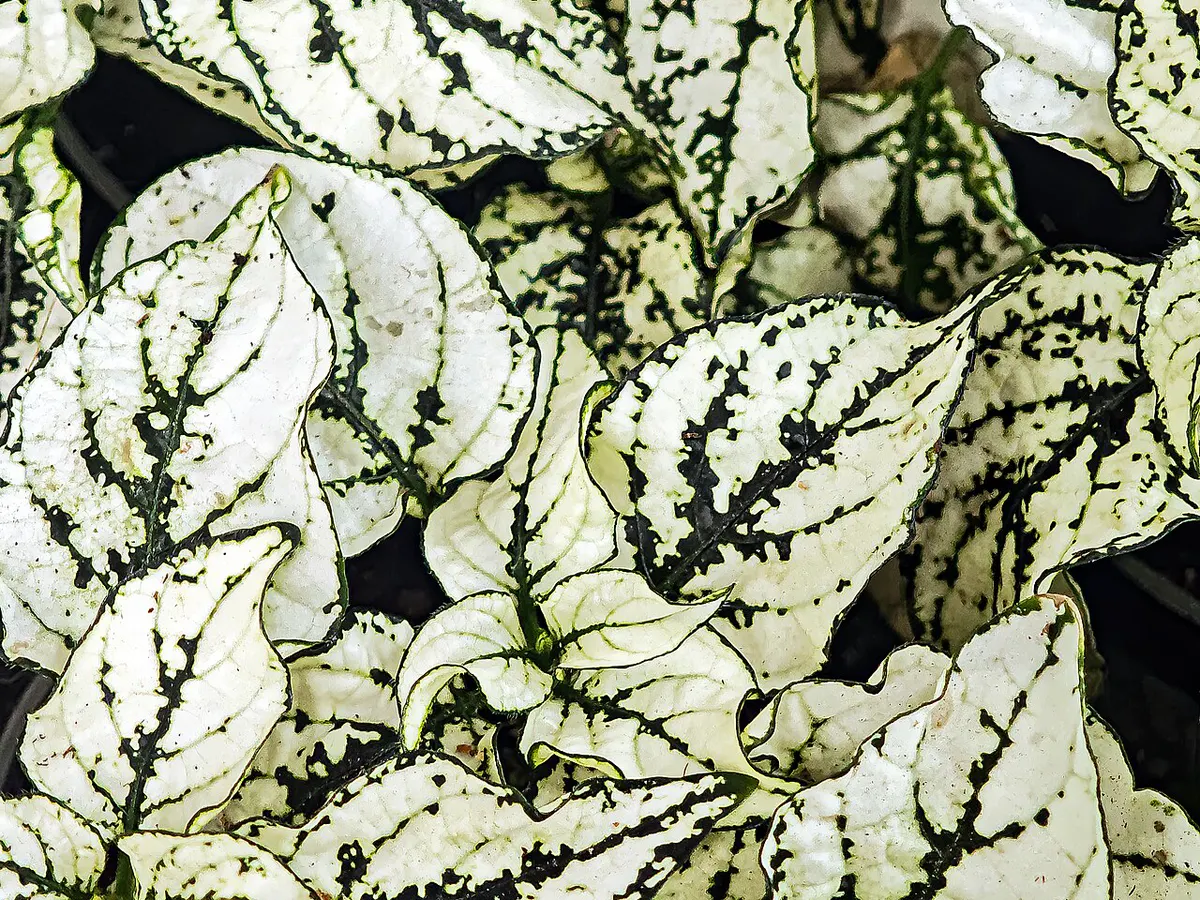
Photo: Didier Descouens, CC BY-SA 4.0, via Wikimedia Commons
- Light
- Bright, indirect
- Water
- Water when the top 2–3 cm of soil are dry.
- Humidity
- Average
- Temperature
- 15–27 °C
- Care level
- Easy-going, a good first plant
- Pets
- Not known to be toxic to cats and dogs
How often to water Polka dot plant
About every 4 days in summer and every 5 days in winter. Water when the top 2–3 cm of soil are dry.
Roughly how often, in a medium pot (12–20 cm) in the light it likes. Smaller pots, brighter spots and warm balconies need water sooner; big pots and dim corners later.
- Spring every 4 days
- Summer every 4 days
- Autumn every 5 days
- Winter every 5 days
Worked out by LeafMinder’s schedule. In the app it then adapts to your home, from your “still damp” and “bone dry” answers.
Feeding and repotting
Feed about every 30 days from March to September, with a houseplant fertiliser at half strength. Not in the colder months. Check whether it needs a bigger pot every 12 months or so, ideally in spring.
Thirsty, or too wet?
- When it would like water
- The whole plant wilts quickly, the leaves hang limp and the soil surface is dry. It usually perks up within a few hours of a good drink.
- When it has had too much
- Leaves yellow and drop even though the soil is damp, and the stems may darken and soften at the base. Let the surface dry before watering again and make sure the pot drains freely.
Soil and pot
A porous, rich mix with plenty of organic matter suits it, such as a houseplant compost with some leaf mould or coir. Use a pot with drainage holes so the roots never sit in water. It grows fast and wants a slightly bigger pot each spring, or when roots fill the pot and it dries out within a day or two. Older plants get leggy, so many growers restart them from cuttings instead.
Common problems
- Long, floppy stems with few leaves
- Too little light, or simply age. It gets leggy over time, faster in dim spots. Try first: Move it to brighter, filtered light and pinch out the shoot tips regularly. Root the tips you remove to start fresh plants.
- Spots fading and leaves turning plain green
- Not enough light to keep the colour. Try first: Give it bright, filtered light, such as near an east window or set back from a sunny one.
- Leaves crinkling, curling or scorched
- Too much strong direct sun. Try first: Move it out of the midday sun or filter the light with a sheer curtain.
- White powdery coating on the leaves
- Powdery mildew, more likely in still air. Try first: Remove the worst leaves, give it more space and air around it and water the soil rather than the leaves.
- Sticky leaves, tiny white flies or cottony spots
- Aphids, whiteflies or mealybugs. Try first: Rinse the plant with lukewarm water and treat with insecticidal soap, repeating every week until they are gone.
Not sure what you’re seeing? A photo health check suggests possible causes. How health checks work
Propagation
It is one of the easiest plants to propagate. In spring or summer, cut a stem tip about 10 cm long, remove the lower leaves and root it in water or moist potting mix in a bright spot. It also grows easily from seed, which can sprout in under a week at about 20 °C.
Varieties and relatives
- 'Splash' series: Large blotches of pink, red or white rather than small dots.
- 'Confetti' series: Smaller, vigorous plants in white, pink, red, rose and burgundy.
- 'Carmina': Bright red splashes over dark green leaves.
- Nerve plant: A low, creeping relative from the same family, with patterned veins. It wants more humidity.
Questions people ask
How often should I water a polka dot plant?
About every 4 days in spring and summer and every 5 days in autumn and winter, in a medium pot indoors. Water as soon as the top few centimetres are dry, as it wilts quickly when dry.
Is a polka dot plant toxic to cats and dogs?
It is listed as non-toxic to cats and dogs. Eating a lot of it may cause mild vomiting or diarrhoea, so keep it where pets can't graze on it.
Why does my polka dot plant droop?
Most often the soil has dried out; it wilts fast and recovers within hours of watering. If it droops while the soil is wet, check the roots for rot and let the pot dry out.
Should I remove the flowers on a polka dot plant?
Yes, if you grow it for the leaves. Pinching off the flower spikes keeps its energy in the foliage and helps the plant stay compact.
Sources and licences
This care guide was written with AI and checked against the sources below.
- Care checked against: NC State Extension Gardener Plant Toolbox, University of Wisconsin–Madison Extension, ASPCA Animal Poison Control.
- GBIF Backbone Taxonomy: other botanical names. Record. CC BY 4.0. GBIF Secretariat (2023). GBIF Backbone Taxonomy. Checklist dataset https://doi.org/10.15468/39omei accessed via GBIF.org on 2026-11-15.
Material from these sources keeps its own licence; LeafMinder’s copyright doesn’t extend to it, and the sources don’t endorse LeafMinder.
General guidance. Every home is different, so the soil is always the best guide. About this advice
From LeafMinder’s plant care guides: leafminder.eu/plants/polka-dot-plant