



Pitcher plant
Sarracenia spp. · Sarraceniaceae · Carnivorous plant
Also called Trumpet pitcher, Sarracenia
Grow it in full sun, ideally on a balcony, standing in a tray of rainwater all summer. It is hardy and needs a cold winter rest with the soil just damp.
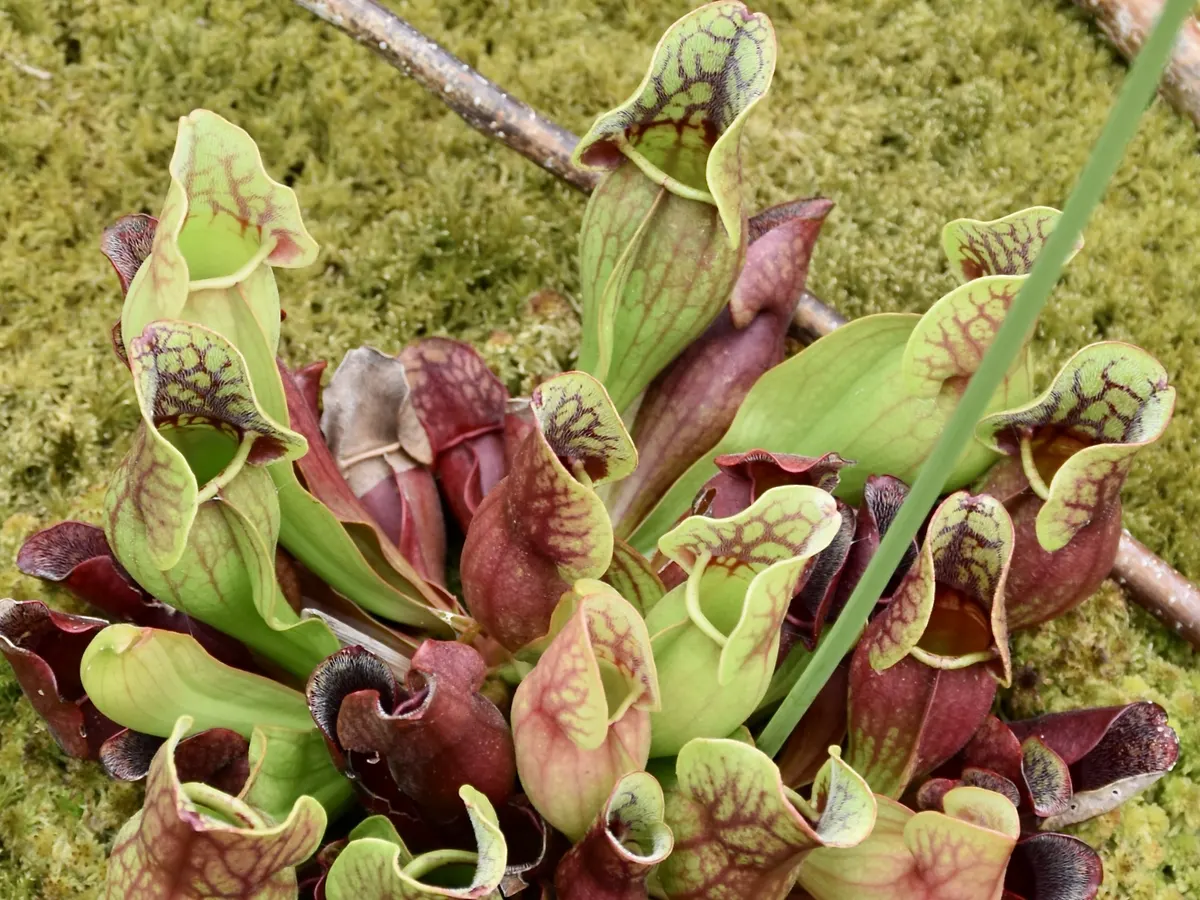
Photo: NasserHalaweh, CC BY-SA 4.0, via Wikimedia Commons
- Light
- Direct sun
- Water
- Keep the soil lightly moist, never soggy.
- Humidity
- Average
- Temperature
- -5–35 °C
- Care level
- Needs a little attention
- Pets
- Pet safety not confirmed
How often to water Pitcher plant
About every 2 days in summer and every 5 days in winter. Keep the soil lightly moist, never soggy.
Roughly how often, in a medium pot (12–20 cm) in the light it likes. Smaller pots, brighter spots and warm balconies need water sooner; big pots and dim corners later.
- Spring every 3 days
- Summer every 2 days
- Autumn every 4 days
- Winter every 5 days
Worked out by LeafMinder’s schedule. In the app it then adapts to your home, from your “still damp” and “bone dry” answers.
Feeding and repotting
No regular feeding needed. Check whether it needs a bigger pot every 24 months or so, ideally in spring.
Thirsty, or too wet?
- When it would like water
- The tray has run dry, the moss on top feels only slightly damp and young pitchers may wilt at the tip. Refill the tray with rainwater, because in the growing season the mix should never dry out.
- When it has had too much
- In the cold winter rest, mix that stays sodden can rot the rhizome: the base turns soft and dark. Empty the tray and keep the mix just damp until new growth appears in spring.
Soil and pot
Use a low-nutrient, acidic mix, such as sphagnum moss with perlite or lime-free sand, or a ready-made carnivorous plant compost. Never use ordinary compost or fertiliser. A fairly deep plastic pot with drainage holes, standing in a tray of rainwater all summer, suits it well. Repot or divide about every two years in early spring, or when the rhizomes crowd the edge of the pot.
Common problems
- Pitchers turning brown in autumn
- The normal start of the winter rest. As days shorten and nights turn cold, the plant stops making pitchers and the old ones die back. Try first: Leave them until early spring, then cut the dead pitchers off at the base before the new growth appears.
- Weak, green, floppy pitchers
- Too little sun. Pitcher plants need full sun to grow upright and colour well. Try first: Move it to the sunniest spot you have. A south-facing balcony is ideal from spring to autumn.
- Brown leaf edges and a crust on the mix
- Minerals from tap water or fertiliser, which the roots cannot cope with. Try first: Water only with rainwater or distilled water, and repot into fresh mix in spring if the crust stays.
- Grey mould in winter
- Botrytis growing on dead leaves in damp, still air, most often when the plant rests indoors. Try first: Remove dead material, give it fresh air and keep the mix just damp rather than wet.
- Small insects or white fluff on new growth
- Aphids, mealybugs or scale insects, which like the soft spring shoots. Try first: Pick or wipe them off, rinse with rainwater and check again after a week.
Not sure what you’re seeing? A photo health check suggests possible causes. How health checks work
Propagation
Divide the rhizome in early spring, at the end of the winter rest. Cut it into pieces that each have a growing point and some roots, and pot them in fresh carnivorous mix. Seed works too, but it needs a few weeks of cold, damp conditions before it will sprout, and seedlings take several years to reach full size.
Varieties and relatives
- Purple pitcher plant (Sarracenia purpurea): Low, squat pitchers that hold rainwater. The hardiest kind, it can stay outdoors in much colder winters.
- Yellow trumpet (Sarracenia flava): Tall, slender yellow-green trumpets with a lid on top. It needs shelter from strong wind.
- White-topped pitcher plant (Sarracenia leucophylla): Tall pitchers with white, red-veined tops. It is less hardy, so protect it below about -5 °C.
- Tropical pitcher plant (Nepenthes): A different, tropical plant with pitchers hanging from the leaf tips. It wants warmth and humidity all year and no cold winter rest.
Questions people ask
How often should I water a pitcher plant?
About every 2 days in summer, every 3 in spring, every 4 in autumn and about every 5 in winter, in a medium pot indoors. In the growing season keep a little rainwater in the tray; in winter keep the mix just damp.
Is a pitcher plant toxic to cats and dogs?
Its safety for pets isn't confirmed, so keep it out of reach of cats and dogs. If a pet chews it and seems unwell, call your vet.
Can a pitcher plant stay outside in winter?
Yes, it needs a cold winter rest, and most kinds cope with frosts down to about -5 °C. In harder frosts, move it into an unheated shed or garage, or cover it with fleece, and keep the mix damp.
Should I feed my pitcher plant?
No. It catches its own insects and never needs fertiliser, which can burn the roots. Don't drop meat or food scraps into the pitchers either, because the plant can't digest fats.
Sources and licences
This care guide was written with AI and checked against the sources below.
- Care checked against: NC State Extension Gardener Plant Toolbox, Royal Horticultural Society.
General guidance. Every home is different, so the soil is always the best guide. About this advice
From LeafMinder’s plant care guides: leafminder.eu/plants/pitcher-plant