



Venus flytrap
Dionaea muscipula · Droseraceae · Carnivorous plant
Also called Flytrap, Dionaea
Use only rainwater or distilled water and stand the pot in a shallow tray so the soil never dries. It needs a cool winter rest, and closing the traps by hand wears the plant out.
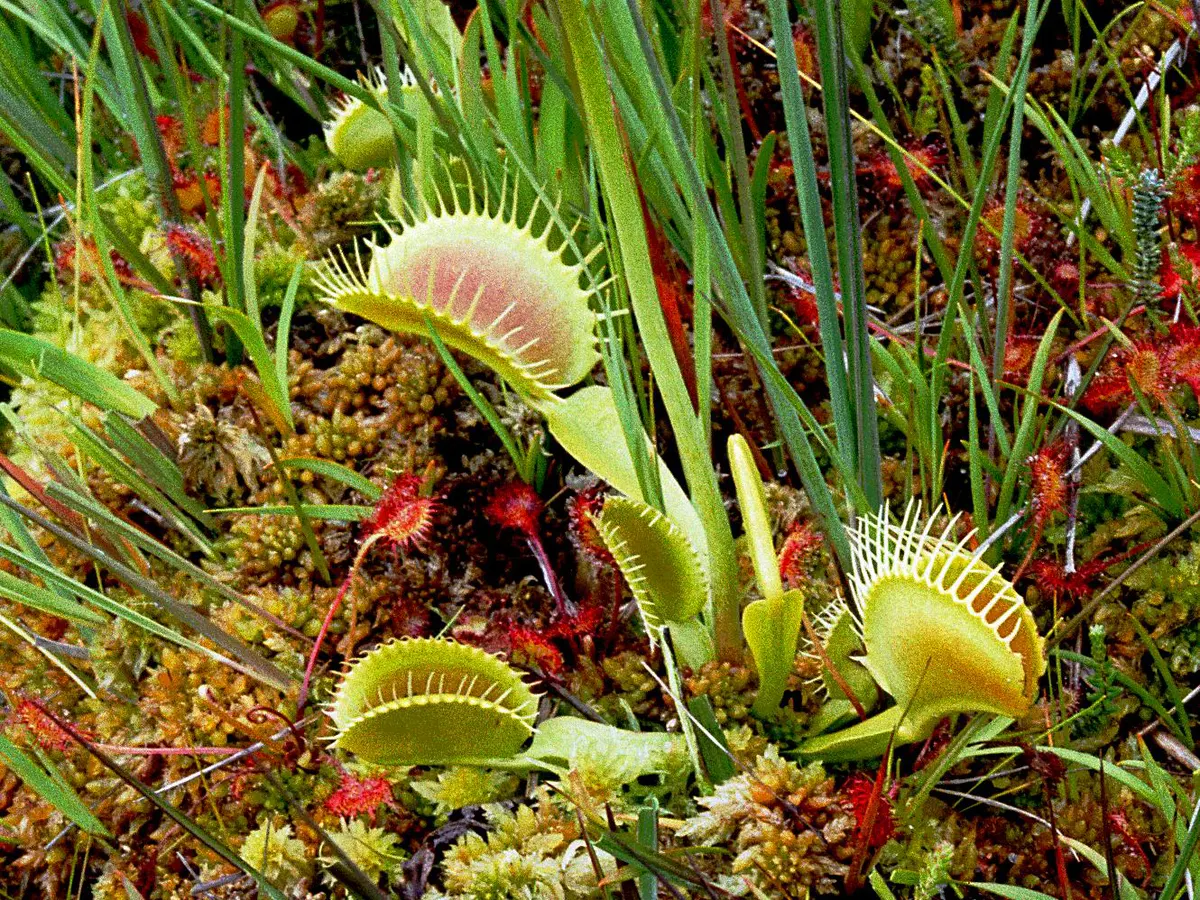
Photo: Len Worthington, CC BY-SA 2.0, via Wikimedia Commons
- Light
- Direct sun
- Water
- Keep the soil lightly moist, never soggy.
- Humidity
- Average
- Temperature
- 2–35 °C
- Care level
- Needs a little attention
- Pets
- Not known to be toxic to cats and dogs
How often to water Venus flytrap
About every 2 days in summer and every 5 days in winter. Keep the soil lightly moist, never soggy.
Roughly how often, in a medium pot (12–20 cm) in the light it likes. Smaller pots, brighter spots and warm balconies need water sooner; big pots and dim corners later.
- Spring every 3 days
- Summer every 2 days
- Autumn every 4 days
- Winter every 5 days
Worked out by LeafMinder’s schedule. In the app it then adapts to your home, from your “still damp” and “bone dry” answers.
Feeding and repotting
No regular feeding needed. Check whether it needs a bigger pot every 24 months or so, ideally in spring.
Thirsty, or too wet?
- When it would like water
- The tray underneath has run dry and the moss on top looks pale and feels barely damp. New traps may look limp. Refill the tray with rainwater, because the mix should never dry out.
- When it has had too much
- During the winter rest, a pot left standing deep in water can rot at the base: leaves blacken from the centre and the mix smells sour. Let the tray empty and keep only about half a centimetre of water in it until spring.
Soil and pot
Use a low-nutrient carnivorous plant mix, such as sphagnum moss with perlite or lime-free sand. Ordinary potting compost and fertiliser burn the roots. A plastic or glazed pot with drainage holes, standing in a shallow tray, works best. Repot about every two years in early spring into fresh mix, or sooner if rosettes crowd the rim or roots grow out of the bottom.
Common problems
- Traps turning black
- Each trap closes only a few times before it dies off. Triggering traps by hand or feeding them meat or cheese uses up the plant's energy faster. Try first: Snip black traps off at the base and leave the rest alone. Let the plant catch its own insects.
- Long, floppy leaves with small green traps
- Not enough direct light. It needs several hours of sun to grow short, sturdy leaves and red-lined traps. Try first: Move it to your sunniest window, or outdoors to a sunny balcony from late spring to autumn.
- Browning leaves and a white crust on the mix
- Minerals from tap water or fertiliser building up in the mix. Try first: Water only with rainwater or distilled water, and repot into fresh carnivorous mix in spring.
- Grey fuzz on old leaves
- Grey mould (botrytis), most common in winter in still, damp air. Try first: Remove dead leaves and any mouldy parts, give it more fresh air and keep only a little water in the tray.
- Small green or black insects on new leaves
- Aphids, which like the soft growth in spring. Try first: Rinse them off with rainwater or pick them off, and check again a week later.
Not sure what you’re seeing? A photo health check suggests possible causes. How health checks work
Propagation
The easiest way is division. In spring, as the plant wakes up, gently separate rosettes that each have their own roots and pot them in fresh carnivorous mix. Leaf cuttings also work in spring: pull off a healthy outer leaf with its white base and lay it on damp sphagnum in bright light, and small plants appear after a few months. Seed is possible, but seedlings take several years to reach flowering size.
Varieties and relatives
- 'Red Dragon' ('Akai Ryu'): Leaves and traps turn deep red all over when grown in good sun.
- 'King Henry': A vigorous form with large traps, yellow-green outside and orange-red inside.
- 'Dente': The teeth along the edge of the traps are short and triangular, like a saw.
- Cape sundew (Drosera capensis): A relative from the same family that catches insects on sticky leaves instead of snapping traps. It doesn't need a cold winter rest.
Questions people ask
How often should I water a Venus flytrap?
About every 2 days in summer, every 3 in spring, every 4 in autumn and about every 5 in winter, in a medium pot indoors. Top up the tray with rainwater or distilled water so the mix never dries out, and keep the water shallower in winter.
Is a Venus flytrap toxic to cats and dogs?
No, it is listed as non-toxic to cats and dogs. A pet that chews it may still get a mildly upset stomach, so it's best kept out of reach.
Does a Venus flytrap need a winter rest?
Yes. From about November to February it wants a cool, bright spot a few degrees above freezing, such as an unheated room or a sheltered balcony. Growth slows and some leaves die back, which is normal. Plants kept warm all winter grow weaker year after year.
Should I feed my Venus flytrap?
No feeding or fertiliser is needed. A few insects a year are plenty, and it catches them by itself. Never give it meat or cheese, and avoid closing the traps by hand, because each closure costs the plant energy.
Sources and licences
This care guide was written with AI and checked against the sources below.
- Care checked against: NC State Extension Gardener Plant Toolbox, Royal Horticultural Society, Royal Horticultural Society, ASPCA.
- GBIF Backbone Taxonomy: other botanical names. Record. CC BY 4.0. GBIF Secretariat (2023). GBIF Backbone Taxonomy. Checklist dataset https://doi.org/10.15468/39omei accessed via GBIF.org on 2026-11-15.
Material from these sources keeps its own licence; LeafMinder’s copyright doesn’t extend to it, and the sources don’t endorse LeafMinder.
General guidance. Every home is different, so the soil is always the best guide. About this advice
From LeafMinder’s plant care guides: leafminder.eu/plants/venus-flytrap