



Panda plant
Kalanchoe tomentosa · Crassulaceae · Succulent
Also called Pussy ears
Water only when the soil is dry right through and keep water off the furry leaves. A sunny windowsill suits it well.
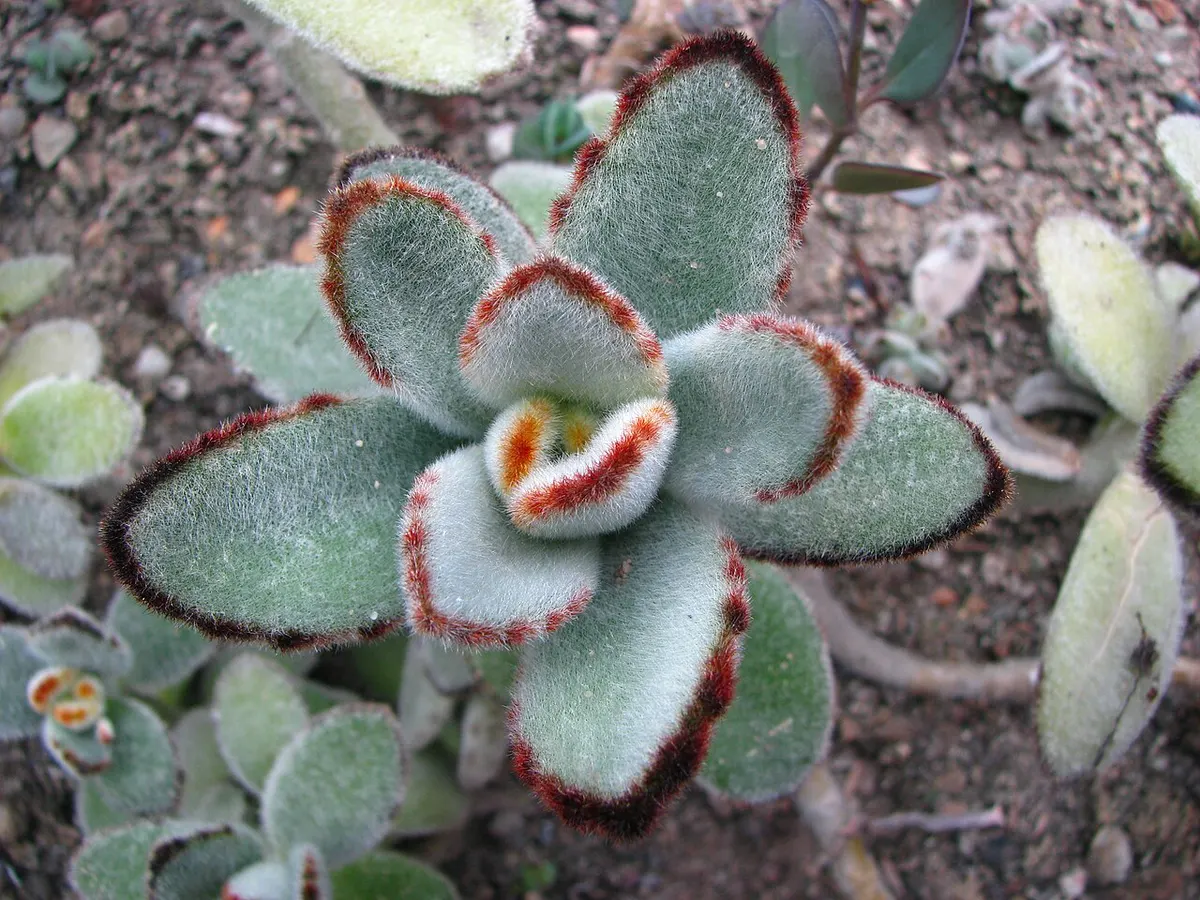
Photo: Agnieszka Kwiecień, Nova, CC BY-SA 4.0, via Wikimedia Commons
- Light
- Direct sun
- Water
- Water only when the soil is dry right through.
- Humidity
- Normal room air is fine
- Temperature
- 10–30 °C
- Care level
- Easy-going, a good first plant
- Pets
- Not safe for cats and dogs
How often to water Panda plant
About every 11 days in summer and every 30 days in winter. Water only when the soil is dry right through.
Roughly how often, in a medium pot (12–20 cm) in the light it likes. Smaller pots, brighter spots and warm balconies need water sooner; big pots and dim corners later.
- Spring every 12 days
- Summer every 11 days
- Autumn every 21 days
- Winter every 30 days
Worked out by LeafMinder’s schedule. In the app it then adapts to your home, from your “still damp” and “bone dry” answers.
Feeding and repotting
Feed about every 30 days from April to September, with a houseplant fertiliser at half strength. Not in the colder months. Check whether it needs a bigger pot every 24 months or so, ideally in spring.
Thirsty, or too wet?
- When it would like water
- The felty leaves feel softer and start to wrinkle, and the soil is dry right through. Water thoroughly at the soil, then let it dry out completely again.
- When it has had too much
- Leaves turn yellow, soft or mushy and drop, and the stem may darken at the base. Let the soil dry out fully, cut away any rot, and water much less often from then on.
Soil and pot
Use a fast-draining cactus and succulent mix, or a houseplant mix with extra grit or perlite, in a pot with a drainage hole. A terracotta pot helps the soil dry out and gives weight to a plant that can get top-heavy. Repot every two years or so in spring, or when roots fill the pot and water runs straight through.
Common problems
- Yellow, mushy leaves
- Overwatering or a mix that drains too slowly, leading to root rot. Try first: Let the pot dry right through before watering again, and move it into a grittier mix if the soil stays wet for days.
- Wrinkled, shrivelled leaves
- Thirst, after it has stayed dry for a long time, often in summer heat. Try first: Water thoroughly and let the excess drain. The leaves should plump up again within a few days.
- Stretched, leggy stems with pale leaves
- Too little light. Try first: Move it to a sunny windowsill. You can trim leggy stems and root the tips.
- Brown or scorched patches
- Sunburn after a sudden move into strong sun, or very hot sun behind glass. Try first: Get it used to strong sun over a week or two, and give it a little shade in the hottest midsummer hours.
- White fluff or fine webbing between the leaves
- Mealybugs or spider mites, which hide among the hairs. Try first: Pick mealybugs out with a cotton bud dipped in rubbing alcohol, and check where the leaves join the stem every week until it is clear.
Not sure what you’re seeing? A photo health check suggests possible causes. How health checks work
Propagation
Take stem cuttings or single leaves in spring or summer, or separate offsets from the base. Let cuttings dry for a few days until the cut end has sealed, then set them on or into a dry, gritty mix and water lightly once roots appear. It roots more slowly than many succulents, so leaf cuttings in particular need patience.
Varieties and relatives
- 'Chocolate Soldier': Longer, thinner leaves with reddish-brown edges; it grows a little faster and forms fuller clumps.
- 'Teddy Bear': Rounder, chocolate-brown leaves with a very dense coat of fuzz.
- Felt bush (Kalanchoe beharensis): A much larger relative with big, felted, triangular leaves; it can grow into a small tree.
- Kalanchoe millotii: A compact relative with scalloped, pale green leaves covered in short felt.
Questions people ask
How often should I water a panda plant?
About every 11–12 days in spring and summer, every three weeks in autumn and about once a month in winter, in a medium pot indoors. Always check first that the soil is dry right through.
Is the panda plant toxic to cats and dogs?
Yes. Like other kalanchoes, it contains bufadienolides, which can cause vomiting and diarrhoea and, rarely, heart rhythm problems. Keep it out of reach, and call your vet if a pet chews it.
Should I mist a panda plant?
No. It likes dry air, and water sitting in the fur can mark the leaves or lead to rot. Water the soil instead.
Why is my panda plant leggy?
It is stretching toward the light. Move it to a sunny window and trim the long stems; the tips can be rooted as cuttings.
Sources and licences
This care guide was written with AI and checked against the sources below.
- Care checked against: NC State Extension Gardener Plant Toolbox, Royal Horticultural Society, ASPCA Animal Poison Control.
General guidance. Every home is different, so the soil is always the best guide. About this advice
From LeafMinder’s plant care guides: leafminder.eu/plants/panda-plant