



Chinese hibiscus
Hibiscus rosa-sinensis · Malvaceae · Flowering houseplant
Also called Hibiscus, Rose of China, Tropical hibiscus
It needs bright light and regular water in summer, so check the soil every few days and water when the surface is dry. Each flower lasts only a day or two; dropped buds usually follow dry soil or a move.
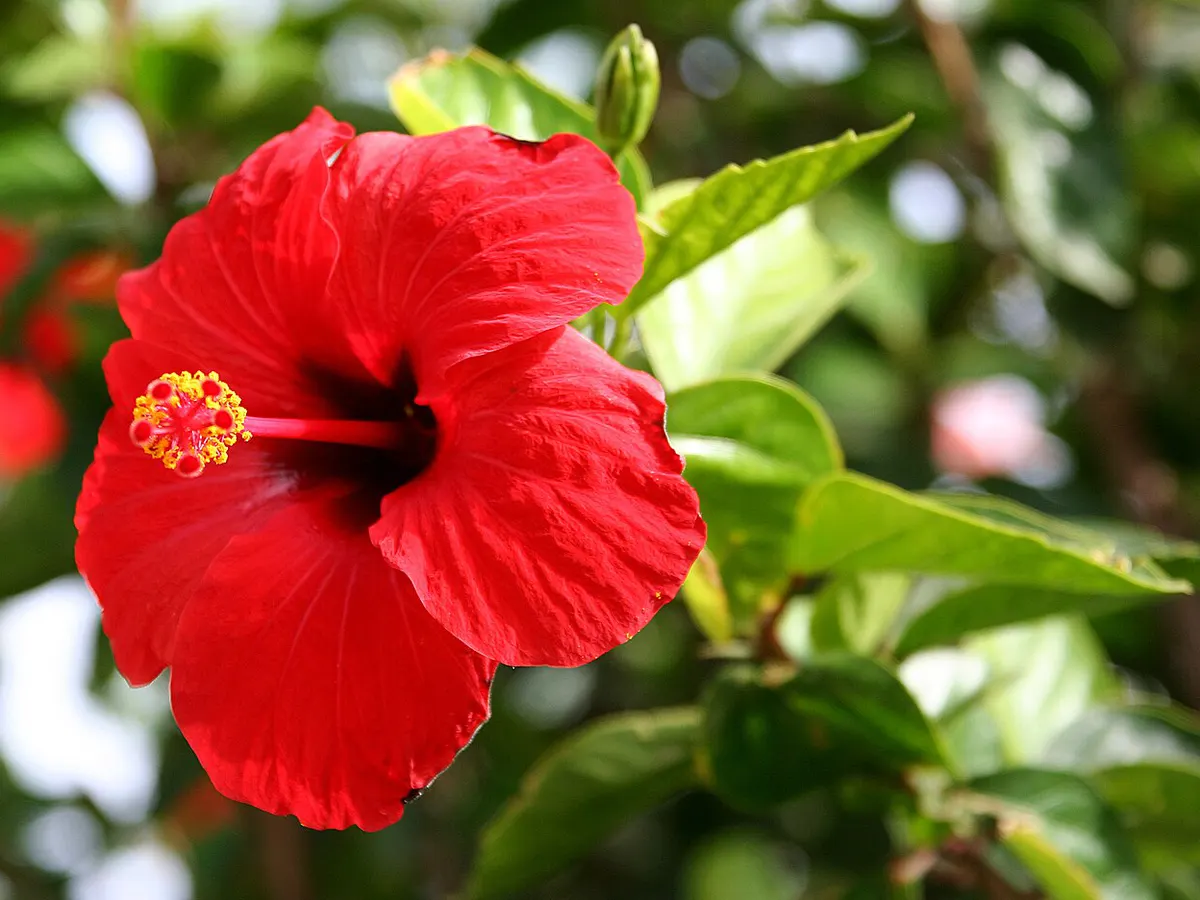
Photo: Andy / Andrew Fogg from near Cambridge, UK, CC BY 2.0, via Wikimedia Commons
- Light
- Direct sun
- Water
- Water when the top 2–3 cm of soil are dry.
- Humidity
- Average
- Temperature
- 12–32 °C
- Care level
- Needs a little attention
- Pets
- Pet safety not confirmed
How often to water Chinese hibiscus
About every 3 days in summer and every 5 days in winter. Water when the top 2–3 cm of soil are dry.
Roughly how often, in a medium pot (12–20 cm) in the light it likes. Smaller pots, brighter spots and warm balconies need water sooner; big pots and dim corners later.
- Spring every 3 days
- Summer every 3 days
- Autumn every 4 days
- Winter every 5 days
Worked out by LeafMinder’s schedule. In the app it then adapts to your home, from your “still damp” and “bone dry” answers.
Feeding and repotting
Feed about every 14 days from March to September, with a houseplant fertiliser at half strength. Not in the colder months. Check whether it needs a bigger pot every 24 months or so, ideally in spring.
Thirsty, or too wet?
- When it would like water
- The soil surface is dry and the leaves start to hang limply; in summer this can happen within a couple of days. Buds may drop if it dries out often, so water thoroughly as soon as the surface is dry.
- When it has had too much
- Leaves turn yellow and fall, starting low on the plant, and the soil stays wet for days. Let the surface dry before you water, empty the saucer, and water less in winter when growth slows.
Soil and pot
Use a rich, free-draining houseplant mix, ideally peat-free, or a soil-based compost, in a pot with a drainage hole. Repot about every two years in late winter or early spring, moving it up one size when roots fill the pot or it dries out within a day. That's also the time to prune it if it needs it.
Common problems
- Buds drop before they open
- Soil drying out, a sudden move, or too little light; the plant is sensitive to change. Try first: Keep watering steady, leave it in one bright spot while it's in bud, and avoid turning or moving it.
- Yellow leaves falling in winter
- Low winter light indoors; it slows down and sheds some leaves. Try first: Give it your brightest window, keep it at 12 °C or above, and water less until growth picks up in spring.
- Lost lots of leaves after coming indoors
- The change from outdoor light and air to indoor conditions; it's adjusting, not declining. Try first: Keep it cool and bright, water sparingly, and give it time: new leaves usually come in late winter or spring.
- Fine webbing and speckled leaves
- Spider mites, which thrive in warm, dry indoor air. Try first: Rinse the leaves, especially underneath, and raise humidity with a tray of damp pebbles.
- Sticky leaves, curled tips or small white insects
- Aphids, whiteflies or mealybugs feeding on new shoots and buds. Try first: Rinse them off in the shower and check new growth weekly; outbreaks caught early are the easiest to clear.
Not sure what you’re seeing? A photo health check suggests possible causes. How health checks work
Propagation
Take 7–10 cm tip cuttings in late spring or early summer and root them in a sandy, peat-free cuttings mix. They need warmth, ideally 24–27 °C from below, and humid air, so a propagator or a clear cover helps. With that warmth, roots can form in about two weeks; then pot each one up on its own.
Varieties and relatives
- Hibiscus rosa-sinensis 'Cooperi': A compact form with leaves marbled green, white and pink, and red flowers.
- Double-flowered hibiscus: Have extra layers of petals and heavier flowers; care is the same.
- Rose of Sharon: A hardy, deciduous garden shrub in the same genus that flowers in late summer and stays outdoors all year.
Questions people ask
How often should I water a hibiscus?
About every 3 days in spring and summer and every 4–5 days in autumn and winter, in a medium pot indoors. Water when the surface is dry; in a cool room in winter it may need less.
Is hibiscus toxic to cats and dogs?
Its safety for cats and dogs isn't confirmed, so keep it out of reach of pets that chew plants. If a pet eats a lot of it, call your vet.
Why are my hibiscus buds falling off?
Usually the soil has dried out, the plant has been moved, or it isn't getting enough light. Water as soon as the surface is dry, keep it in one bright spot and let it settle; new buds will follow.
Can my hibiscus go outside in summer?
Yes, once nights stay above about 12 °C. Get it used to stronger sun over a week or so, and bring it back in before the nights cool down; some leaf drop as it adjusts indoors is normal.
When should I prune a hibiscus?
In late winter or early spring. It flowers on new growth, so cutting it back by up to half then keeps it compact without losing the season's flowers.
Sources and licences
This care guide was written with AI and checked against the sources below.
- Care checked against: Royal Horticultural Society, NC State Extension Gardener Plant Toolbox, New York Botanical Garden (Mertz Library), UF/IFAS Gardening Solutions, ASPCA Animal Poison Control.
- GBIF Backbone Taxonomy: other botanical names. Record. CC BY 4.0. GBIF Secretariat (2023). GBIF Backbone Taxonomy. Checklist dataset https://doi.org/10.15468/39omei accessed via GBIF.org on 2026-11-15.
Material from these sources keeps its own licence; LeafMinder’s copyright doesn’t extend to it, and the sources don’t endorse LeafMinder.
General guidance. Every home is different, so the soil is always the best guide. About this advice
From LeafMinder’s plant care guides: leafminder.eu/plants/hibiscus