



Inch plant
Tradescantia fluminensis · Commelinaceae · Trailing or climbing plant
Also called Small-leaf spiderwort, River spiderwort, Tradescantia
Water when the top few centimetres are dry; it grows quickly and benefits from a regular trim. Pinched-off tips root easily in water or soil.
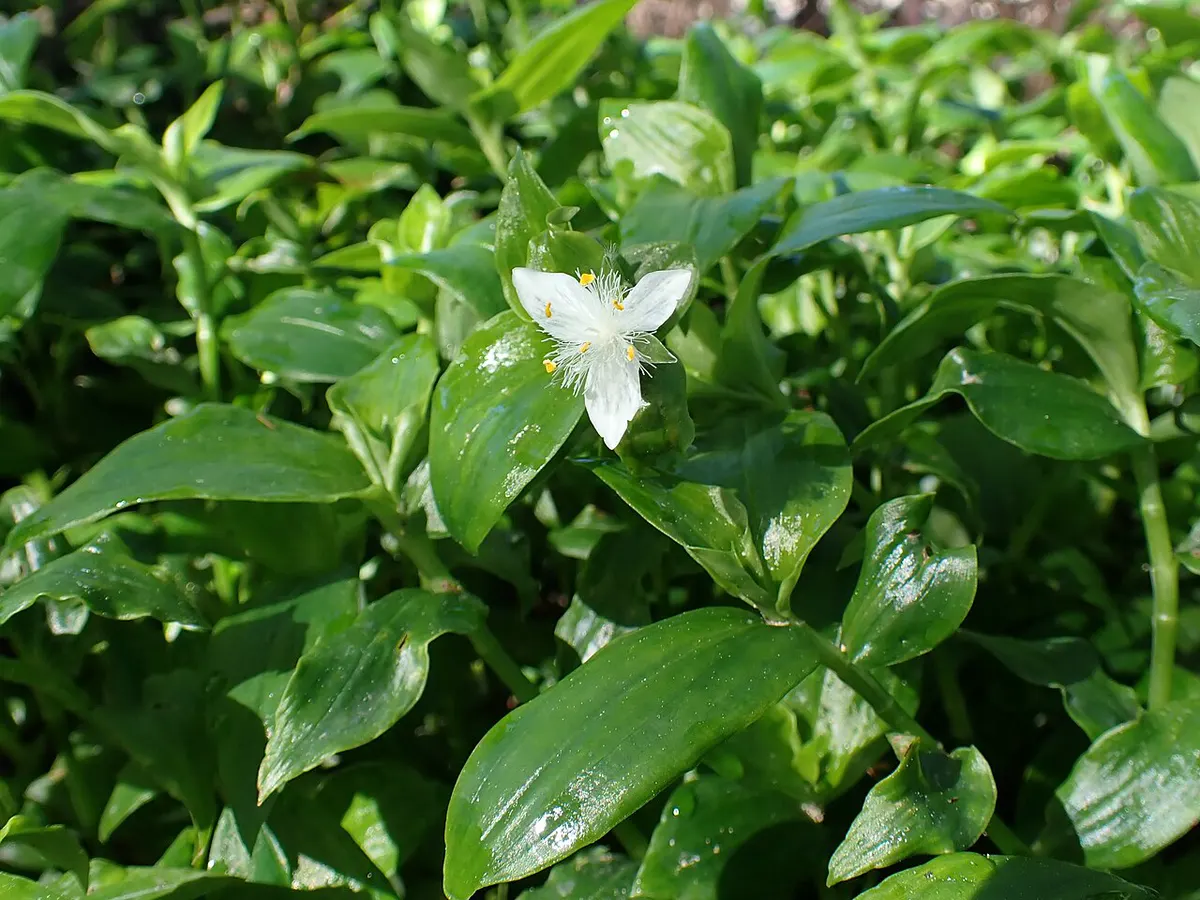
Photo: Krzysztof Ziarnek, Kenraiz, CC BY-SA 4.0, via Wikimedia Commons
- Light
- Bright, indirect · copes with less
- Water
- Water when the top 2–3 cm of soil are dry.
- Humidity
- Average
- Temperature
- 10–27 °C
- Care level
- Easy-going, a good first plant
- Pets
- Not safe for cats and dogs
How often to water Inch plant
About every 5 days in summer and every 9 days in winter. Water when the top 2–3 cm of soil are dry.
Roughly how often, in a medium pot (12–20 cm) in the light it likes. Smaller pots, brighter spots and warm balconies need water sooner; big pots and dim corners later.
- Spring every 6 days
- Summer every 5 days
- Autumn every 8 days
- Winter every 9 days
Worked out by LeafMinder’s schedule. In the app it then adapts to your home, from your “still damp” and “bone dry” answers.
Feeding and repotting
Feed about every 30 days from March to September, with a houseplant fertiliser at half strength. Not in the colder months. Check whether it needs a bigger pot every 12 months or so, ideally in spring.
Thirsty, or too wet?
- When it would like water
- Stems go limp, the leaves look dull and slightly shrivelled, and the top few centimetres of soil are dry. It recovers quickly once watered.
- When it has had too much
- Stems turn soft and brown at the base, and leaves yellow and fall. Let the top of the soil dry before watering again, and root a few healthy tips in case the base doesn't recover.
Soil and pot
Any good houseplant compost with a little perlite works, in a pot or hanging basket with a drainage hole. It grows fast and fills a pot quickly, so plan to repot it or refresh the soil each spring. Roots coming out of the drainage hole, or soil drying out within a day or two, mean it's time.
Common problems
- Long, bare stems with leaves only at the tips
- Normal ageing plus too little light. Older stems lose their lower leaves. Try first: Move it to brighter light, cut the stems back, and plant the tips in the same pot to fill it out.
- Variegated leaves turning plain green
- Too little light, or an all-green shoot outgrowing the coloured ones. Try first: Give it more light and snip off fully green stems where they start.
- Brown, crispy leaves
- Soil left dry for too long, or hot direct sun through glass. Try first: Water when the top few centimetres are dry, and move it out of strong midday sun.
- Fine webbing or white fluff in the leaf joints
- Spider mites or mealybugs. Whiteflies and aphids also visit. Try first: Rinse the plant in the shower, cut out the worst stems, and check it weekly.
- Stems rotting at the soil
- Soil that stays wet, especially in a cool room. Try first: Let it dry more between waterings, and restart the plant from healthy tip cuttings.
Not sure what you’re seeing? A photo health check suggests possible causes. How health checks work
Propagation
It's one of the easiest plants to root. Snip 8–10 cm tips just below a node, take off the lowest leaves, and stand them in water or push them into moist compost. Roots appear within a week or two at any time of year, fastest in spring and summer. Planting several cuttings together gives a fuller pot.
Varieties and relatives
- 'Albovittata': Light green leaves with fine white stripes. A vigorous grower.
- 'Nanouk': A compact form striped green, cream and pinkish violet. It needs bright light to keep its colour.
- Silver inch plant: Tradescantia zebrina, with silver-striped leaves and purple undersides. Care is much the same.
- Purple heart: Tradescantia pallida, with longer, deep purple leaves. It likes more sun to keep its colour.
Questions people ask
How often should I water an inch plant?
About every 5–6 days in spring and summer and every 8–9 days in autumn and winter, in a medium pot indoors. Check the top few centimetres first; a hanging basket may dry out sooner.
Is the inch plant toxic to cats and dogs?
Yes. Its sap can cause skin irritation and redness in cats and dogs, and chewing it can upset the mouth and stomach. Keep it out of reach, and call your vet if a pet seems irritated after contact. Gloves help when you prune, if your own skin is sensitive.
Why is my inch plant getting leggy?
Stems naturally lose their lower leaves as they age, and low light speeds this up. Pinch back the tips regularly, give it brighter light, and replant the cuttings in the pot to keep it full.
Can I plant an inch plant outside?
It can spend summer outdoors in light shade, but it doesn't survive frost. In mild regions it spreads into the wild and smothers native plants, so keep it in pots and don't throw cuttings out in the garden.
Sources and licences
This care guide was written with AI and checked against the sources below.
- Care checked against: NC State Extension Gardener Plant Toolbox, Royal Horticultural Society, University of Wisconsin–Madison Extension, ASPCA Animal Poison Control.
- GBIF Backbone Taxonomy: other botanical names. Record. CC BY 4.0. GBIF Secretariat (2023). GBIF Backbone Taxonomy. Checklist dataset https://doi.org/10.15468/39omei accessed via GBIF.org on 2026-11-15.
Material from these sources keeps its own licence; LeafMinder’s copyright doesn’t extend to it, and the sources don’t endorse LeafMinder.
General guidance. Every home is different, so the soil is always the best guide. About this advice
From LeafMinder’s plant care guides: leafminder.eu/plants/inch-plant