



Haworthia
Haworthia spp. · Asphodelaceae · Succulent
Also called Zebra haworthia, Zebra cactus, Pearl plant
Unlike most succulents it prefers bright light without harsh midday sun. Water when the soil is dry right through.
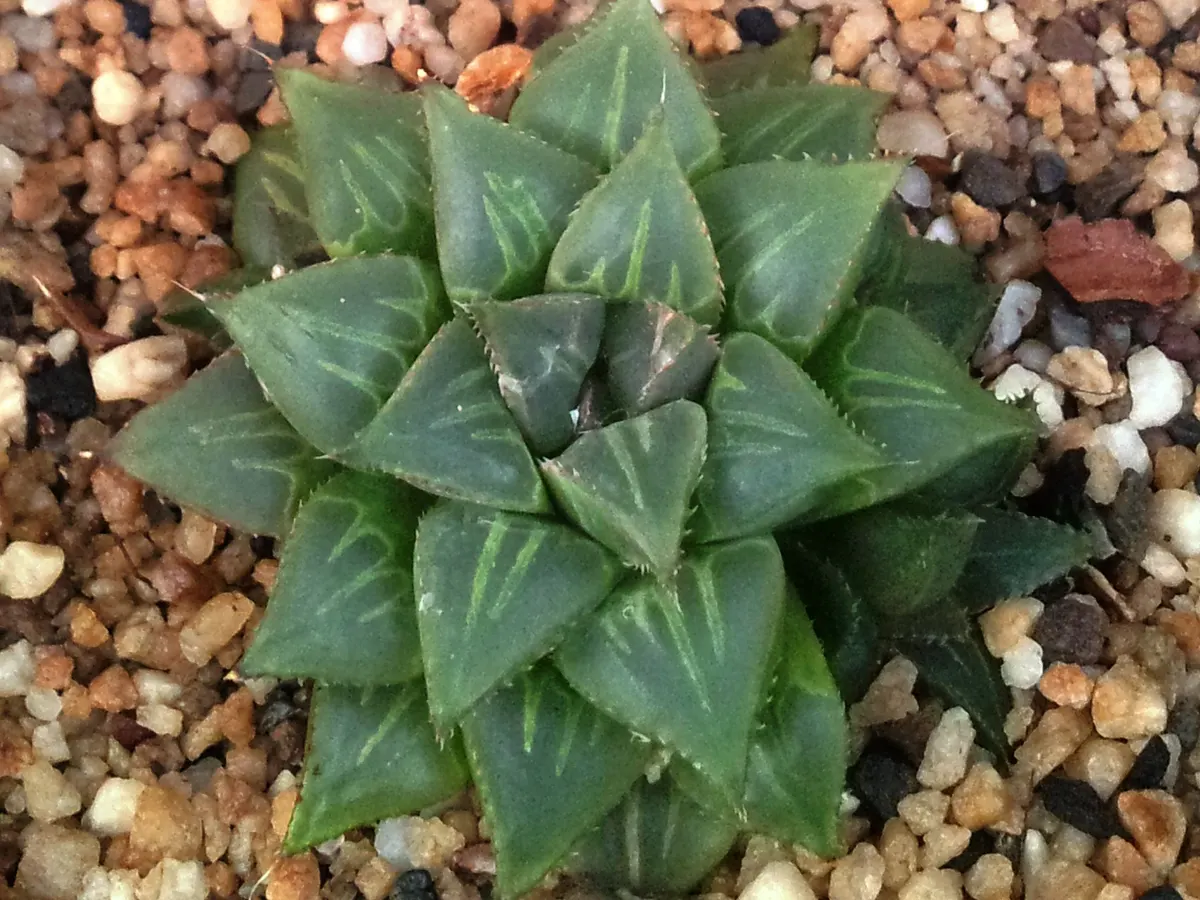
Photo: Abu Shawka, CC0 1.0, via Wikimedia Commons
- Light
- Bright, indirect
- Water
- Water only when the soil is dry right through.
- Humidity
- Normal room air is fine
- Temperature
- 7–30 °C
- Care level
- Easy-going, a good first plant
- Pets
- Not known to be toxic to cats and dogs
How often to water Haworthia
About every 13 days in summer and every 35 days in winter. Water only when the soil is dry right through.
Roughly how often, in a medium pot (12–20 cm) in the light it likes. Smaller pots, brighter spots and warm balconies need water sooner; big pots and dim corners later.
- Spring every 14 days
- Summer every 13 days
- Autumn every 25 days
- Winter every 35 days
Worked out by LeafMinder’s schedule. In the app it then adapts to your home, from your “still damp” and “bone dry” answers.
Feeding and repotting
Feed about every 30 days from April to September, with a houseplant fertiliser at half strength. Not in the colder months. Check whether it needs a bigger pot every 24 months or so, ideally in spring.
Thirsty, or too wet?
- When it would like water
- The soil is dry right through and the leaves look a little less plump, sometimes slightly wrinkled or with the tips curling inwards. That is the moment for a thorough drink.
- When it has had too much
- Leaves turn soft, translucent and mushy, often starting at the base of the rosette. Stop watering, pull off any rotten leaves and let the soil dry right through; repot into dry, gritty mix if the roots are soft.
Soil and pot
Use a gritty, fast-draining cactus and succulent mix, or one part coarse grit or perlite to two parts potting soil. The roots are shallow, so a wide, shallow pot with a drainage hole suits it, and terracotta helps the soil dry evenly. Move it up a size in spring once the rosettes cover the soil surface, usually every couple of years.
Common problems
- Soft, see-through, mushy leaves
- Too much water, or soil that stays wet in a pot without good drainage, which leads to rot. Try first: Let the soil dry right through, cut away rotten leaves and roots, and repot into fresh gritty mix. Water again only when the pot is dry all the way down.
- Red-brown or bleached leaves
- Strong, direct midday sun, which stresses and can scorch the leaves. Try first: Move it to a bright spot out of harsh midday sun, such as an east window. Stress colouring fades again; scorched patches stay, but new leaves grow in clean.
- Stretched, pale rosette with faded stripes
- Too little light; the plant reaches towards brightness and loses its markings. Try first: Give it a brighter spot close to a window. Stretched growth won't tighten again, but new leaves will grow compact.
- White cottony tufts deep in the rosette
- Mealybugs, the main pest of haworthias; they also hide on the roots. Try first: Dab them off with a cotton swab dipped in alcohol and check the roots when you repot. Repeat weekly until no new ones appear.
- Dry, shrivelled lower leaves
- Older leaves die off naturally as the rosette grows; many at once can mean it has been dry for too long. Try first: Pull off the dead leaves gently. If the soil has been dry for weeks and the whole plant looks deflated, give it a thorough watering.
Not sure what you’re seeing? A photo health check suggests possible causes. How health checks work
Propagation
The easiest way is to separate the offsets (pups) that grow around the base, best in spring or summer when you repot. Pups with their own roots can go straight into gritty mix; ones without roots should dry for two or three days first, then sit on barely damp mix until they root. Leaf cuttings also work but are slower.
Varieties and relatives
- Zebra haworthia: Haworthiopsis fasciata: white bands only on the outer side of the leaves, with smooth inner faces.
- Zebra plant: Haworthiopsis attenuata: white bumps on both sides of its narrow, pointed leaves; often mixed up with the zebra haworthia.
- Cathedral window haworthia: Haworthia cymbiformis: plump, pale green, boat-shaped leaves with translucent tips that let light in.
- Cooper's haworthia: Haworthia cooperi: very fleshy leaves with clear, glassy windows at the tips, forming tight clumps.
Questions people ask
How often should I water a haworthia?
About every two weeks in spring and summer, every three to four weeks in autumn and about every five weeks in winter, in a medium pot indoors. Water only when the soil is dry right through.
Is haworthia toxic to cats and dogs?
No. The ASPCA lists the zebra haworthia as non-toxic to cats and dogs, and haworthias in general are considered safe. Chewing any plant can still cause a mild stomach upset.
Does haworthia need direct sun?
Not much. Unlike many succulents it grows best in bright light without harsh midday sun; a little gentle morning sun is fine. Too much sun turns the leaves red-brown, and too little makes the rosette stretch and fade.
Is a haworthia a cactus?
No, it is a succulent from southern Africa, related to aloes. Several species have moved to the genus Haworthiopsis, which is why zebra plants are often labelled with either name.
Sources and licences
This care guide was written with AI and checked against the sources below.
General guidance. Every home is different, so the soil is always the best guide. About this advice
From LeafMinder’s plant care guides: leafminder.eu/plants/haworthia