



Guzmania
Guzmania lingulata · Bromeliaceae · Flowering houseplant
Also called Scarlet star, Bromeliad
Keep a little water in the central cup and refresh it every week or two, and water the soil only lightly. The plant fades slowly after flowering, but the pups at its base can be grown on.
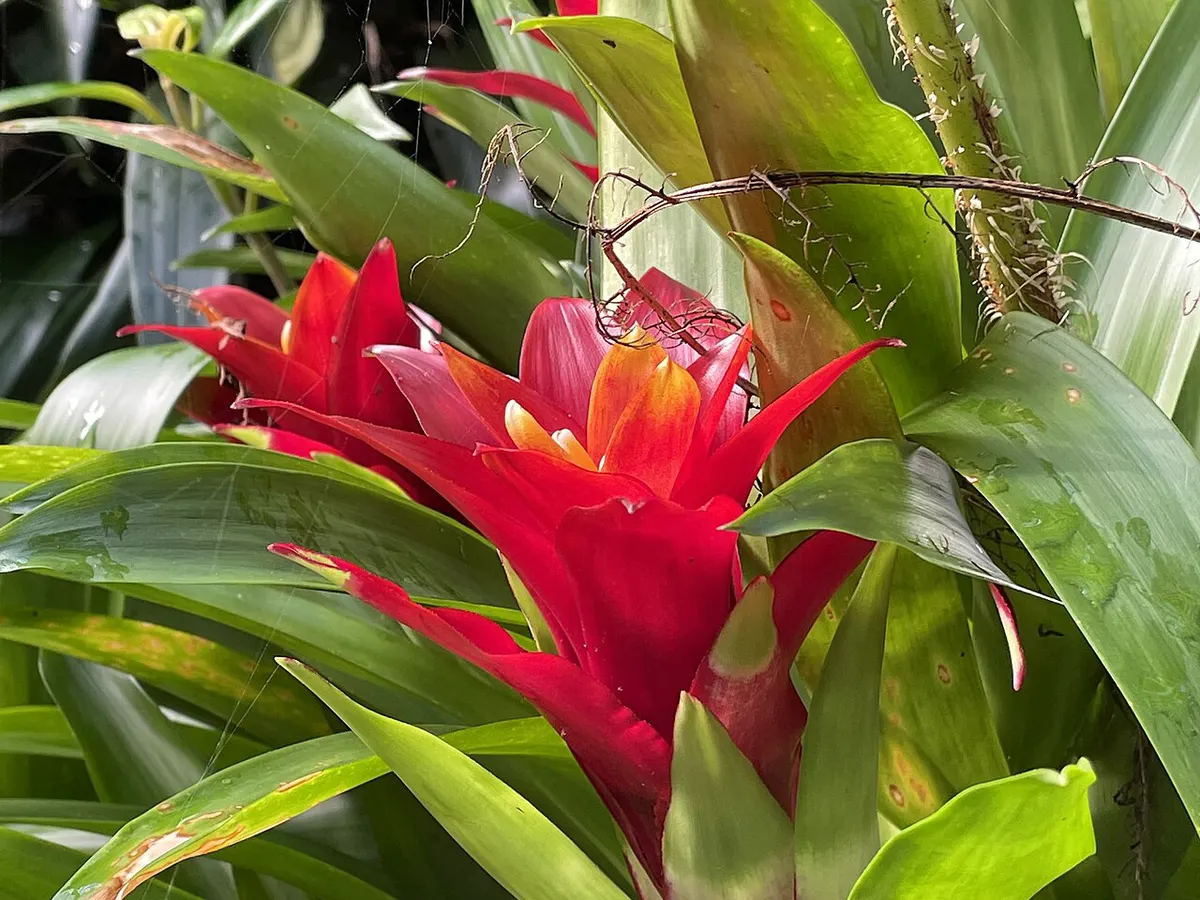
Photo: Amada44, CC BY-SA 3.0, via Wikimedia Commons
- Light
- Bright, indirect
- Water
- Water when the top 2–3 cm of soil are dry.
- Humidity
- Likes humid air
- Temperature
- 16–30 °C
- Care level
- Easy-going, a good first plant
- Pets
- Not known to be toxic to cats and dogs
How often to water Guzmania
About every 6 days in summer and every 11 days in winter. Water when the top 2–3 cm of soil are dry.
Roughly how often, in a medium pot (12–20 cm) in the light it likes. Smaller pots, brighter spots and warm balconies need water sooner; big pots and dim corners later.
- Spring every 7 days
- Summer every 6 days
- Autumn every 9 days
- Winter every 11 days
Worked out by LeafMinder’s schedule. In the app it then adapts to your home, from your “still damp” and “bone dry” answers.
Feeding and repotting
No regular feeding needed.
Thirsty, or too wet?
- When it would like water
- The central cup is empty, the mix is dry on top and the leaves start to curl lengthways and lose their sheen. Top up the cup and give the mix a light drink.
- When it has had too much
- The base of the rosette turns brown and soft, the leaves loosen and the mix smells sour. Pour off any standing water, let the mix dry, then water the soil lightly and keep only a little water in the cup.
Soil and pot
Its roots mostly anchor it, so it needs very little soil: a loose, airy mix such as bark-based orchid mix, or potting compost with plenty of bark and perlite. Use a small, heavy pot with drainage holes so the rosette doesn't tip over. It rarely needs a bigger pot; pot up the pups instead once they have roots of their own.
Common problems
- Plant fading after flowering
- Natural: each rosette flowers once, then slowly dies over some months while pups grow at its base. Try first: Keep caring for it as usual so the pups grow strong, cut the flower spike off when it browns, and remove the old rosette once it has withered.
- Brown, dry leaf tips
- Dry indoor air, or minerals building up from hard tap water left in the cup. Try first: Raise the humidity, use rainwater or filtered water when you can, and flush the cup with fresh water every week or two.
- Soft, brown base or loose leaves
- Rot from soggy mix or stale water sitting in the cup, especially in a cool room. Try first: Let the mix dry, empty and refill the cup, and keep the plant above 16 °C. A badly rotted rosette rarely recovers, but healthy pups can be saved.
- Pale, bleached leaves or a faded bract
- Too much direct sun. Try first: Move it into bright, indirect light, a little back from a sunny window.
- White fluffy spots or brown bumps on the leaves
- Mealybugs or scale insects, the most common bromeliad pests. Try first: Wipe them off with a soft cloth or cotton bud dipped in rubbing alcohol, checking where the leaves meet, and repeat weekly.
Not sure what you’re seeing? A photo health check suggests possible causes. How health checks work
Propagation
Guzmania is grown on from pups, the small rosettes that appear at the base after flowering. When a pup is about a third to half the size of the parent and has a few roots, cut it away with a clean knife in spring or summer and pot it in an airy bromeliad or orchid mix. Keep it warm, bright and humid, with a little water in its cup. A pup usually takes a year or more to flower; a mature one sealed in a clear bag with a ripe apple for a week or so can be nudged into bloom.
Varieties and relatives
- Guzmania lingulata var. minor: A smaller form with a bright orange or red star of bracts, often sold as 'Orange Star'.
- Flaming sword (Vriesea splendens): A bromeliad with dark-banded leaves and a flat, sword-shaped red flower spike, cared for in much the same way.
- Urn plant (Aechmea fasciata): Stiffer, grey, spiny-edged leaves and a pink bract. It copes better with the drier air of most homes.
- Blushing bromeliad (Neoregelia carolinae): Grown for its leaves: the centre turns bright red when it is about to flower. It likes more light than guzmania.
Questions people ask
How often should I water a guzmania?
Water the mix lightly about every 6 days in summer, every 7 in spring, every 9 in autumn and about every 11 days in winter, in a medium pot indoors, once the top few centimetres are dry. Keep a little water in the central cup and refresh it every week or two.
Is guzmania toxic to cats and dogs?
No. The ASPCA lists guzmania as non-toxic to cats and dogs. Chewing any plant can still upset a pet's stomach, so it's best kept away from keen nibblers.
Why is my guzmania dying after it flowered?
That's its natural cycle: each rosette flowers once, and the colourful bract can last for months before the plant slowly fades. Look for pups at the base; they are the next generation.
Should I put water in the centre of a guzmania?
Yes, a little. The cup is how it drinks in nature, so keep some water in it and refresh it every week or two so it doesn't go stale. In a cool room in winter, keep the level low.
Sources and licences
This care guide was written with AI and checked against the sources below.
- Care checked against: Clemson Cooperative Extension, Home & Garden Information Center, University of Florida IFAS Gardening Solutions, University of Missouri Integrated Pest Management, ASPCA Animal Poison Control.
- GBIF Backbone Taxonomy: other botanical names. Record. CC BY 4.0. GBIF Secretariat (2023). GBIF Backbone Taxonomy. Checklist dataset https://doi.org/10.15468/39omei accessed via GBIF.org on 2026-11-15.
Material from these sources keeps its own licence; LeafMinder’s copyright doesn’t extend to it, and the sources don’t endorse LeafMinder.
General guidance. Every home is different, so the soil is always the best guide. About this advice
From LeafMinder’s plant care guides: leafminder.eu/plants/guzmania