



Echeveria
Echeveria spp. · Crassulaceae · Succulent
Also called Mexican snowball, Hens and chicks
Water the soil, not the rosette, and only when the pot is dry right through. If it stretches towards the window, it needs more direct light.
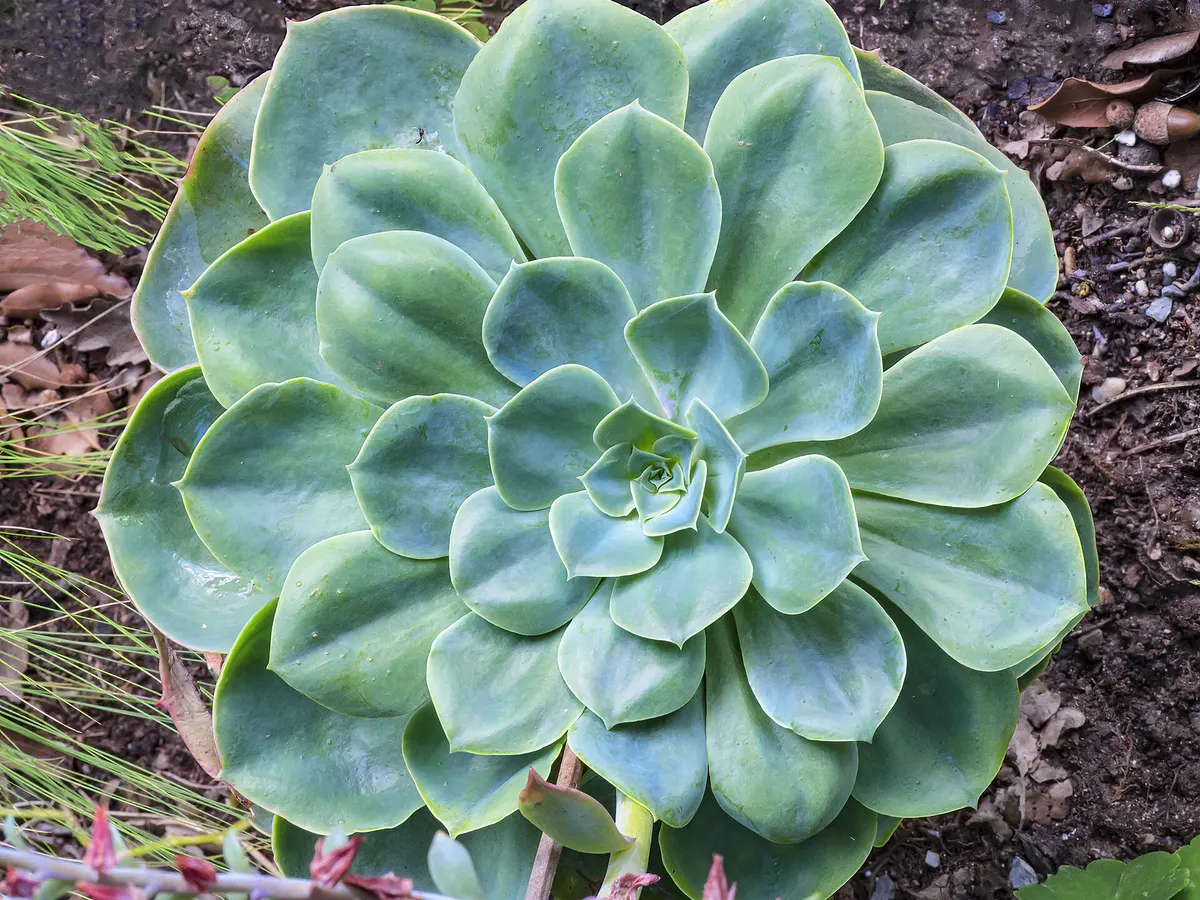
Photo: Didier Descouens, CC BY-SA 4.0, via Wikimedia Commons
- Light
- Direct sun
- Water
- Water only when the soil is dry right through.
- Humidity
- Normal room air is fine
- Temperature
- 7–32 °C
- Care level
- Easy-going, a good first plant
- Pets
- Not known to be toxic to cats and dogs
How often to water Echeveria
About every 9 days in summer and every 26 days in winter. Water only when the soil is dry right through.
Roughly how often, in a medium pot (12–20 cm) in the light it likes. Smaller pots, brighter spots and warm balconies need water sooner; big pots and dim corners later.
- Spring every 10 days
- Summer every 9 days
- Autumn every 18 days
- Winter every 26 days
Worked out by LeafMinder’s schedule. In the app it then adapts to your home, from your “still damp” and “bone dry” answers.
Feeding and repotting
Feed about every 30 days from April to September, with a houseplant fertiliser at half strength. Not in the colder months. Check whether it needs a bigger pot every 24 months or so, ideally in spring.
Thirsty, or too wet?
- When it would like water
- The leaves lose their firmness, feel slightly soft and start to wrinkle, and the lowest ones may shrivel. Check that the pot is dry right through, then water the soil thoroughly.
- When it has had too much
- Leaves turn translucent, yellow or black and feel mushy, and the stem may go soft at the base. Stop watering, let the mix dry out completely, and repot into dry, gritty mix if the roots are brown and soft.
Soil and pot
Use a gritty, fast-draining cactus and succulent mix, or add coarse grit or pumice to ordinary potting mix. A shallow terracotta pot with a drainage hole helps the mix dry quickly. Repot in spring about every two years, or sooner when offsets crowd the edge of the pot or roots come out of the drainage hole.
Common problems
- Stretched stem with gaps between the leaves
- Not enough direct light, so the rosette grows towards the window. Warm winters with frequent watering make it worse. Try first: Move it to the sunniest window you have. The stretched part won't tighten up again, but you can cut off the rosette in spring and replant it.
- Mushy, translucent or black leaves
- Root and stem rot from soil that stays wet, especially in winter or in a pot without drainage. Try first: Stop watering and check the base. Cut a healthy rosette above any soft tissue, let it dry for a few days and replant it in dry, gritty mix.
- White, cottony tufts between the leaves
- Mealybugs, which hide deep in the rosette and where the leaves meet the stem. Try first: Isolate the plant and dab the insects with a cotton bud dipped in rubbing alcohol. Check again every week, as eggs hatch later.
- Lower leaves shrivel and dry up
- Usually normal: the rosette uses up its oldest leaves as it grows. If many shrivel at once, the plant is thirsty. Try first: Remove dry leaves gently so they don't hold moisture or hide pests, and water if the pot is dry right through.
- Marks on the leaves after watering
- Water left sitting in the rosette, or minerals from hard tap water. The powdery coating on the leaves also rubs off where it's touched. Try first: Water the soil, not the rosette, and use rainwater where you can. Hold the leaves by their edges when you move the plant.
Not sure what you’re seeing? A photo health check suggests possible causes. How health checks work
Propagation
Echeveria is easy to propagate in spring and early summer. Twist off a healthy leaf whole, let it dry for a few days, then lay it on dry or barely moist gritty mix; roots and a tiny rosette appear at its base within a few weeks. Offsets around the mother plant can be separated and potted on their own, and a stretched rosette can be cut with a short stem, left to callus and replanted.
Varieties and relatives
- Mexican snowball (Echeveria elegans): Compact, pale blue-grey rosettes that quickly form clumps of offsets. One of the toughest kinds.
- Lipstick echeveria (Echeveria agavoides): Stiffer, pointed green leaves with red edges that deepen in strong sun.
- Plush plant (Echeveria pulvinata): Grows small branching stems with leaves covered in fine silvery hairs, often tipped red.
- Echeveria 'Perle von Nürnberg': A popular hybrid with powdery lilac-pink leaves. The colour is strongest in full sun.
Questions people ask
How often should I water an echeveria?
About every 9–10 days in spring and summer, about every 18 days in autumn and about every 26 days in winter, in a medium pot indoors. Only water when the mix is dry right through, then soak it and let it drain.
Is echeveria toxic to cats and dogs?
No. The ASPCA lists echeveria as non-toxic to cats and dogs. A pet that chews a lot of any plant can still get a mild upset stomach.
Why is my echeveria growing tall and leggy?
It's reaching for light. Without a few hours of direct sun, the stem stretches and the leaves spread apart. Move it to your brightest window; the stretched part stays, but you can cut and replant the rosette in spring.
Should I remove the dry leaves at the bottom of my echeveria?
Yes, once they are fully dry they come away with a gentle tug. Clearing them keeps the base airy and gives mealybugs fewer places to hide.
Sources and licences
This care guide was written with AI and checked against the sources below.
- Care checked against: NC State Extension, Gardener Plant Toolbox, Royal Horticultural Society, ASPCA Animal Poison Control.
General guidance. Every home is different, so the soil is always the best guide. About this advice
From LeafMinder’s plant care guides: leafminder.eu/plants/echeveria