



Dragon tree (Dracaena reflexa var. angustifolia)
Dracaena reflexa var. angustifolia · Asparagaceae · Leafy green plant
Also called Madagascar dragon tree, Dracaena marginata, Dracaena
Let the top few centimetres dry out between waterings; it copes with dry air but not with wet roots. Shedding a few old lower leaves is normal.
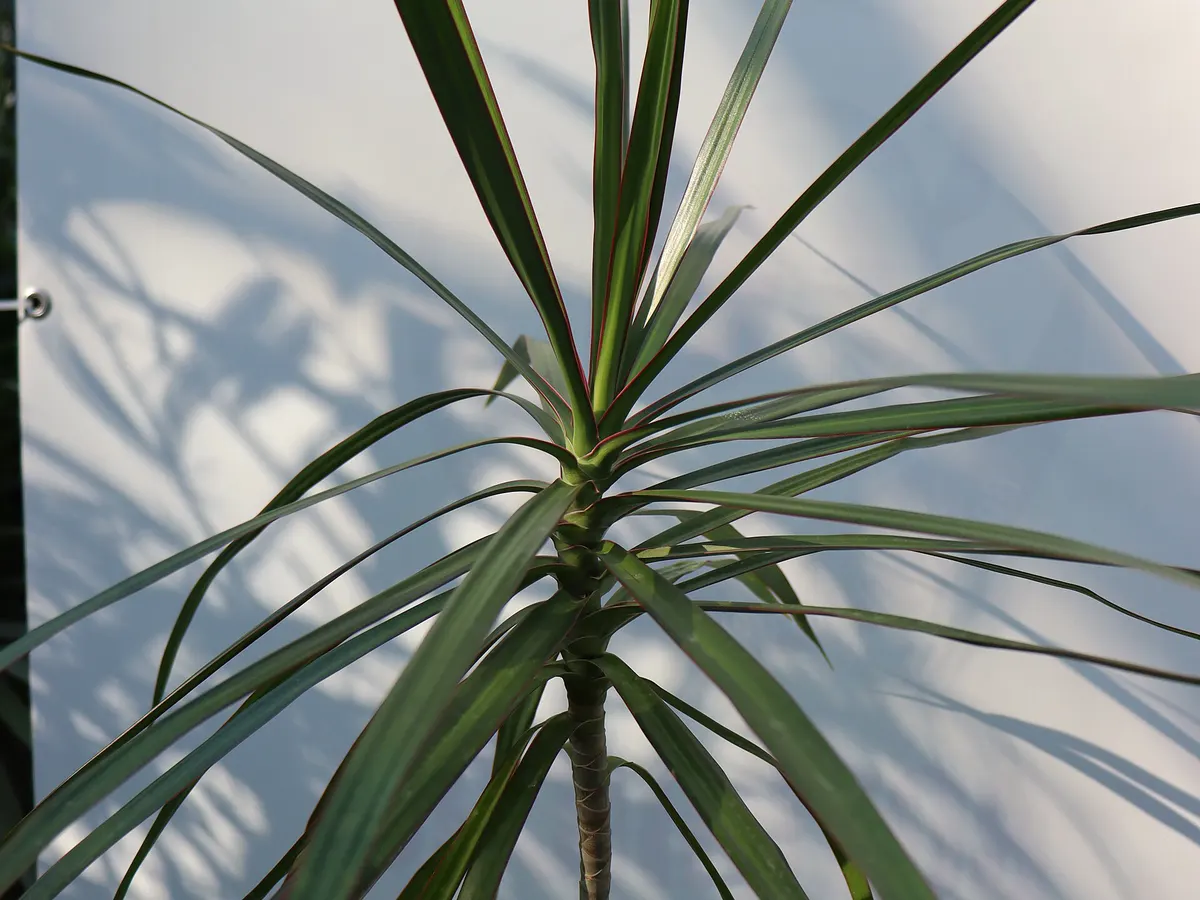
Photo: Dandarmkd, CC BY-SA 4.0, via Wikimedia Commons
- Light
- Bright, indirect · copes with less
- Water
- Water when the top 2–3 cm of soil are dry.
- Humidity
- Normal room air is fine
- Temperature
- 15–30 °C
- Care level
- Easy-going, a good first plant
- Pets
- Not safe for cats and dogs
How often to water Dragon tree
About every 9 days in summer and every 18 days in winter. Water when the top 2–3 cm of soil are dry.
Roughly how often, in a medium pot (12–20 cm) in the light it likes. Smaller pots, brighter spots and warm balconies need water sooner; big pots and dim corners later.
- Spring every 10 days
- Summer every 9 days
- Autumn every 14 days
- Winter every 18 days
Worked out by LeafMinder’s schedule. In the app it then adapts to your home, from your “still damp” and “bone dry” answers.
Feeding and repotting
Feed about every 30 days from March to September, with a houseplant fertiliser at half strength. Not in the colder months. Check whether it needs a bigger pot every 24 months or so, ideally in spring.
Thirsty, or too wet?
- When it would like water
- The soil is dry several centimetres down and the pot feels light. The leaves soften and droop a little, and more lower leaves than usual turn yellow.
- When it has had too much
- Leaves yellow from the bottom of the crown upwards, the stem feels soft near the soil and the mix smells sour. Let it dry out well, empty the saucer, and check the roots for brown, mushy parts if it doesn't pick up.
Soil and pot
An ordinary, well-draining houseplant mix suits it, with a little bark or grit for air. Avoid mixes that are mostly perlite, which can add to the fluoride damage this plant is prone to. Use a pot with a drainage hole, only a few centimetres wider than the root ball. It wants a bigger pot when roots circle the bottom or poke out of the hole, or water runs straight through, usually every two years in spring.
Common problems
- Brown, dry leaf tips
- Fluoride and salts in tap water, a build-up of fertiliser in the soil, or very dry air. Try first: Use rainwater or filtered water when you can, flush the pot through with plenty of water a few times a year, and feed lightly. Trim brown tips with clean scissors, leaving a thin brown edge; damaged tissue won't turn green again.
- Yellow lower leaves dropping
- A few at a time is normal as the stem grows taller. Many at once usually means roots that stay wet, a chill or a recent move. Try first: Let the top few centimetres dry before watering, keep it above 15 °C and away from cold draughts, and give it time to settle after a move.
- Soft, dark stem near the soil
- Root and stem rot from soil that stays soggy or drains slowly. Try first: Stop watering, take it out of the pot and cut away mushy roots, then repot in fresh, free-draining mix. If the stem base is soft, cut off the healthy tops and root them as cuttings.
- Pale speckled leaves with fine webbing
- Spider mites, which thrive in warm, dry rooms. Try first: Rinse the leaves in the shower, wipe both sides, and repeat every week for a few weeks. Keep it apart from other plants until it's clear.
- Sticky leaves, brown bumps or white fluff
- Scale insects or mealybugs feeding on the sap. Try first: Wipe them off with a cloth or cotton bud dipped in soapy water or rubbing alcohol, paying attention to leaf bases, and check again weekly.
Not sure what you’re seeing? A photo health check suggests possible causes. How health checks work
Propagation
Stem cuttings root easily. In spring or summer, cut off a top with 10–20 cm of stem, strip the lowest leaves and stand it in water or push it into moist, free-draining mix; roots follow in a few weeks in a warm, bright spot. Short sections of bare stem pressed into the mix can sprout too, and the stump left behind usually sends out two or more new shoots below the cut. For a very tall plant, air layering a stem before cutting it is another option.
Varieties and relatives
- 'Tricolor': Green leaves striped with cream and edged in red. Needs good light to keep its colour.
- 'Colorama': Leaves so heavily striped with pink-red and white that the plant looks mostly red. Slower and keener on bright light.
- 'Magenta': Dark green leaves with wider magenta-red edges, for a deeper colour than the plain form.
- Song of India (Dracaena reflexa): The same species in its broader-leaved form: shorter, wider leaves, often edged yellow, on a bushier plant.
Questions people ask
How often should I water a dragon tree?
About every 9–10 days in spring and summer, every two weeks in autumn and every two and a half weeks in winter, in a medium pot indoors. Feel the soil first and water when the top few centimetres are dry.
Is a dragon tree toxic to cats and dogs?
Yes. It contains saponins, which can cause vomiting, drooling and loss of appetite, and dilated pupils in cats. Keep it out of reach, and call your vet if a pet chews it.
Why are my dragon tree's leaf tips turning brown?
Most often from fluoride and salts in tap water, too much fertiliser, or very dry air. Use rainwater or filtered water some of the time, flush the soil now and then, and trim the tips; new leaves should come through clean.
Can I cut back a tall dragon tree?
Yes. In spring or summer, cut the stem at the height you want; it usually branches into two or more new heads just below the cut. The top you removed can be rooted as a new plant.
Sources and licences
This care guide was written with AI and checked against the sources below.
General guidance. Every home is different, so the soil is always the best guide. About this advice
From LeafMinder’s plant care guides: leafminder.eu/plants/dragon-tree