



Chinese money plant
Pilea peperomioides · Urticaceae · Leafy green plant
Also called Pilea, Pancake plant, UFO plant, Missionary plant
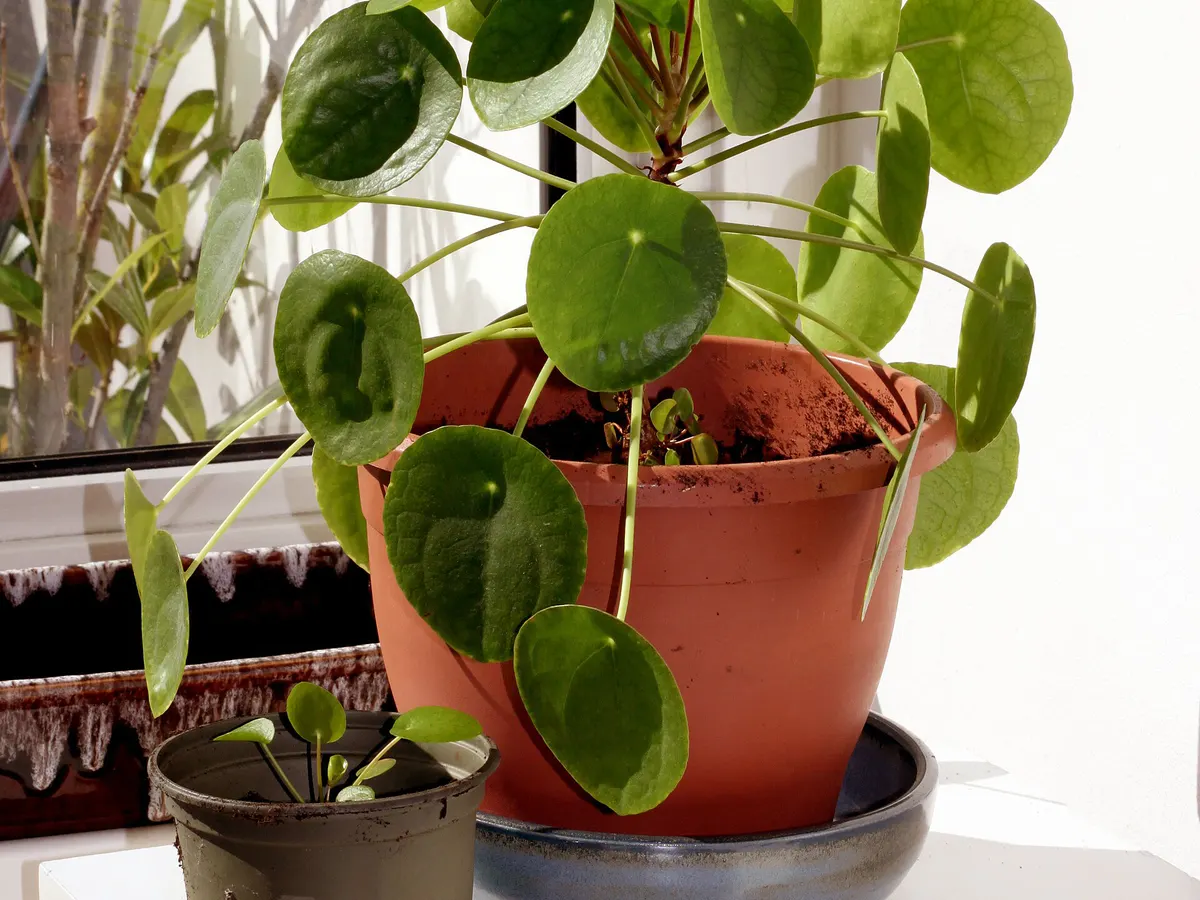
Water when the top few centimetres are dry and turn the pot every week so it grows evenly. The small offsets around the base can be potted up as new plants.
- Light
- Bright, indirect
- Water
- Water when the top 2–3 cm of soil are dry.
- Humidity
- Average
- Temperature
- 12–27 °C
- Care level
- Easy-going, a good first plant
- Pets
- Not known to be toxic to cats and dogs
How often to water Chinese money plant
About every 6 days in summer and every 11 days in winter. Water when the top 2–3 cm of soil are dry.
Roughly how often, in a medium pot (12–20 cm) in the light it likes. Smaller pots, brighter spots and warm balconies need water sooner; big pots and dim corners later.
- Spring every 7 days
- Summer every 6 days
- Autumn every 9 days
- Winter every 11 days
Worked out by LeafMinder’s schedule. In the app it then adapts to your home, from your “still damp” and “bone dry” answers.
Feeding and repotting
Feed about every 30 days from March to September, with a houseplant fertiliser at half strength. Not in the colder months. Check whether it needs a bigger pot every 12 months or so, ideally in spring.
Thirsty, or too wet?
- When it would like water
- The round leaves droop and feel soft, and the pot feels light. The top few centimetres of soil are dry, and it perks up within hours of a good drink.
- When it has had too much
- Leaves droop even though the soil is damp, lower leaves yellow and drop, and soft dark spots may appear. Let it dry out more than usual, empty the saucer and check for mushy roots.
Soil and pot
A free-draining houseplant mix suits it; adding a handful of perlite or grit helps the water run through. Always use a pot with a drainage hole and move up only a couple of centimetres at a time, as a big pot stays wet and can rot the roots. Check the roots each spring: if they circle the pot, come out of the holes or the soil dries in a day or two, it's ready for the next size.
Common problems
- Drooping leaves
- Usually thirst, but soggy soil and rotting roots cause the same droop. Try first: Feel the soil first. If it's dry, water thoroughly. If it's wet, let it dry well and check the roots before watering again.
- Yellow lower leaves that fall off
- Lower leaves drop naturally as the stem grows taller. Many at once usually means too much water. Try first: Pick off old leaves and let the top few centimetres dry between waterings. A pot with a drainage hole makes a big difference.
- Plant leans and grows long and sparse
- The leaves reach for the light, and too little light makes long, bare stems. Try first: Give it bright, indirect light and turn the pot a quarter turn every week so it grows evenly.
- Leaves curl, dome or pucker
- Usually a watering or light problem: very bright light, uneven watering or a pot that stays too wet. Try first: Keep it out of direct sun, water when the top few centimetres are dry and keep that rhythm steady. New leaves should flatten out.
- Fine webbing, white fluff or tiny flies
- Spider mites and mealybugs feed on sap; fungus gnats breed in soil that stays damp. Try first: Rinse the leaves in the shower and wipe off mealybugs with a cotton bud dipped in rubbing alcohol. For gnats, let the soil dry more between waterings.
Not sure what you’re seeing? A photo health check suggests possible causes. How health checks work
Propagation
This is one of the easiest plants to share. It sends up baby plants around its base and sometimes from the roots a little way off. In spring or early summer, once a baby is a few centimetres tall, cut it free with a bit of root, using a clean knife, and pot it in a small pot of the same mix. One without roots can sit in a glass of water until roots form.
Varieties and relatives
- 'Mojito': A variegated form with leaves marbled in green and pale yellow. It needs good light to keep its pattern.
- Aluminium plant: A bushier pilea with pointed leaves marked in silver stripes.
- Friendship plant: Crinkled, bronze-green leaves with reddish undersides. It likes more humidity than the Chinese money plant.
- Moon Valley pilea: Deeply quilted, bright green leaves with darker veins, on a low, bushy plant.
Questions people ask
How often should I water a Chinese money plant?
About every 6–7 days in spring and summer, every 9 days in autumn and about every 11 days in winter, in a medium pot indoors. Check that the top few centimetres of soil are dry first.
Is a Chinese money plant toxic to cats and dogs?
It's considered safe for pets. A cat or dog that eats a lot of it may still get a mild upset stomach, so it's kindest to keep it out of chewing reach.
Why is my pilea leaning to one side?
Its round leaves turn towards the light, so the plant tilts towards the window. Turn the pot a quarter turn each week and it will grow straight.
Why are my pilea's leaves curling?
Curled or domed leaves usually point to light or watering. Move it out of direct sun, water only when the top few centimetres are dry and keep the rhythm steady; new leaves will come in flatter.
From the journal
Sources and licences
This care guide was written with AI and checked against the sources below.
- Care checked against: Royal Horticultural Society (RHS), Penn State Extension, NC State Extension Gardener Plant Toolbox.
General guidance. Every home is different, so the soil is always the best guide. About this advice
From LeafMinder’s plant care guides: leafminder.eu/plants/chinese-money-plant