



Wax plant
Hoya carnosa · Apocynaceae · Trailing or climbing plant
Also called Hoya, Porcelain flower, Hindu rope
Let most of the soil dry before watering and leave the old flower spurs in place, as new flowers grow from them. It blooms more freely when slightly pot-bound.
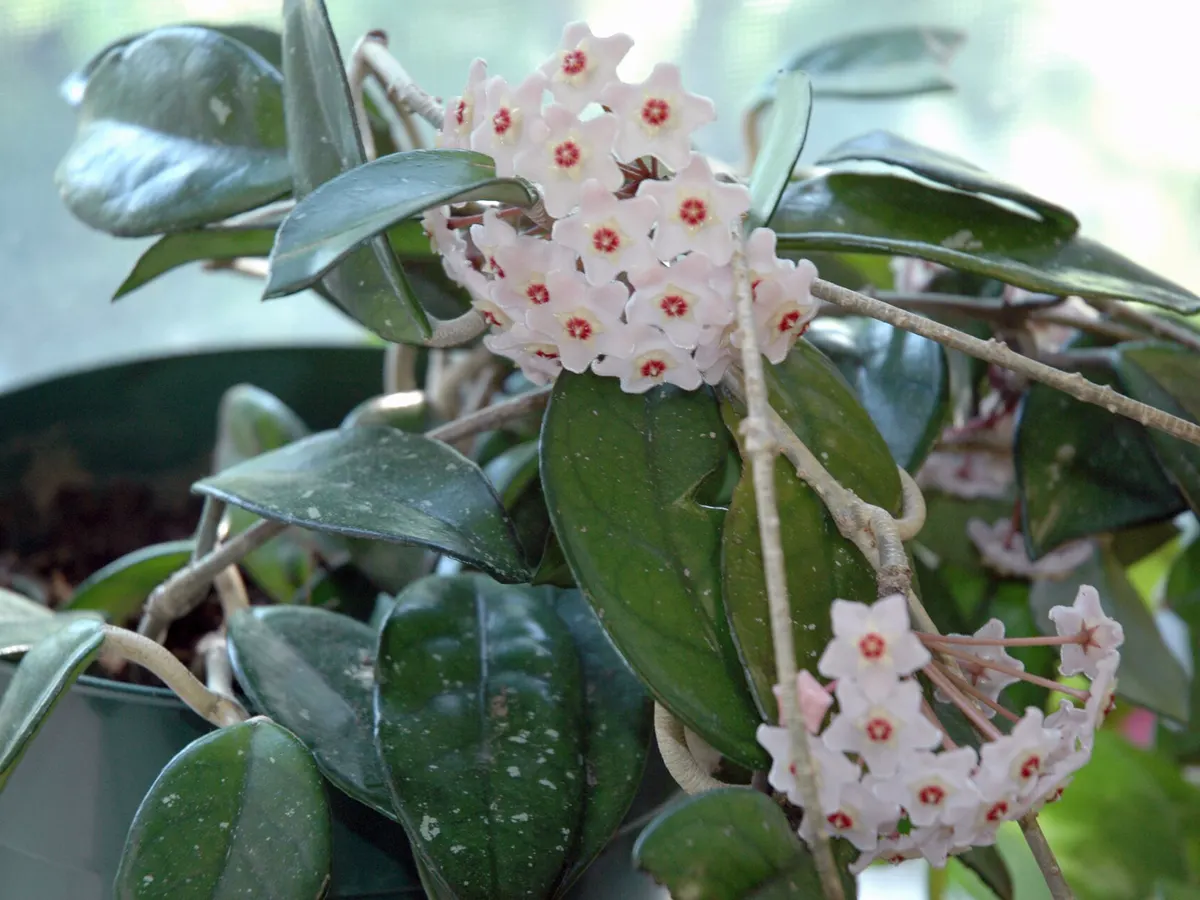
Photo: Yvan leduc, CC BY-SA 3.0, via Wikimedia Commons
- Light
- Bright, indirect
- Water
- Water when about half the pot has dried out.
- Humidity
- Average
- Temperature
- 12–30 °C
- Care level
- Easy-going, a good first plant
- Pets
- Not known to be toxic to cats and dogs
How often to water Wax plant
About every 9 days in summer and every 20 days in winter. Water when about half the pot has dried out.
Roughly how often, in a medium pot (12–20 cm) in the light it likes. Smaller pots, brighter spots and warm balconies need water sooner; big pots and dim corners later.
- Spring every 10 days
- Summer every 9 days
- Autumn every 15 days
- Winter every 20 days
Worked out by LeafMinder’s schedule. In the app it then adapts to your home, from your “still damp” and “bone dry” answers.
Feeding and repotting
Feed about every 30 days from April to September, with a houseplant fertiliser at half strength. Not in the colder months. Check whether it needs a bigger pot every 36 months or so, ideally in spring.
Thirsty, or too wet?
- When it would like water
- The thick leaves lose their firmness, feel a little soft and may wrinkle. When most of the soil in the pot is dry and the pot feels light, give it a good drink.
- When it has had too much
- Leaves turn yellow and soft, drop off or blacken, and stems may darken at the base, most often in a cool winter. Let the pot dry right down, water much less in winter and check the roots for rot.
Soil and pot
Hoyas need a chunky, fast-draining mix, for example equal parts houseplant compost, orchid bark and coarse perlite. A pot with drainage holes is essential. They like a snug pot and often flower better when slightly root-bound, so repot only every few years in spring, into a pot just a few centimetres wider. Roots filling the pot and soil that dries out within a couple of days are the signs it's time; avoid repotting while it's in bud or flower.
Common problems
- Healthy plant but no flowers
- Too little light is the usual reason. Young plants often take two or three years to flower, and cutting off the old flower spurs removes next year's blooms. Try first: Move it to the brightest spot you have without hot midday sun, leave the spurs in place and let it stay a little pot-bound.
- Yellow, soft leaves and dark stems
- Too much water, especially in a cool room in winter, which rots the roots. Try first: Let most of the soil dry before watering and water sparingly in winter. If roots are rotten, take healthy stem cuttings to start again.
- Buds fall off before opening
- Moving the plant or a sudden change in light, temperature or watering while it's in bud. Try first: Once buds form, leave it in the same place and keep watering steady until it has finished flowering.
- White fluff on stems and leaf joints
- Mealybugs, which hoyas are prone to. Scale and aphids also appear. Try first: Wipe them off with a cotton bud dipped in rubbing alcohol and check every week, including under leaves and around the spurs.
- Fine webbing and speckled leaves
- Spider mites, which thrive in dry, warm air. Try first: Rinse the leaves in the shower, wipe the undersides and raise the humidity a little with a tray of damp gravel.
Not sure what you’re seeing? A photo health check suggests possible causes. How health checks work
Propagation
Stem cuttings root easily in spring or early summer. Cut a piece with at least two nodes, take off the lowest leaves and stand it in water, or push it into moist, gritty mix; roots usually appear in two to three weeks in water. You can also layer it: pin a long stem onto a pot of mix and cut it free once it has rooted. Wear gloves, as the milky sap can irritate skin.
Varieties and relatives
- 'Krimson Queen': Green leaves with creamy white to pink edges. The colour is strongest in good light.
- 'Krimson Princess': The reverse pattern: pink and cream centres with dark green edges.
- 'Compacta' (Hindu rope): Leaves curl and twist tightly along the stem like a rope. It grows more slowly than the plain form.
- Sweetheart hoya: Thick, heart-shaped leaves, often sold as a single rooted leaf. A single leaf rarely grows on unless it has a piece of stem.
Questions people ask
How often should I water a hoya?
About every 9–10 days in spring and summer, every two weeks or so in autumn and about every three weeks in winter, in a medium pot indoors. Let most of the soil dry first.
Is a hoya toxic to cats and dogs?
No. The ASPCA lists Hoya carnosa as non-toxic to cats and dogs. A pet that eats a lot of any plant may still get a mild upset stomach.
Should I cut off the old hoya flower stalks?
No. The short stalks, or spurs, flower again in later years, so leave them on the plant. Only remove a whole stem if it's dead or in the way.
Why is my hoya dripping sticky liquid?
In flower, hoyas often drip a sweet nectar, which is harmless; a saucer or cloth below catches it. If leaves are sticky with no flowers around, look for mealybugs or scale.
Sources and licences
This care guide was written with AI and checked against the sources below.
- Care checked against: NC State Extension Gardener Plant Toolbox, Royal Horticultural Society (RHS), ASPCA Animal Poison Control.
- GBIF Backbone Taxonomy: other botanical names. Record. CC BY 4.0. GBIF Secretariat (2023). GBIF Backbone Taxonomy. Checklist dataset https://doi.org/10.15468/39omei accessed via GBIF.org on 2026-11-15.
Material from these sources keeps its own licence; LeafMinder’s copyright doesn’t extend to it, and the sources don’t endorse LeafMinder.
General guidance. Every home is different, so the soil is always the best guide. About this advice
From LeafMinder’s plant care guides: leafminder.eu/plants/wax-plant