



String of pearls
Curio rowleyanus · Asteraceae · Succulent
Also called Senecio rowleyanus, String of beads
Let most of the soil dry before watering; shrivelled pearls mean it is thirsty, mushy ones mean too much water. Keep the base of the stems on top of the soil, not buried.
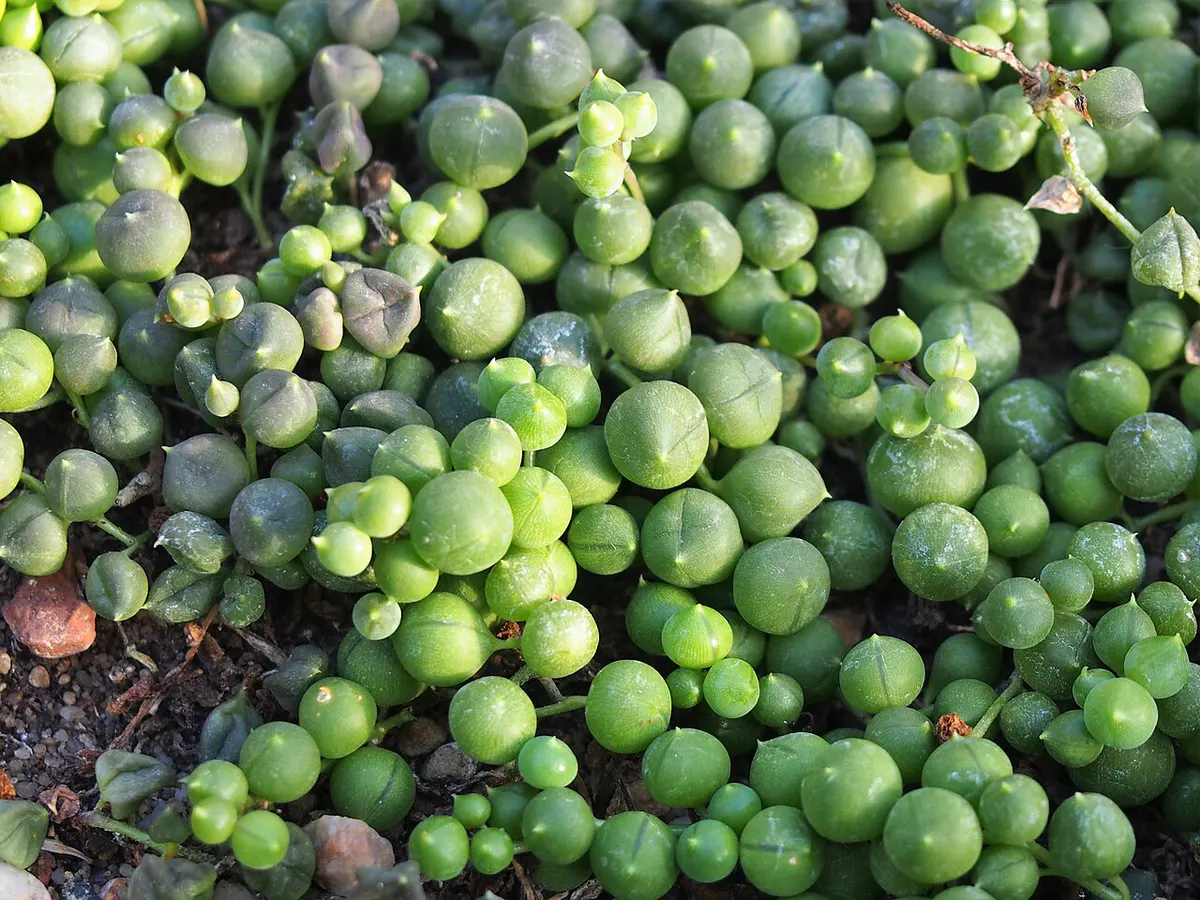
Photo: Agnieszka Kwiecień, Nova, CC BY-SA 4.0, via Wikimedia Commons
- Light
- Bright, indirect
- Water
- Water when about half the pot has dried out.
- Humidity
- Normal room air is fine
- Temperature
- 10–30 °C
- Care level
- Needs a little attention
- Pets
- Not safe for cats and dogs
How often to water String of pearls
About every 11 days in summer and every 24 days in winter. Water when about half the pot has dried out.
Roughly how often, in a medium pot (12–20 cm) in the light it likes. Smaller pots, brighter spots and warm balconies need water sooner; big pots and dim corners later.
- Spring every 12 days
- Summer every 11 days
- Autumn every 18 days
- Winter every 24 days
Worked out by LeafMinder’s schedule. In the app it then adapts to your home, from your “still damp” and “bone dry” answers.
Feeding and repotting
Feed about every 30 days from April to September, with a houseplant fertiliser at half strength. Not in the colder months. Check whether it needs a bigger pot every 24 months or so, ideally in spring.
Thirsty, or too wet?
- When it would like water
- The pearls look wrinkled or slightly flattened and feel soft rather than firm, and the soil is dry well down into the pot. After a thorough drink they plump up again within a day or two.
- When it has had too much
- Pearls turn soft, see-through or mushy, the stems darken near the soil and strands may come away. Stop watering, let the pot dry right out, and save healthy strands as cuttings if the base has rotted.
Soil and pot
Use a gritty cactus and succulent mix, or houseplant mix with plenty of grit or pumice added. A shallow terracotta pot with drainage holes suits it, as the roots are shallow and clay helps the soil dry out. Keep the point where the stems meet the soil on top of the mix, not buried. Repot every couple of years, or sooner if the soil turns dark and stays wet, moving up just one size.
Common problems
- Shrivelled pearls
- Usually thirst. Shrivelling while the soil is damp means the roots have rotted and can't take up water. Poor light can also cause it. Try first: Feel the soil. If it's dry, water thoroughly. If it's wet, let it dry out and check the base for rot. Give it a bright spot either way.
- Mushy pearls, dark stems near the soil
- Too much water or soil that drains slowly, leading to stem rot. Try first: Stop watering and let the pot dry. Cut off rotten parts, and root healthy strands in fresh gritty mix if the base is lost.
- Bare top, long thin strands
- Too little light, or an older plant thinning out at the crown. Try first: Move it to a brighter spot and lay a few cuttings on the soil surface to fill the top. Older plants often do better restarted from cuttings.
- Bleached or brown patches on the pearls
- Scorch from hot midday sun, especially through glass. Try first: Move it out of strong midday sun; bright light with only gentle morning or evening sun is ideal.
- White fluff or small green insects on the strands
- Mealybugs or aphids feeding on the sap. Try first: Dab mealybugs with a cotton bud dipped in rubbing alcohol and rinse aphids off gently. Check again every week.
Not sure what you’re seeing? A photo health check suggests possible causes. How health checks work
Propagation
It roots easily from strands. In spring or summer, cut pieces about 10 cm long, let the cut ends dry for a day, then lay them on moist, gritty mix and press the lower part in or pin it down so a few nodes touch the soil. Keep them bright and barely moist; roots usually form in about a month. You can also pin a strand onto a pot of mix beside the parent and cut it free once it has rooted.
Varieties and relatives
- Variegated string of pearls (Curio rowleyanus 'Variegatus'): Pearls marbled cream and green, sometimes blushed pink. Grows more slowly and scorches more easily.
- String of bananas (Senecio radicans): Curved, banana-shaped leaves on long strands. Usually faster growing and more forgiving.
- String of dolphins: Curved leaves with small side points that look like leaping dolphins. Same care.
- String of tears (Curio citriformis): Pointed, teardrop-shaped leaves on short stems, for a more compact plant.
Questions people ask
How often should I water string of pearls?
About every 11–12 days in spring and summer, every two and a half weeks in autumn and every three and a half weeks in winter, in a medium pot indoors. Water when about half the soil has dried.
Is string of pearls toxic to cats and dogs?
Yes, it is considered mildly toxic to cats and dogs, and eating it can cause vomiting and diarrhoea. The sap can also irritate skin. Keep it out of reach and call your vet if a pet chews it.
Why is my string of pearls shrivelling?
Feel the soil. If it's dry, the plant is thirsty and needs a thorough drink. If it's damp, the roots are struggling from too much water: let it dry out and check the base for rot.
How do I make my string of pearls look fuller?
Coil a few healthy strands back onto the soil surface and press them in gently so they root. Give it bright light, and trim very long, bare strands to root as new plants.
Sources and licences
This care guide was written with AI and checked against the sources below.
- Care checked against: RHS, NC State Extension Gardener Plant Toolbox.
- GBIF Backbone Taxonomy: other botanical names. Record. CC BY 4.0. GBIF Secretariat (2023). GBIF Backbone Taxonomy. Checklist dataset https://doi.org/10.15468/39omei accessed via GBIF.org on 2026-11-15.
Material from these sources keeps its own licence; LeafMinder’s copyright doesn’t extend to it, and the sources don’t endorse LeafMinder.
General guidance. Every home is different, so the soil is always the best guide. About this advice
From LeafMinder’s plant care guides: leafminder.eu/plants/string-of-pearls