



Rex begonia
Begonia rex · Begoniaceae · Leafy green plant
Also called Painted-leaf begonia, King begonia
Let the top few centimetres dry before watering and keep water off the leaves. It likes humidity but not wet soil; a tray of damp pebbles works well.
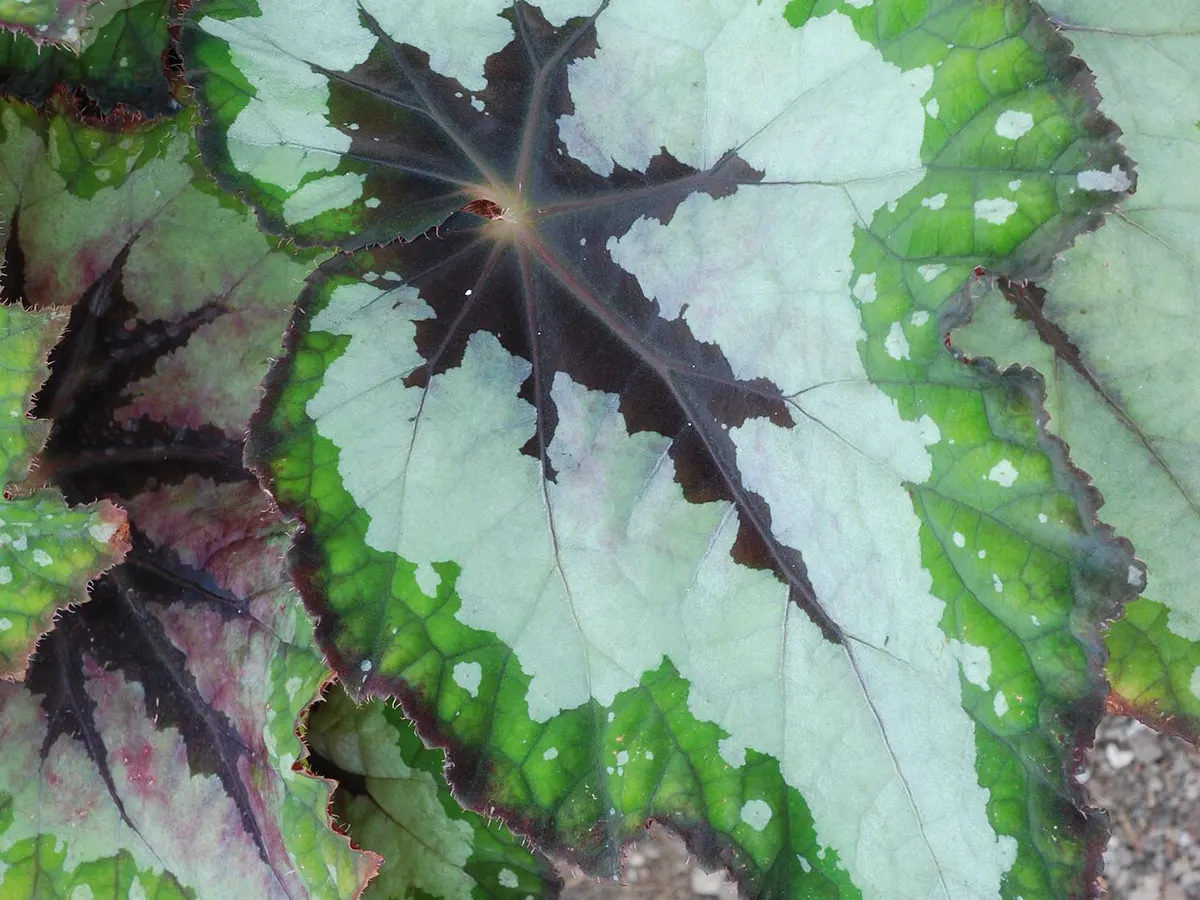
Photo: GCornelis, CC BY-SA 3.0, via Wikimedia Commons
- Light
- Medium, a few steps from a window
- Water
- Water when the top 2–3 cm of soil are dry.
- Humidity
- Likes humid air
- Temperature
- 15–26 °C
- Care level
- Needs a little attention
- Pets
- Not safe for cats and dogs
How often to water Rex begonia
About every 6 days in summer and every 10 days in winter. Water when the top 2–3 cm of soil are dry.
Roughly how often, in a medium pot (12–20 cm) in the light it likes. Smaller pots, brighter spots and warm balconies need water sooner; big pots and dim corners later.
- Spring every 7 days
- Summer every 6 days
- Autumn every 8 days
- Winter every 10 days
Worked out by LeafMinder’s schedule. In the app it then adapts to your home, from your “still damp” and “bone dry” answers.
Feeding and repotting
Feed about every 30 days from March to September, with a houseplant fertiliser at half strength. Not in the colder months. Check whether it needs a bigger pot every 12 months or so, ideally in spring.
Thirsty, or too wet?
- When it would like water
- The top few centimetres of mix are dry, the pot feels light, and the leaves soften and droop slightly from their stalks.
- When it has had too much
- Leaf stalks go soft and brown where they join the rhizome, and leaves may yellow or rot. Let the top 2–3 cm dry, water around the edge of the pot rather than over the crown, and never leave it standing in water.
Soil and pot
Use a light, free-draining potting mix, such as one made for African violets, or a peat-free houseplant mix with added perlite. The rhizome creeps along the surface, so a wide, shallow pot with a drainage hole suits it best. Move it on about once a year, in spring, when the rhizome reaches the rim or roots fill the pot.
Common problems
- White, powdery patches on the leaves
- Powdery mildew, encouraged by damp leaves and still air. Try first: Remove the worst leaves, keep water off the foliage and give it more space and airflow. Don't mist it.
- Brown, crispy leaf edges
- Dry air or too much heat, often near a radiator. Try first: Stand the pot on a tray of damp pebbles, with the base above the water line, or group it with other plants, and move it away from heat sources.
- Soft, rotting stalks at the base
- Overwatering or water sitting on the crown and rhizome. Try first: Let the mix dry more between waterings and water at the soil edge. Cut away rotten parts; healthy leaves can be used as cuttings.
- Leaves dropping in winter
- Short, dark days can send it into a rest. Try first: Keep the mix barely moist, give it the brightest indirect light you have and stop feeding. New leaves usually come as days lengthen.
- Speckled leaves, fine webbing or white fluff
- Spider mites in warm, dry rooms, or mealybugs. Try first: Wipe the undersides, dab mealybugs with a cotton bud dipped in rubbing alcohol and check again every week.
Not sure what you’re seeing? A photo health check suggests possible causes. How health checks work
Propagation
Rex begonias are easy to grow from leaf cuttings in late spring or early summer. Take a newly mature leaf, make small cuts across the main veins about 2.5 cm apart and lay it face up on moist, sandy mix, pinned so the cuts touch it. Keep it warm (about 18–24 °C), humid and in good light out of direct sun; small plants form at the cuts. You can also divide the rhizome when repotting.
Varieties and relatives
- Begonia rex 'Escargot': Leaves swirl in a silver and green spiral like a snail shell.
- Iron cross begonia (Begonia masoniana): Puckered green leaves with a dark, cross-shaped mark in the centre. Similar care.
- Eyelash begonia (Begonia bowerae): A small rhizomatous begonia with little leaves edged in fine hairs and dark markings.
- Polka dot begonia (Begonia maculata): A taller cane begonia with silver-spotted leaves and red undersides, grown on upright stems rather than a rhizome.
Questions people ask
How often should I water a rex begonia?
About every 6 days in summer, weekly in spring, every 8 days in autumn and about every 10 days in winter, in a medium pot indoors. Let the top 2–3 cm dry first and keep water off the leaves.
Is a rex begonia toxic to cats and dogs?
Yes. Begonias contain soluble calcium oxalates, mostly in the underground parts, which can cause drooling and vomiting. Keep it out of reach, and call your vet if a pet chews it.
Should I mist a rex begonia?
It's better not to. Rex begonias like humid air, but wet leaves invite powdery mildew. Raise the humidity with a pebble tray, by grouping plants or with a humidifier instead.
Why is my rex begonia losing leaves in winter?
With little light it often slows down and drops leaves to rest. Keep it in bright, indirect light, water sparingly so the mix stays barely moist and skip feeding until spring, when new growth starts.
Sources and licences
This care guide was written with AI and checked against the sources below.
- Care checked against: UConn Home and Garden Education Center, Royal Horticultural Society, ASPCA Animal Poison Control.
- GBIF Backbone Taxonomy: other botanical names. Record. CC BY 4.0. GBIF Secretariat (2023). GBIF Backbone Taxonomy. Checklist dataset https://doi.org/10.15468/39omei accessed via GBIF.org on 2026-11-15.
Material from these sources keeps its own licence; LeafMinder’s copyright doesn’t extend to it, and the sources don’t endorse LeafMinder.
General guidance. Every home is different, so the soil is always the best guide. About this advice
From LeafMinder’s plant care guides: leafminder.eu/plants/rex-begonia